THE ADVENTURE COLLECTIVE® · Independent discovery and booking for outdoor travel
Take a short, low-altitude flight over the famed Nazca Lines and the Cantalloc Aqueducts to see colossal geoglyphs and ancient irrigation works from the air. Ideal for early-morning flights, this 35–60 minute experience pairs dramatic visuals with practical context.
Take a short, low-altitude flight over the famed Nazca Lines and the Cantalloc Aqueducts to see colossal geoglyphs and ancient irrigation works from the air. Ideal for early-morning flights, this 35–60 minute experience pairs dramatic visuals with practical context.
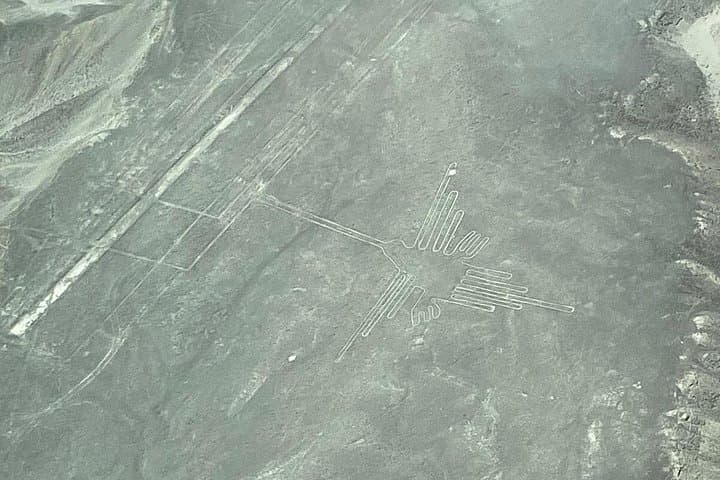
You lift off from the compact airstrip outside Nazca and the desert opens beneath you like a map cut in sharp lines. From the window, the pampas—baked clay and stone—stretches flat and ochre, while geoglyphs the size of football fields appear as deliberate, clean marks: a hummingbird frozen mid-flight, a condor with outstretched wings, a spider crouched against the plain.
Verified experiences and guided adventures in the surrounding area.
Operated by Aeronasca · Nazca, Ica
You lift off from the compact airstrip outside Nazca and the desert opens beneath you like a map cut in sharp lines. From the window, the pampas—baked clay and stone—stretches flat and ochre, while geoglyphs the size of football fields appear as deliberate, clean marks: a hummingbird frozen mid-flight, a condor with outstretched wings, a spider crouched against the plain.
The Nazca Lines were etched by the Nazca culture between roughly 200 BCE and 600 CE; their scale makes most sense from above. Geologically, the region’s aridity and wind-stable surface preserved these lines for millennia. The Cantalloc Aqueducts, visible near town and sometimes from the air, are an ingenious pre-Hispanic irrigation network—stone-lined galleries that tap groundwater and say as much about daily survival as the lines do about ritual expression.
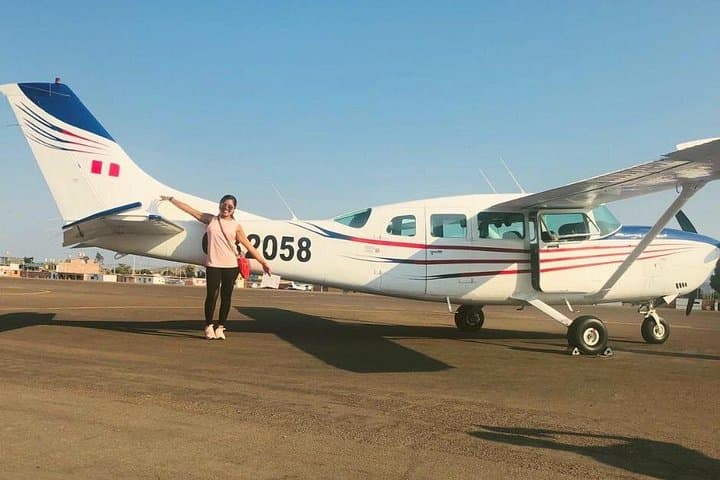
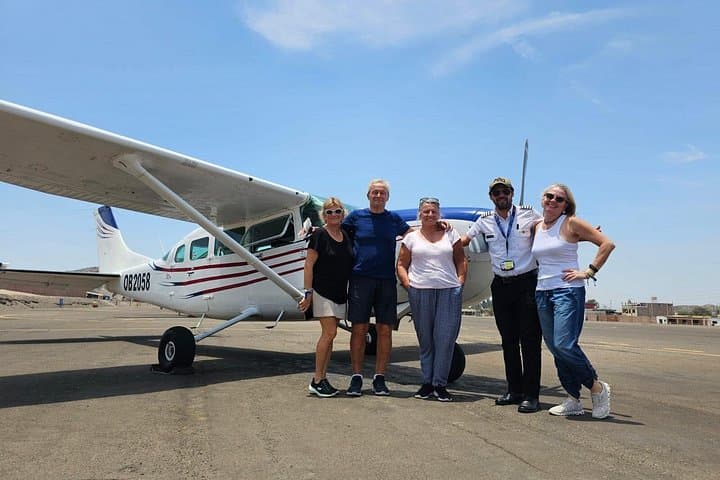
Expect a short, intimate flight: 35–60 minutes in small aircraft with window seating prioritized for weight balance. Plan for morning departures when light and thermals are calmer; the real experience is the sudden clarity as figures resolve beneath you. Photographing is straightforward but keep lenses clear of reflections and bring a fast shutter setting to counter plane movement.
Practical notes: weight limits and brief safety briefings are standard; motion sickness is common for first-time flyers over the desert’s visual cues. Combine the aerial viewpoint with a ground visit to the Cantalloc Aqueducts and the small Nazca town museums to round out the context. This is an aerial archaeology trip—short, focused, and uniquely visual.
The advertised flight window is 35–60 minutes; typical shared flights are about 35 minutes of airtime covering the main geoglyphs.
Yes—Cantalloc is accessible from Nazca town; some operators include a short ground stop but check the itinerary because many packages are flight-only.
Operators commonly have weight-balancing rules and may ask for passenger weights; infants may be required to sit on laps—confirm policies at booking.
Early morning is best for calmer air and clearer light; afternoons can be windier, which may make the flight bumpier.
Aeronasca operates guided outdoor trips and adventures with an emphasis on safety, stewardship, and memorable experiences.

You lift off from the compact airstrip outside Nazca and the desert opens beneath you like a map cut in sharp lines. From the window, the pampas—baked clay and stone—stretches flat and ochre, while geoglyphs the size of football fields appear as deliberate, clean marks: a hummingbird frozen mid-flight, a condor with outstretched wings, a spider crouched against the plain.
You lift off from the compact airstrip outside Nazca and the desert opens beneath you like a map cut in sharp lines. From the window, the pampas—baked clay and stone—stretches flat and ochre, while geoglyphs the size of football fields appear as deliberate, clean marks: a hummingbird frozen mid-flight, a condor with outstretched wings, a spider crouched against the plain.
The Nazca Lines were etched by the Nazca culture between roughly 200 BCE and 600 CE; their scale makes most sense from above. Geologically, the region’s aridity and wind-stable surface preserved these lines for millennia. The Cantalloc Aqueducts, visible near town and sometimes from the air, are an ingenious pre-Hispanic irrigation network—stone-lined galleries that tap groundwater and say as much about daily survival as the lines do about ritual expression.
Expect a short, intimate flight: 35–60 minutes in small aircraft with window seating prioritized for weight balance. Plan for morning departures when light and thermals are calmer; the real experience is the sudden clarity as figures resolve beneath you. Photographing is straightforward but keep lenses clear of reflections and bring a fast shutter setting to counter plane movement.
Practical notes: weight limits and brief safety briefings are standard; motion sickness is common for first-time flyers over the desert’s visual cues. Combine the aerial viewpoint with a ground visit to the Cantalloc Aqueducts and the small Nazca town museums to round out the context. This is an aerial archaeology trip—short, focused, and uniquely visual.
