THE ADVENTURE COLLECTIVE® · Independent discovery and booking for outdoor travel

Take a 35-minute Cessna overflight from Huacachina or Ica to see the Nazca Lines from above—giant geoglyphs carved into the Peruvian desert and best viewed in the calm morning air. Flights include hotel pickup, a guide, and visits to the Maria Reiche museum and Chauchilla cemetery.
Take a 35-minute Cessna overflight from Huacachina or Ica to see the Nazca Lines from above—giant geoglyphs carved into the Peruvian desert and best viewed in the calm morning air. Flights include hotel pickup, a guide, and visits to the Maria Reiche museum and Chauchilla cemetery.
The Cessna lifts off over a sunbaked plain and the desert opens beneath you like a stripped map—broad, raw, and oddly deliberate. For 35 minutes the aircraft banks gently, the pilot pointing out stitched lines and giant figures cut into the sand: a hummingbird frozen mid-flap, a condor with outstretched wings, a spider poised across the plateau. The wind outside is a ghost; below, the geoglyphs demand attention.
Verified experiences and guided adventures in the surrounding area.
Operated by Danzak Peru Travel · Nazca, Ica Region
The Cessna lifts off over a sunbaked plain and the desert opens beneath you like a stripped map—broad, raw, and oddly deliberate. For 35 minutes the aircraft banks gently, the pilot pointing out stitched lines and giant figures cut into the sand: a hummingbird frozen mid-flap, a condor with outstretched wings, a spider poised across the plateau. The wind outside is a ghost; below, the geoglyphs demand attention.
These figures were laid down between the 1st and 7th centuries AD on the coastal plain of southern Peru. The Nazca culture used the region’s stable climate and minimal rainfall to scrape away dark pebbles and reveal lighter soil beneath, producing lines that survive because the desert resists change. Archaeologists debate purpose—astronomical markers, ritual processional ways, or water-related symbols—but the scale and precision remain remarkable.
Practical guidance: flights depart from Maria Reiche airfield with hotel pickup in Huacachina or Ica; passport details are required at booking and on the day. Morning departures are calmer and reduce turbulence, giving clearer views and steadier camera shots. Expect light vehicle transfers to the airstrip and a multilingual guide at stops including Chauchilla cemetery and the Maria Reiche museum, where you’ll learn about the researchers who cataloged the figures.
Bring sun protection, a secure camera strap, and motion-sickness remedies if you’re prone to airsickness. The operator cancels in bad weather; otherwise, the experience is straightforward and suitable for most fitness levels. From the air, the desert almost seems to read back at you—ancient gestures visible only when you rise above them.
The overflight portion lasts about 35 minutes; the full experience including transfers and visits runs to roughly 8 hours.
Yes—passport name, number, expiry and country are required at booking and must be presented on the travel day.
This activity is not recommended for pregnant travelers or people with serious cardiac or medical conditions due to flight and transfer conditions.
The operator cancels flights in bad weather; policies are all-sales-final for cancellations by customers, but weather cancellations are handled per the provider’s rules.
Danzak Peru Travel operates guided outdoor trips and adventures with an emphasis on safety, stewardship, and memorable experiences.
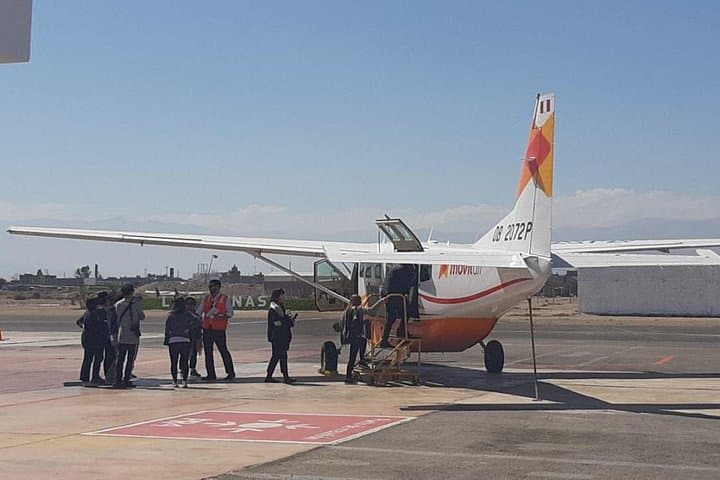


The Cessna lifts off over a sunbaked plain and the desert opens beneath you like a stripped map—broad, raw, and oddly deliberate. For 35 minutes the aircraft banks gently, the pilot pointing out stitched lines and giant figures cut into the sand: a hummingbird frozen mid-flap, a condor with outstretched wings, a spider poised across the plateau. The wind outside is a ghost; below, the geoglyphs demand attention.
The Cessna lifts off over a sunbaked plain and the desert opens beneath you like a stripped map—broad, raw, and oddly deliberate. For 35 minutes the aircraft banks gently, the pilot pointing out stitched lines and giant figures cut into the sand: a hummingbird frozen mid-flap, a condor with outstretched wings, a spider poised across the plateau. The wind outside is a ghost; below, the geoglyphs demand attention.
These figures were laid down between the 1st and 7th centuries AD on the coastal plain of southern Peru. The Nazca culture used the region’s stable climate and minimal rainfall to scrape away dark pebbles and reveal lighter soil beneath, producing lines that survive because the desert resists change. Archaeologists debate purpose—astronomical markers, ritual processional ways, or water-related symbols—but the scale and precision remain remarkable.
Practical guidance: flights depart from Maria Reiche airfield with hotel pickup in Huacachina or Ica; passport details are required at booking and on the day. Morning departures are calmer and reduce turbulence, giving clearer views and steadier camera shots. Expect light vehicle transfers to the airstrip and a multilingual guide at stops including Chauchilla cemetery and the Maria Reiche museum, where you’ll learn about the researchers who cataloged the figures.
Bring sun protection, a secure camera strap, and motion-sickness remedies if you’re prone to airsickness. The operator cancels in bad weather; otherwise, the experience is straightforward and suitable for most fitness levels. From the air, the desert almost seems to read back at you—ancient gestures visible only when you rise above them.