THE ADVENTURE COLLECTIVE® · Independent discovery and booking for outdoor travel

Explore Negombo’s coastal culture on a private half-day car tour that links Dutch-era canals, a working fish market, colonial churches, and colorful temples. Ideal for travelers wanting history, local life, and easy walking in one compact itinerary.
Explore Negombo’s coastal culture on a private half-day car tour that links Dutch-era canals, a working fish market, colonial churches, and colorful temples. Ideal for travelers wanting history, local life, and easy walking in one compact itinerary.
Salt spray and the voices of market vendors set the scene before the car doors open — Negombo arrives not as a postcard but as a working coastal city: fishing boats bob on the lagoon, colonial stonework shades narrow streets, and church bells punctuate the bustle.
Verified experiences and guided adventures in the surrounding area.
Operated by Grand Traverse Sri Lanka · Negombo, Western Province
Salt spray and the voices of market vendors set the scene before the car doors open — Negombo arrives not as a postcard but as a working coastal city: fishing boats bob on the lagoon, colonial stonework shades narrow streets, and church bells punctuate the bustle.
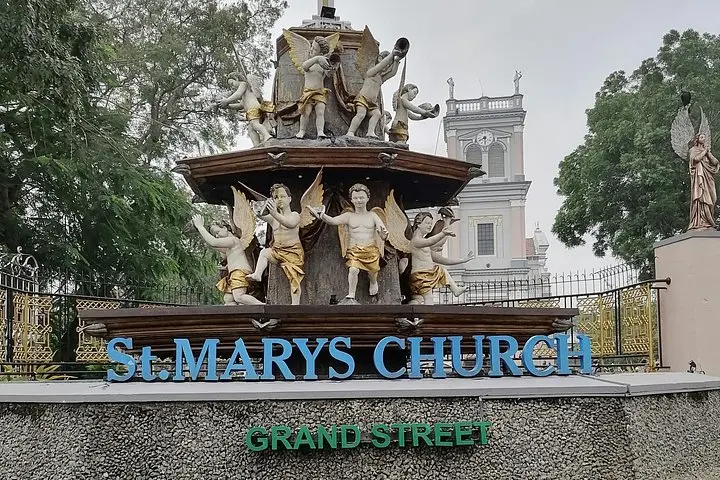
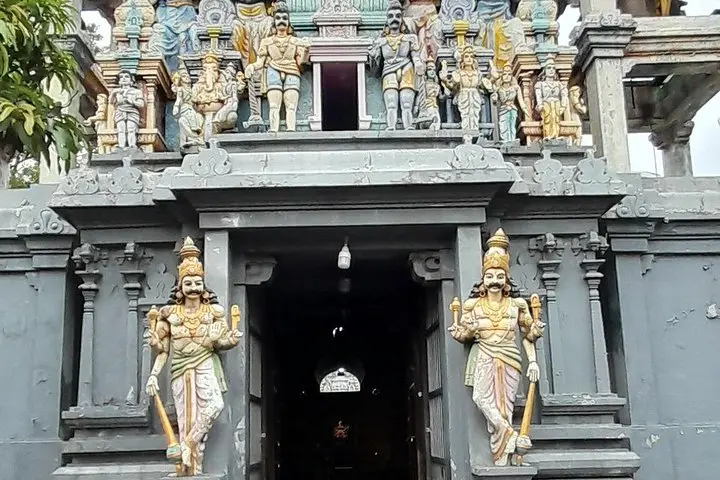
This half-day private tour walks a line through Negombo’s layered past: Portuguese and Dutch fortifications, British-era canals, and churches rebuilt in neoclassical style. Geology here is low-lying coastal plain and mangrove fringe — the Hamilton Canal was engineered to manage tidal saltwater and wetland drainage, shaping local livelihoods for two centuries. Culture is immediate and visible: a strong Roman Catholic presence, lively Hindu temples with vivid sculpture, Buddhist shrines with painted ceilings, and a fish market where the day’s catch underpins rhythm and economy.
Expect short strolls and roadside stops rather than long hikes — the tour typically runs 3–3.5 hours by air‑conditioned car with an English-speaking chauffeur-guide. Wear light, breathable clothing and footwear for cobbled lanes and wet market surfaces. Modest dress required for temples and Buddhist sites; plan to remove shoes. Morning light favors the lagoon and market; afternoons bring humidity and occasional squalls.
Practicalities: bring cash for market purchases and temple donations, a compact rain layer for sudden showers, sunscreen, and a reusable water bottle. Photography is welcomed but ask permission at religious sites and of individuals. The itinerary stitches heritage, daily life, and waterways into a compact, accessible introduction to Negombo’s coastal culture.
Yes — pickup and drop-off from hotels in the Negombo area are included as part of the private tour.
Most stops are viewpoint or walk-up visits; specific museum or paid-entry sites would typically be extra — check the itinerary for details.
Yes — the tour involves minimal walking and is suitable for families and older travelers, though those with serious mobility or spinal/heart conditions should consult beforehand.
As a private tour, the itinerary is flexible — discuss preferred stops and timing with your guide when booking or at pickup.
Grand Traverse Sri Lanka operates guided outdoor trips and adventures with an emphasis on safety, stewardship, and memorable experiences.

Salt spray and the voices of market vendors set the scene before the car doors open — Negombo arrives not as a postcard but as a working coastal city: fishing boats bob on the lagoon, colonial stonework shades narrow streets, and church bells punctuate the bustle.
Salt spray and the voices of market vendors set the scene before the car doors open — Negombo arrives not as a postcard but as a working coastal city: fishing boats bob on the lagoon, colonial stonework shades narrow streets, and church bells punctuate the bustle.
This half-day private tour walks a line through Negombo’s layered past: Portuguese and Dutch fortifications, British-era canals, and churches rebuilt in neoclassical style. Geology here is low-lying coastal plain and mangrove fringe — the Hamilton Canal was engineered to manage tidal saltwater and wetland drainage, shaping local livelihoods for two centuries. Culture is immediate and visible: a strong Roman Catholic presence, lively Hindu temples with vivid sculpture, Buddhist shrines with painted ceilings, and a fish market where the day’s catch underpins rhythm and economy.
Expect short strolls and roadside stops rather than long hikes — the tour typically runs 3–3.5 hours by air‑conditioned car with an English-speaking chauffeur-guide. Wear light, breathable clothing and footwear for cobbled lanes and wet market surfaces. Modest dress required for temples and Buddhist sites; plan to remove shoes. Morning light favors the lagoon and market; afternoons bring humidity and occasional squalls.
Practicalities: bring cash for market purchases and temple donations, a compact rain layer for sudden showers, sunscreen, and a reusable water bottle. Photography is welcomed but ask permission at religious sites and of individuals. The itinerary stitches heritage, daily life, and waterways into a compact, accessible introduction to Negombo’s coastal culture.