THE ADVENTURE COLLECTIVE® · Independent discovery and booking for outdoor travel

Glide through mangrove tunnels and open water on a short boat safari from Negombo, where kingfishers, egrets and curious monkeys punctuate a 90-minute wildlife-focused ride. This private tour includes hotel pickup and local insights into lagoon fisheries and mangrove ecology.
Glide through mangrove tunnels and open water on a short boat safari from Negombo, where kingfishers, egrets and curious monkeys punctuate a 90-minute wildlife-focused ride. This private tour includes hotel pickup and local insights into lagoon fisheries and mangrove ecology.
The boat slips away from a narrow channel and the lagoon opens like a wide, reflective mirror. Early light picks out mangrove roots and a distant line of coconut palms; kingfishers flash and a monkey sits motionless on a low branch, sizing you up before it slips away.
Verified experiences and guided adventures in the surrounding area.
Operated by Heli Tuk Tuk Tours · Negombo, Western Province
The boat slips away from a narrow channel and the lagoon opens like a wide, reflective mirror. Early light picks out mangrove roots and a distant line of coconut palms; kingfishers flash and a monkey sits motionless on a low branch, sizing you up before it slips away.
Negombo Lagoon spans roughly 35 square kilometers and connects to the Indian Ocean through tidal channels. Its mix of brackish water, mangrove stands, and tidal flats has long supported local fisheries; colonial-era canals and Dutch-era coastal settlements shaped the shoreline communities you pass on the way. Geologically this is a low-lying coastal plain—sediment from river outflow and tidal exchange builds the flats that feed the mangroves, while fishermen’s nets and shallow outrigger boats remain central to local culture.
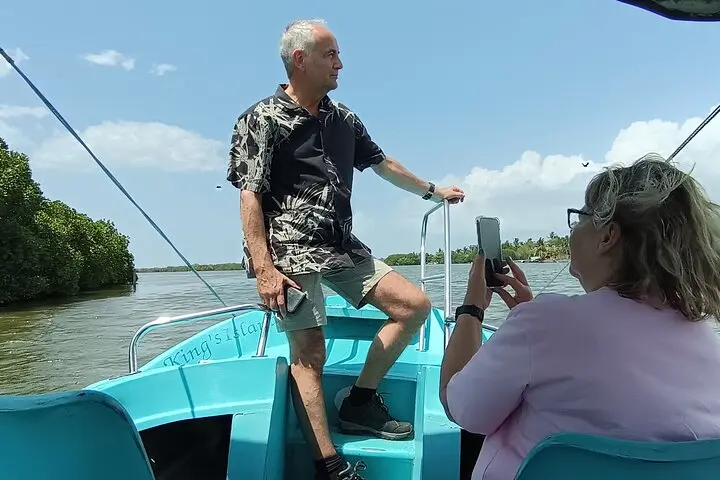
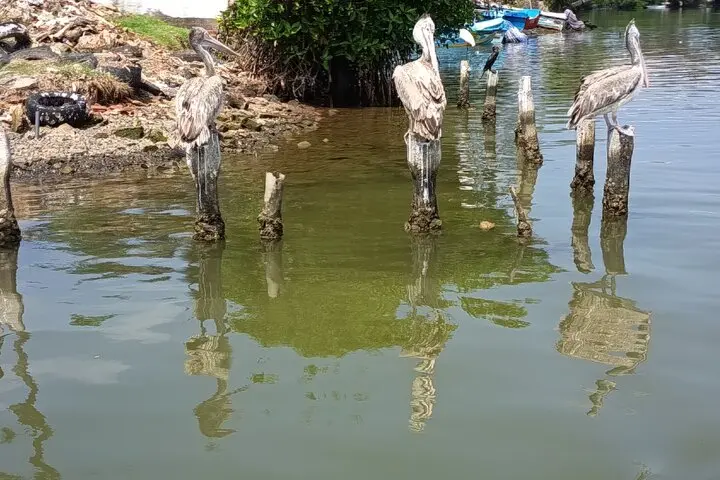
On a 90-minute safari you’ll move from narrow mangrove tunnels to open water, watching herons, egrets, and kingfishers, and catching glimpses of crab-hunting shorebirds and the occasional macaque. Guides explain fishing techniques and point out traditional villages along the banks.
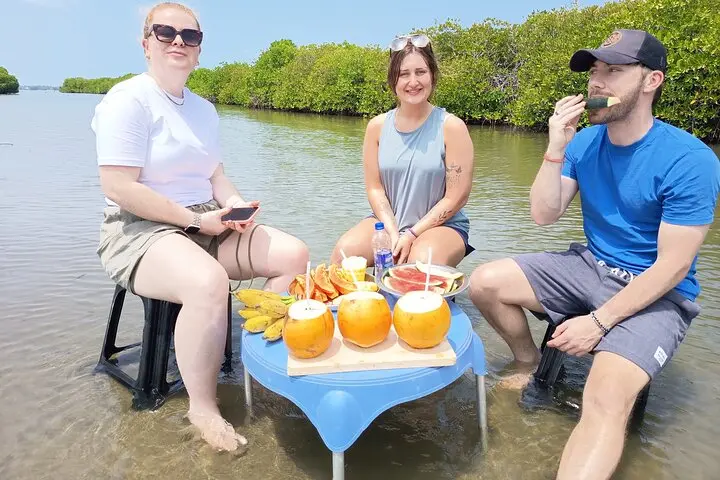
Practical guidance: the tour generally lasts 2–3 hours including pickup by tuk-tuk or private transfer; boats are calm but wear a life jacket during maneuvers. Morning and late afternoon have best light and bird activity; bring sun protection, insect repellent, a waterproof phone case, and a small towel. Expect basic refreshments such as king coconut on board. If you’re photographing wildlife, use a zoom lens and move quietly—wildlife responds to steady, slow motions. The trip is accessible to most fitness levels and makes a compact, wildlife-rich introduction to Sri Lanka’s west-coast wetlands.
The scheduled boat segment is about 90 minutes, with the total door-to-door time typically 2–3 hours including transfers.
Yes—macaques and various waterbirds like herons, egrets and kingfishers are commonly seen, though sightings depend on season, time of day and quiet observation.
Yes—tours suit families and non-swimmers; life jackets are provided and the water is shallow and calm, though supervision is advised for small children.
Basic facilities are usually available at the meeting point or nearby village stops, but not on the boat—plan accordingly.
Heli Tuk Tuk Tours operates guided outdoor trips and adventures with an emphasis on safety, stewardship, and memorable experiences.
The boat slips away from a narrow channel and the lagoon opens like a wide, reflective mirror. Early light picks out mangrove roots and a distant line of coconut palms; kingfishers flash and a monkey sits motionless on a low branch, sizing you up before it slips away.
The boat slips away from a narrow channel and the lagoon opens like a wide, reflective mirror. Early light picks out mangrove roots and a distant line of coconut palms; kingfishers flash and a monkey sits motionless on a low branch, sizing you up before it slips away.
Negombo Lagoon spans roughly 35 square kilometers and connects to the Indian Ocean through tidal channels. Its mix of brackish water, mangrove stands, and tidal flats has long supported local fisheries; colonial-era canals and Dutch-era coastal settlements shaped the shoreline communities you pass on the way. Geologically this is a low-lying coastal plain—sediment from river outflow and tidal exchange builds the flats that feed the mangroves, while fishermen’s nets and shallow outrigger boats remain central to local culture.
On a 90-minute safari you’ll move from narrow mangrove tunnels to open water, watching herons, egrets, and kingfishers, and catching glimpses of crab-hunting shorebirds and the occasional macaque. Guides explain fishing techniques and point out traditional villages along the banks.
Practical guidance: the tour generally lasts 2–3 hours including pickup by tuk-tuk or private transfer; boats are calm but wear a life jacket during maneuvers. Morning and late afternoon have best light and bird activity; bring sun protection, insect repellent, a waterproof phone case, and a small towel. Expect basic refreshments such as king coconut on board. If you’re photographing wildlife, use a zoom lens and move quietly—wildlife responds to steady, slow motions. The trip is accessible to most fitness levels and makes a compact, wildlife-rich introduction to Sri Lanka’s west-coast wetlands.