THE ADVENTURE COLLECTIVE® · Independent discovery and booking for outdoor travel

Witness sunrise on Nemrut’s colossal statues, explore Karakuş tumulus and Roman Cendere Bridge, and walk the ruinous terraces of Arsemia on this private 2-day tour from Adıyaman. Ideal for history-minded hikers who can handle short, rocky approaches.
Witness sunrise on Nemrut’s colossal statues, explore Karakuş tumulus and Roman Cendere Bridge, and walk the ruinous terraces of Arsemia on this private 2-day tour from Adıyaman. Ideal for history-minded hikers who can handle short, rocky approaches.
You arrive as the road unwinds off the plateau and the statues appear, half-human faces catching the last light. The air is thin at 2,134 meters and the stone heads of Nemrut—guardians carved by the Commagene king—seem to hold court over a raw, highland sky. On day one the route threads quieter heritage sites: Karakuş tumulus with its carved stelae, the Roman Cendere Bridge spanning a slow river, and the stripped ruins of Arsemia where inscriptions and terraces trace ancient politics.
Verified experiences and guided adventures in the surrounding area.
Operated by Blue Bosphorus Tours · Adıyaman, Adıyaman Province
You arrive as the road unwinds off the plateau and the statues appear, half-human faces catching the last light. The air is thin at 2,134 meters and the stone heads of Nemrut—guardians carved by the Commagene king—seem to hold court over a raw, highland sky. On day one the route threads quieter heritage sites: Karakuş tumulus with its carved stelae, the Roman Cendere Bridge spanning a slow river, and the stripped ruins of Arsemia where inscriptions and terraces trace ancient politics.
Geology here is volcanic and uplifted; the summit sits atop a limestone and conglomerate platform that creates broad terraces with sweeping views of the Mesopotamian plains. Culturally, Nemrut is first-century BC—Antiochus I placed colossal sculptures and a royal funerary mound to link Persian and Hellenistic motifs; nearby Arsemia was a political stage for the same kingdom.
Expect short, rocky walks from the parking areas to the eastern and western terraces—roughly 0.8–1.5 km each with loose gravel and low steps. Sunset and sunrise are the draw: dawn paints the statues in low-angle light and cooler temperatures; dusk softens the plateau and, if clear, offers long views toward the Euphrates valley.
Practical notes: bring warm layers, a headlamp for pre-dawn treks, sturdy footwear, and water; facilities on-site are minimal. The tour includes hotel accommodation, meals, and transfers, but plan for early starts and uneven footing. Moderate fitness and basic mobility are required to enjoy terraces and viewpoints safely.
Guides typically depart very early from the hotel to reach the summit before dawn—plan for a 4:00–5:00 AM start depending on season and hotel location.
The walks from parking areas to each terrace are short (about 0.8–1.5 km) but on uneven, gravelly ground with short stone steps—moderate mobility and steady footing are needed.
This tour lists site admissions as included for the itinerary points; confirm with the operator at booking for any recent changes to site fees.
Yes—the second day includes transfer to the bus station or airport; provide your departure details at booking so the operator can schedule the drop-off.
Blue Bosphorus Tours operates guided outdoor trips and adventures with an emphasis on safety, stewardship, and memorable experiences.
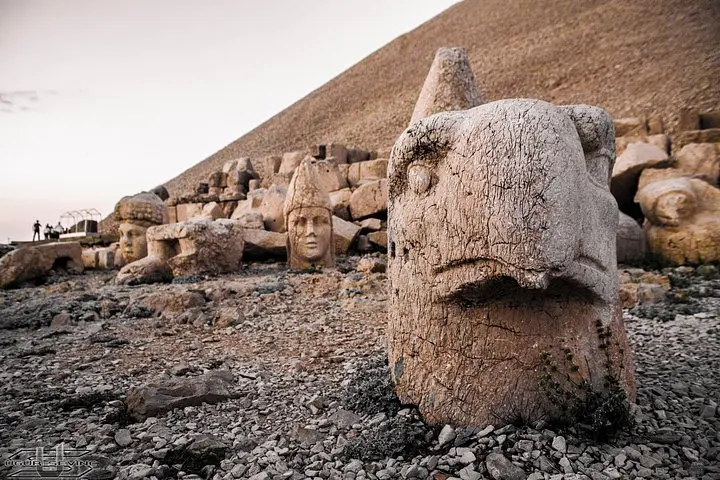
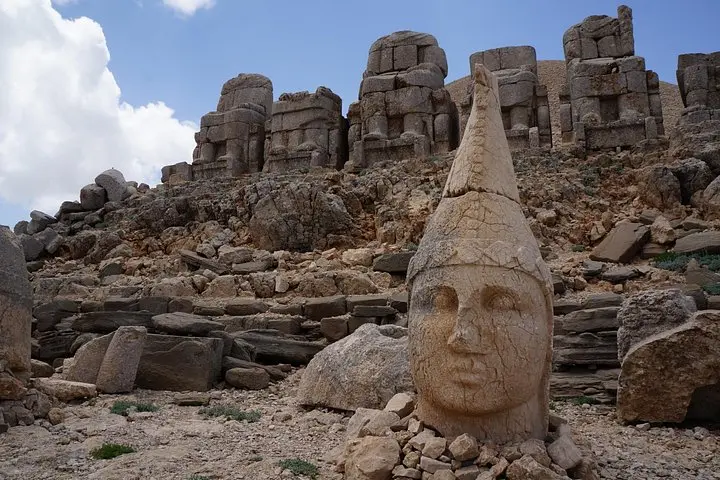
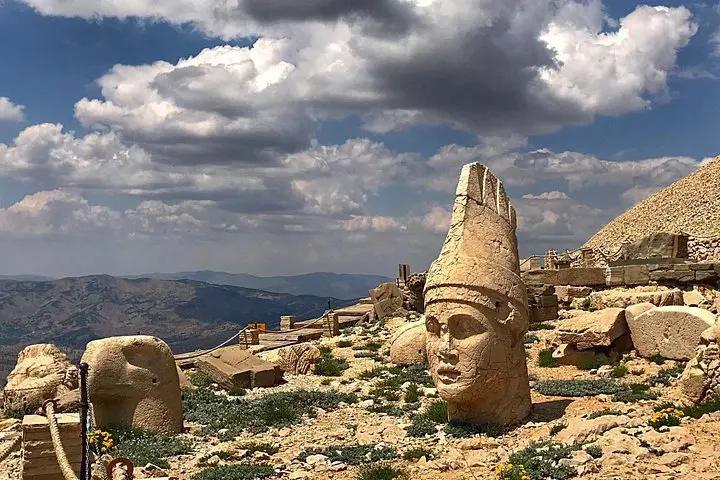
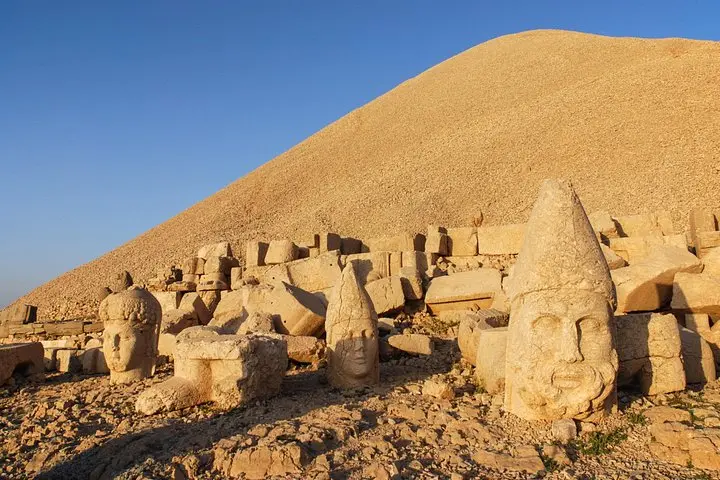
You arrive as the road unwinds off the plateau and the statues appear, half-human faces catching the last light. The air is thin at 2,134 meters and the stone heads of Nemrut—guardians carved by the Commagene king—seem to hold court over a raw, highland sky. On day one the route threads quieter heritage sites: Karakuş tumulus with its carved stelae, the Roman Cendere Bridge spanning a slow river, and the stripped ruins of Arsemia where inscriptions and terraces trace ancient politics.
You arrive as the road unwinds off the plateau and the statues appear, half-human faces catching the last light. The air is thin at 2,134 meters and the stone heads of Nemrut—guardians carved by the Commagene king—seem to hold court over a raw, highland sky. On day one the route threads quieter heritage sites: Karakuş tumulus with its carved stelae, the Roman Cendere Bridge spanning a slow river, and the stripped ruins of Arsemia where inscriptions and terraces trace ancient politics.
Geology here is volcanic and uplifted; the summit sits atop a limestone and conglomerate platform that creates broad terraces with sweeping views of the Mesopotamian plains. Culturally, Nemrut is first-century BC—Antiochus I placed colossal sculptures and a royal funerary mound to link Persian and Hellenistic motifs; nearby Arsemia was a political stage for the same kingdom.
Expect short, rocky walks from the parking areas to the eastern and western terraces—roughly 0.8–1.5 km each with loose gravel and low steps. Sunset and sunrise are the draw: dawn paints the statues in low-angle light and cooler temperatures; dusk softens the plateau and, if clear, offers long views toward the Euphrates valley.
Practical notes: bring warm layers, a headlamp for pre-dawn treks, sturdy footwear, and water; facilities on-site are minimal. The tour includes hotel accommodation, meals, and transfers, but plan for early starts and uneven footing. Moderate fitness and basic mobility are required to enjoy terraces and viewpoints safely.