THE ADVENTURE COLLECTIVE® · Independent discovery and booking for outdoor travel

Explore Skopje’s bold neoclassical makeover on a guided two-hour walking tour that links Roman roots, Ottoman lanes and the controversial Skopje 2014 monuments. Ideal for history lovers who want a compact introduction to the city’s public art and central sights.
Explore Skopje’s bold neoclassical makeover on a guided two-hour walking tour that links Roman roots, Ottoman lanes and the controversial Skopje 2014 monuments. Ideal for history lovers who want a compact introduction to the city’s public art and central sights.
You step off the pavement onto the Art Bridge and the city shifts—bronze figures gaze across the Vardar, marble façades rise like arguments in stone, and the oversized statue of Alexander the Great anchors the main square.
Verified experiences and guided adventures in the surrounding area.
Operated by Opatrip.com Macedonia · Skopje, Skopje
You step off the pavement onto the Art Bridge and the city shifts—bronze figures gaze across the Vardar, marble façades rise like arguments in stone, and the oversized statue of Alexander the Great anchors the main square.
This two-hour walk threads the bold, contested pages of Skopje’s past. Roman foundations underlie the grid; Byzantine and Ottoman layers still mark the Old Bazaar, while the controversial Skopje 2014 project painted the riverbank with neoclassical columns and dozens of public monuments. Geologically, the Vardar valley funnels wind and light between the surrounding hills, so views change quickly as you cross bridges or climb toward Kale Fortress.
Along the route a guide will point out war memorials, the Justinian statue, and plaques to local writers and musicians—public memory made architectural. Expect stories about 20th-century reconstruction after the 1963 earthquake and local craft traditions in the bazaar lanes.
Practical edge: the tour is mostly flat pavement with short stair sections; wear sturdy shoes and expect 1.5–2 miles of walking over two hours. Mornings and late afternoons give the best light for photos and cooler air; summer can be hot on exposed squares. Bring a refillable water bottle, a light rain shell in spring/fall, and a small amount of local currency for tiny museum entries or a coffee stop. Public transit and taxis meet the square, and the compact route makes it easy to extend your visit toward the Old Bazaar or the fortress afterward.
Most tours begin at Macedonia Square near the Alexander the Great statue; confirm the exact meeting point on your booking confirmation.
Yes—it's rated easy and accessible to most ages, but there are short stair sections and about 1.5–2 miles of walking.
Offerings vary by operator; check the booking page for available guide languages or request a private tour in advance.
Full refund is typically available if you cancel at least 24 hours before departure; check your voucher for exact terms.
Opatrip.com Macedonia operates guided outdoor trips and adventures with an emphasis on safety, stewardship, and memorable experiences.
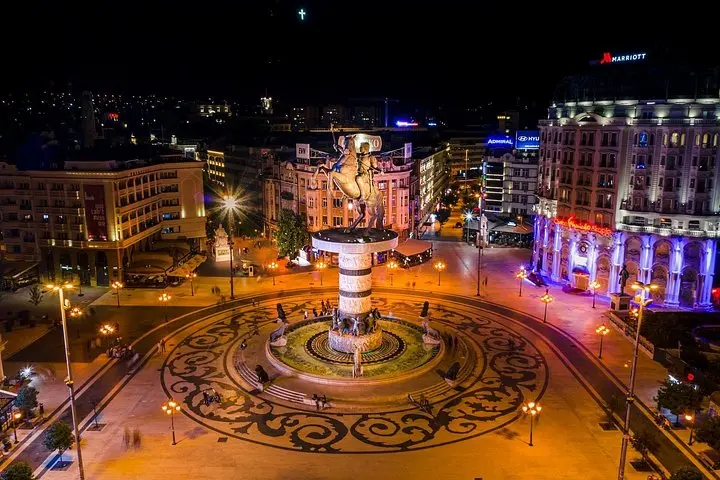
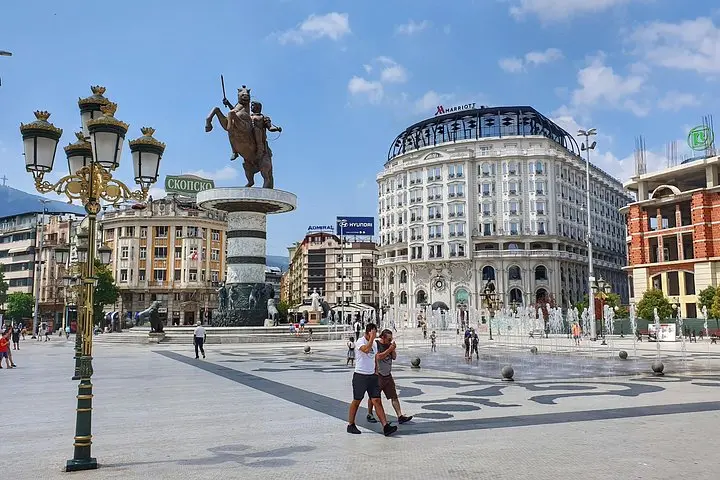
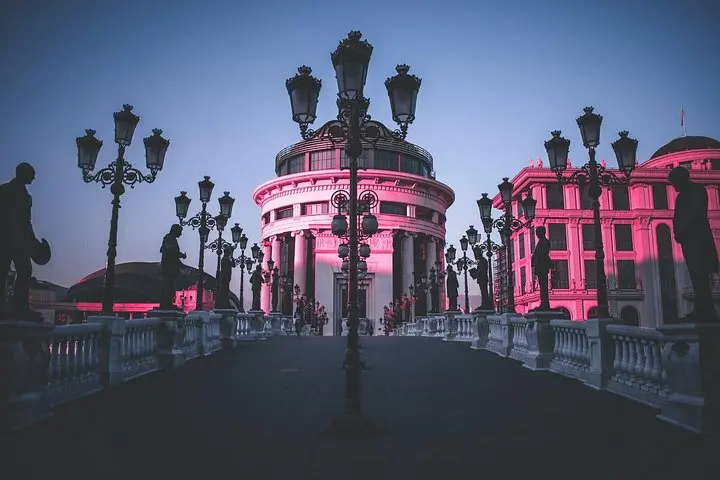
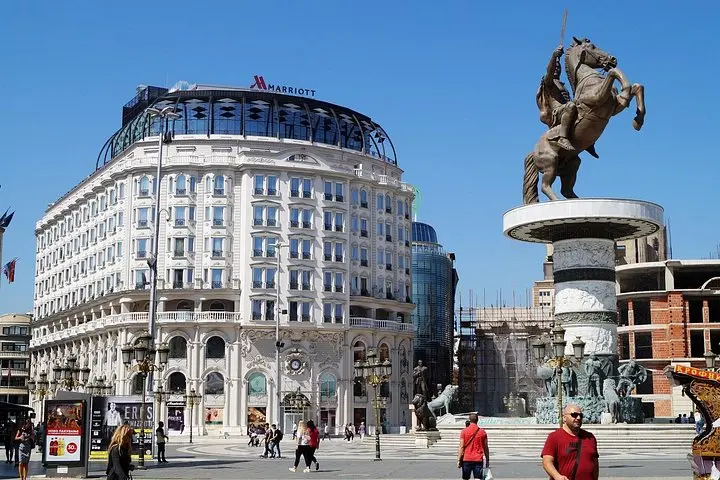
You step off the pavement onto the Art Bridge and the city shifts—bronze figures gaze across the Vardar, marble façades rise like arguments in stone, and the oversized statue of Alexander the Great anchors the main square.
You step off the pavement onto the Art Bridge and the city shifts—bronze figures gaze across the Vardar, marble façades rise like arguments in stone, and the oversized statue of Alexander the Great anchors the main square.
This two-hour walk threads the bold, contested pages of Skopje’s past. Roman foundations underlie the grid; Byzantine and Ottoman layers still mark the Old Bazaar, while the controversial Skopje 2014 project painted the riverbank with neoclassical columns and dozens of public monuments. Geologically, the Vardar valley funnels wind and light between the surrounding hills, so views change quickly as you cross bridges or climb toward Kale Fortress.
Along the route a guide will point out war memorials, the Justinian statue, and plaques to local writers and musicians—public memory made architectural. Expect stories about 20th-century reconstruction after the 1963 earthquake and local craft traditions in the bazaar lanes.
Practical edge: the tour is mostly flat pavement with short stair sections; wear sturdy shoes and expect 1.5–2 miles of walking over two hours. Mornings and late afternoons give the best light for photos and cooler air; summer can be hot on exposed squares. Bring a refillable water bottle, a light rain shell in spring/fall, and a small amount of local currency for tiny museum entries or a coffee stop. Public transit and taxis meet the square, and the compact route makes it easy to extend your visit toward the Old Bazaar or the fortress afterward.