THE ADVENTURE COLLECTIVE® · Independent discovery and booking for outdoor travel
Short on time but hungry for altitude? This full-day guided ascent of Nevado Mateo (5,150 m) from Huaraz offers a compact introduction to high-Andean climbing—perfect for acclimatization and panoramic views of Huascarán and Chopicalqui.
Short on time but hungry for altitude? This full-day guided ascent of Nevado Mateo (5,150 m) from Huaraz offers a compact introduction to high-Andean climbing—perfect for acclimatization and panoramic views of Huascarán and Chopicalqui.
A thin, cold light splits the Andean horizon as the van leaves Huaraz at 3:00 a.m., tires crunching on highland gravel toward Punta Olímpica. By dawn the air is a clear, metallic presence; rock and ice sit like anchored forces, and the summit of Nevado Mateo (≈5,150 m) waits above a field of compacted snow. The route is short by alpine standards—roughly 4 hours of ascent from the trailhead—but the altitude gives each step weighty consequence.
Verified experiences and guided adventures in the surrounding area.
Operated by Peru Expeditions Tours · Huaraz, Ancash
A thin, cold light splits the Andean horizon as the van leaves Huaraz at 3:00 a.m., tires crunching on highland gravel toward Punta Olímpica. By dawn the air is a clear, metallic presence; rock and ice sit like anchored forces, and the summit of Nevado Mateo (≈5,150 m) waits above a field of compacted snow. The route is short by alpine standards—roughly 4 hours of ascent from the trailhead—but the altitude gives each step weighty consequence.
The Cordillera Blanca is young, uplifted granite and metamorphic rock carved by Pleistocene glaciers; its peaks rose as the Nazca Plate pressed under South America. Local Quechua communities have guided travelers here for generations, and modern routes follow traditional highland passes that connected villages long before roads. Mateo’s accessible slope is often used for acclimatization before committing to Huascarán or Chopicalqui.
Expect cold, wind, and intermittent sun; glaciers will test crampon and ice-axe technique. Guides provide helmets, harnesses, boots, crampons and teach gear checks—testing equipment a day before departure is mandatory. Logistics include a 2–3 hour drive from Huaraz, early pickup, and a steady 4-hour climb with panoramic views at the crest.
Practical plan: hydrate well 24–48 hours prior, layer for temperature swings, and allow extra time for gear fitting. If you’re breathing thin air for the first time, move deliberately—short steps and steady pacing reduce fatigue. With basic crampon and ice-axe competency and respect for altitude, Nevado Mateo is a compact, high-country challenge that introduces the Cordillera Blanca’s grander summits.
Moderate fitness for 4–6 hours of hiking at high altitude is required; the route is not highly technical but altitude makes it demanding.
No advanced experience is required, but familiarity with crampons and ice-axe use is strongly recommended and practiced during the pre-trip gear test.
Guides monitor symptoms closely; typical responses include slowing pace, descending to lower elevation, and administering oxygen or evacuation if necessary.
Yes—guides provide boots, crampons, harnesses, ice axes and helmets, but those items must be tested at the operator’s office before departure.
Peru Expeditions Tours operates guided outdoor trips and adventures with an emphasis on safety, stewardship, and memorable experiences.

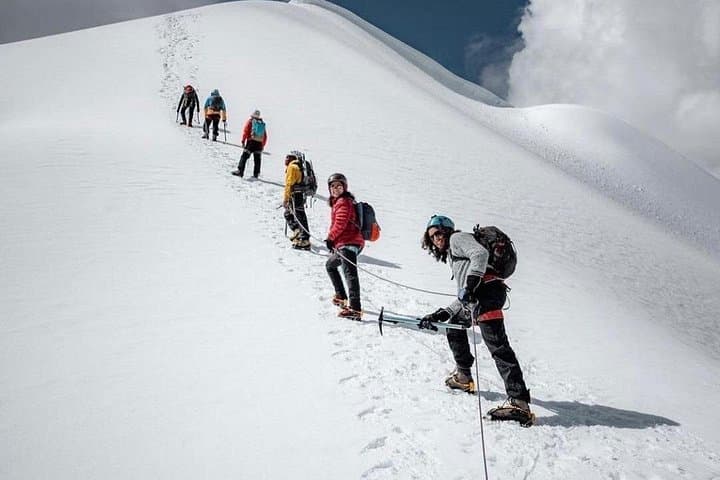
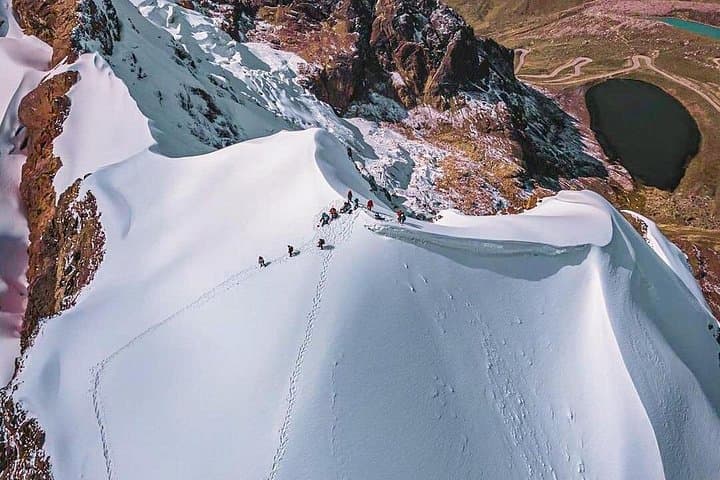
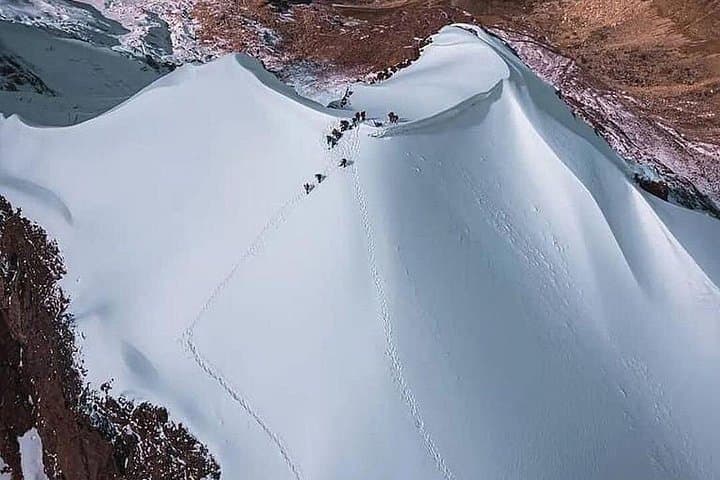
A thin, cold light splits the Andean horizon as the van leaves Huaraz at 3:00 a.m., tires crunching on highland gravel toward Punta Olímpica. By dawn the air is a clear, metallic presence; rock and ice sit like anchored forces, and the summit of Nevado Mateo (≈5,150 m) waits above a field of compacted snow. The route is short by alpine standards—roughly 4 hours of ascent from the trailhead—but the altitude gives each step weighty consequence.
A thin, cold light splits the Andean horizon as the van leaves Huaraz at 3:00 a.m., tires crunching on highland gravel toward Punta Olímpica. By dawn the air is a clear, metallic presence; rock and ice sit like anchored forces, and the summit of Nevado Mateo (≈5,150 m) waits above a field of compacted snow. The route is short by alpine standards—roughly 4 hours of ascent from the trailhead—but the altitude gives each step weighty consequence.
The Cordillera Blanca is young, uplifted granite and metamorphic rock carved by Pleistocene glaciers; its peaks rose as the Nazca Plate pressed under South America. Local Quechua communities have guided travelers here for generations, and modern routes follow traditional highland passes that connected villages long before roads. Mateo’s accessible slope is often used for acclimatization before committing to Huascarán or Chopicalqui.
Expect cold, wind, and intermittent sun; glaciers will test crampon and ice-axe technique. Guides provide helmets, harnesses, boots, crampons and teach gear checks—testing equipment a day before departure is mandatory. Logistics include a 2–3 hour drive from Huaraz, early pickup, and a steady 4-hour climb with panoramic views at the crest.
Practical plan: hydrate well 24–48 hours prior, layer for temperature swings, and allow extra time for gear fitting. If you’re breathing thin air for the first time, move deliberately—short steps and steady pacing reduce fatigue. With basic crampon and ice-axe competency and respect for altitude, Nevado Mateo is a compact, high-country challenge that introduces the Cordillera Blanca’s grander summits.
