THE ADVENTURE COLLECTIVE® · Independent discovery and booking for outdoor travel

A compact, drive-in cultural day from Delhi that pairs the Taj Mahal’s marble perfection with Agra Fort’s Mughal red sandstone. Expect guided visits, a midday meal, and hotel pickup for a full but efficient day of history and architecture.
A compact, drive-in cultural day from Delhi that pairs the Taj Mahal’s marble perfection with Agra Fort’s Mughal red sandstone. Expect guided visits, a midday meal, and hotel pickup for a full but efficient day of history and architecture.
Before dawn the highway flattens into a ribbon and the Taj Mahal first appears like a pale promise on the Yamuna’s opposite bank—its white marble catching the low sun while the river dares you to look away. This full-day transfer tour moves deliberately: a highway drive from Delhi, a sunrise or morning visit to the mausoleum, a relaxed lunch, and an hour inside Agra Fort before the return trip.
Verified experiences and guided adventures in the surrounding area.
Operated by 707 TOURS · Agra, Uttar Pradesh
Before dawn the highway flattens into a ribbon and the Taj Mahal first appears like a pale promise on the Yamuna’s opposite bank—its white marble catching the low sun while the river dares you to look away. This full-day transfer tour moves deliberately: a highway drive from Delhi, a sunrise or morning visit to the mausoleum, a relaxed lunch, and an hour inside Agra Fort before the return trip.
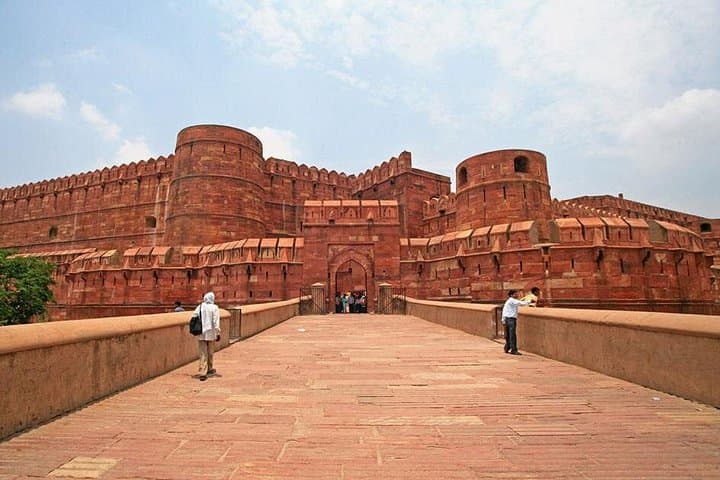
The Taj Mahal was raised in the 17th century by Emperor Shah Jahan as a mausoleum for Mumtaz Mahal; its marble and pietra dura inlay work reflect Mughal aesthetics and the region’s geology—marble quarried and transported, set against the floodplain of the Yamuna. Agra Fort predates the mausoleum and, begun in the 16th century under Akbar, shows defensive red-sandstone architecture reworked for royal life. Around both sites the city’s culture centers on crafts—stone inlay, leatherwork, and petha sweets—offering immediate context to what you see.
Practically, expect security checks, guided explanation of key chambers and façades, and tight time windows at each stop. Morning light is best for photography at the Taj; Mehtab Bagh across the river gives a quieter sunset perspective. Bring comfortable walking shoes, a hat and water, and dress modestly for both monuments. The operator typically includes monument entry and hotel pickup/drop-off; cancellations are refundable up to 24 hours ahead. The day is long but straightforward—ideal for travelers who want concentrated cultural history with minimal planning fuss.
Yes — this tour typically includes the Taj Mahal and Agra Fort monument tickets as part of the package.
Expect roughly 60–90 minutes at the Taj Mahal and about 60 minutes at Agra Fort, with additional time for transport and lunch.
Pickup is usually from hotels or the airport in Delhi/Gurgaon and drop-off can be at your Delhi hotel or the airport as arranged in advance.
Photography for personal use is allowed; tripods and commercial equipment may be restricted—check with your guide and the monument’s rules on the day.
707 TOURS operates guided outdoor trips and adventures with an emphasis on safety, stewardship, and memorable experiences.



Before dawn the highway flattens into a ribbon and the Taj Mahal first appears like a pale promise on the Yamuna’s opposite bank—its white marble catching the low sun while the river dares you to look away. This full-day transfer tour moves deliberately: a highway drive from Delhi, a sunrise or morning visit to the mausoleum, a relaxed lunch, and an hour inside Agra Fort before the return trip.
Before dawn the highway flattens into a ribbon and the Taj Mahal first appears like a pale promise on the Yamuna’s opposite bank—its white marble catching the low sun while the river dares you to look away. This full-day transfer tour moves deliberately: a highway drive from Delhi, a sunrise or morning visit to the mausoleum, a relaxed lunch, and an hour inside Agra Fort before the return trip.
The Taj Mahal was raised in the 17th century by Emperor Shah Jahan as a mausoleum for Mumtaz Mahal; its marble and pietra dura inlay work reflect Mughal aesthetics and the region’s geology—marble quarried and transported, set against the floodplain of the Yamuna. Agra Fort predates the mausoleum and, begun in the 16th century under Akbar, shows defensive red-sandstone architecture reworked for royal life. Around both sites the city’s culture centers on crafts—stone inlay, leatherwork, and petha sweets—offering immediate context to what you see.
Practically, expect security checks, guided explanation of key chambers and façades, and tight time windows at each stop. Morning light is best for photography at the Taj; Mehtab Bagh across the river gives a quieter sunset perspective. Bring comfortable walking shoes, a hat and water, and dress modestly for both monuments. The operator typically includes monument entry and hotel pickup/drop-off; cancellations are refundable up to 24 hours ahead. The day is long but straightforward—ideal for travelers who want concentrated cultural history with minimal planning fuss.