THE ADVENTURE COLLECTIVE® · Independent discovery and booking for outdoor travel

Climb into a mule-drawn carriage and let the French Quarter’s past come alive—murders, epidemics, and restless spirits are told by guides who blend archival history with spine-tingling folklore. This intimate, one-hour tour from Jackson Square offers atmospheric storytelling and local context in a compact package.
Climb into a mule-drawn carriage and let the French Quarter’s past come alive—murders, epidemics, and restless spirits are told by guides who blend archival history with spine-tingling folklore. This intimate, one-hour tour from Jackson Square offers atmospheric storytelling and local context in a compact package.
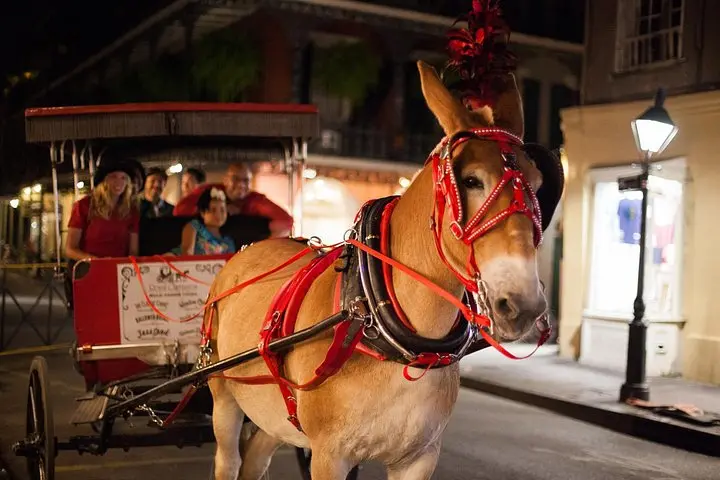
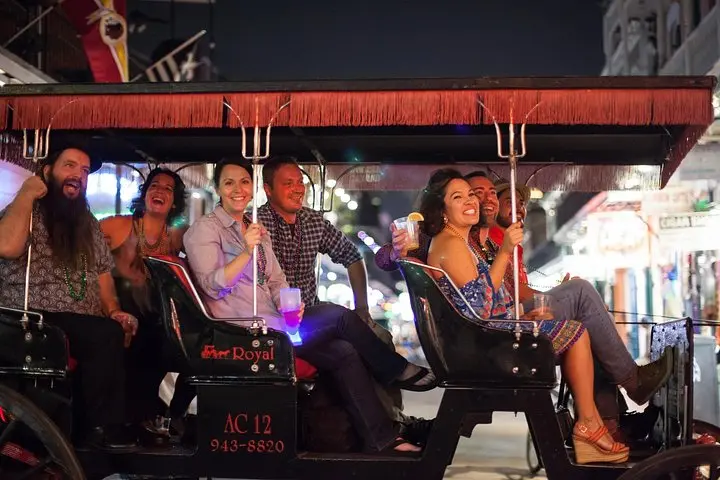
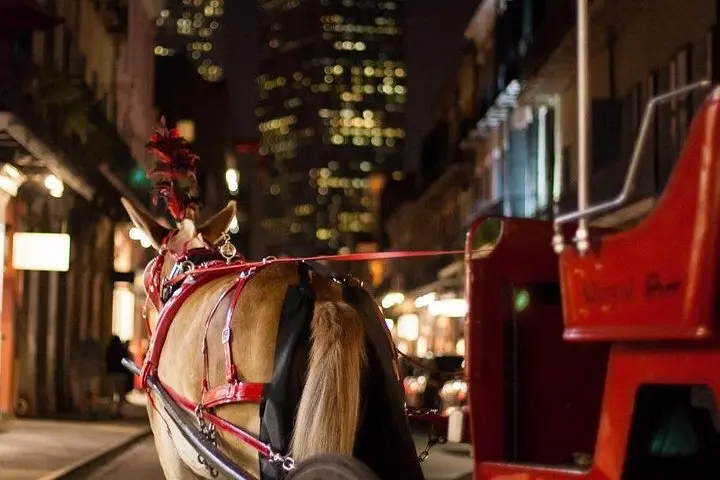
The carriage rocks forward with a soft clop of mules’ hooves, and the French Quarter slides into view like a film strip: wrought-iron balconies, gaslamp-orange beads of light, and the cathedral’s silhouette cut against a humid sky. You smell frying oil and jasmine, hear distant brass bands and the guide’s voice leaning into the hush—stories about fires, fever, and a city that refuses to forget its dead.
Verified experiences and guided adventures in the surrounding area.
Operated by Royal Carriages · New Orleans, Louisiana
The carriage rocks forward with a soft clop of mules’ hooves, and the French Quarter slides into view like a film strip: wrought-iron balconies, gaslamp-orange beads of light, and the cathedral’s silhouette cut against a humid sky. You smell frying oil and jasmine, hear distant brass bands and the guide’s voice leaning into the hush—stories about fires, fever, and a city that refuses to forget its dead.
This is a one-hour, mule-drawn carriage through the oldest streets of New Orleans, a slow-motion tour that pairs architectural detail with haunted folklore. The Royal Carriages drivers trace the Quarter’s arc from Jackson Square down Decatur, pausing at Napoleon House, St. Louis Cathedral, and the famous LaLaurie residence, translating archival tragedies into human-scale narratives. The tour doesn’t trade history for theatrics; instead it locates ghost stories within epidemics, fires, and 18th–19th century urban life that made the Quarter what it is.
Geologically, New Orleans sits on a living delta; the Mississippi’s sediment built the low ridge that became the city, and the risk of floods and hurricanes shaped both the architecture and the lore. Culturally, the French Quarter is a mash-up—Creole, Spanish, African, Caribbean—so the tour weaves in how religious practices, voodoo, and ritual funerary culture have influenced local beliefs about the afterlife.
Practicalities are straightforward: meet under the red umbrella at Jackson Square at least 15 minutes early for boarding. Tours run with small groups—maximum eight—so conversation is intimate and questions are welcome. Carriages are wheelchair-accessible with advance notice, and guides have years of experience balancing respect for real tragedies with the appetite for chills. The ride can continue in light rain; extreme weather cancels for safety.
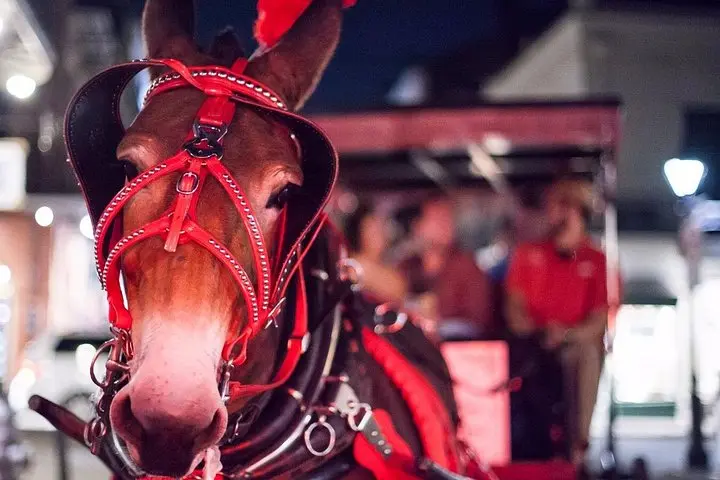
If you go, bring a light jacket for evening humidity that turns to cool breezes; keep cameras ready—carriage angles catch unexpected details—but respect the animals: don’t offer food, and follow handlers’ instructions for photos. Tipping is customary for both guide and mule handler; these are working animals with dedicated caretakers.
For travelers who want context, arrive early to watch the street life unfold around Jackson Square, or follow the ride with a late-night beignet and anecdote swapping. The haunted carriage is less about guaranteed apparitions and more about feeling the city’s long, complicated life press close—history, architecture, and the stories people tell to keep memory moving through the streets.
Meet at the Royal Carriages stand under the red umbrella at Jackson Square (700 Decatur Street); arrive 15 minutes early to check in.
Yes—carriages are wheelchair accessible but you must advise at time of booking so staff can prepare assistance.
The tour shares documented histories and local folklore; sightings are anecdotal—expect atmosphere and stories rather than guaranteed phenomena.
Tours operate in light rain; severe weather such as lightning or flooding will result in cancellation and a full refund if within the policy window.
Children are welcome but must be accompanied by an adult; infants and toddlers must remain on a guardian’s lap throughout the ride.
Tipping is customary and appreciated; the driver often manages both storytelling and animal care, so 10–20% or a small cash tip is common.
Royal Carriages operates guided outdoor trips and adventures with an emphasis on safety, stewardship, and memorable experiences.
The carriage rocks forward with a soft clop of mules’ hooves, and the French Quarter slides into view like a film strip: wrought-iron balconies, gaslamp-orange beads of light, and the cathedral’s silhouette cut against a humid sky. You smell frying oil and jasmine, hear distant brass bands and the guide’s voice leaning into the hush—stories about fires, fever, and a city that refuses to forget its dead.
The carriage rocks forward with a soft clop of mules’ hooves, and the French Quarter slides into view like a film strip: wrought-iron balconies, gaslamp-orange beads of light, and the cathedral’s silhouette cut against a humid sky. You smell frying oil and jasmine, hear distant brass bands and the guide’s voice leaning into the hush—stories about fires, fever, and a city that refuses to forget its dead.
This is a one-hour, mule-drawn carriage through the oldest streets of New Orleans, a slow-motion tour that pairs architectural detail with haunted folklore. The Royal Carriages drivers trace the Quarter’s arc from Jackson Square down Decatur, pausing at Napoleon House, St. Louis Cathedral, and the famous LaLaurie residence, translating archival tragedies into human-scale narratives. The tour doesn’t trade history for theatrics; instead it locates ghost stories within epidemics, fires, and 18th–19th century urban life that made the Quarter what it is.
Geologically, New Orleans sits on a living delta; the Mississippi’s sediment built the low ridge that became the city, and the risk of floods and hurricanes shaped both the architecture and the lore. Culturally, the French Quarter is a mash-up—Creole, Spanish, African, Caribbean—so the tour weaves in how religious practices, voodoo, and ritual funerary culture have influenced local beliefs about the afterlife.
Practicalities are straightforward: meet under the red umbrella at Jackson Square at least 15 minutes early for boarding. Tours run with small groups—maximum eight—so conversation is intimate and questions are welcome. Carriages are wheelchair-accessible with advance notice, and guides have years of experience balancing respect for real tragedies with the appetite for chills. The ride can continue in light rain; extreme weather cancels for safety.
If you go, bring a light jacket for evening humidity that turns to cool breezes; keep cameras ready—carriage angles catch unexpected details—but respect the animals: don’t offer food, and follow handlers’ instructions for photos. Tipping is customary for both guide and mule handler; these are working animals with dedicated caretakers.
For travelers who want context, arrive early to watch the street life unfold around Jackson Square, or follow the ride with a late-night beignet and anecdote swapping. The haunted carriage is less about guaranteed apparitions and more about feeling the city’s long, complicated life press close—history, architecture, and the stories people tell to keep memory moving through the streets.