THE ADVENTURE COLLECTIVE® · Independent discovery and booking for outdoor travel

Spend New Year’s in Erg Chebbi with camel rides, Berber tents, and dune-side music beneath an intense desert sky. This four-day circuit from Marrakech combines gorges, fossil quarries and a night camp under the stars.
Spend New Year’s in Erg Chebbi with camel rides, Berber tents, and dune-side music beneath an intense desert sky. This four-day circuit from Marrakech combines gorges, fossil quarries and a night camp under the stars.
The first night in Erg Chebbi arrives like a slow tide: gold dunes cooling, a camel caravan outlined against a sky where stars crowd so close they seem to breathe. You step from the khaima—a low Berber tent—onto wind-polished sand and the silence answers with a dry, papery hush.
Verified experiences and guided adventures in the surrounding area.
Operated by Tours Aladdina Viajeros · Merzouga, Drâa-Tafilalet
The first night in Erg Chebbi arrives like a slow tide: gold dunes cooling, a camel caravan outlined against a sky where stars crowd so close they seem to breathe. You step from the khaima—a low Berber tent—onto wind-polished sand and the silence answers with a dry, papery hush.
This four-day route threads Marrakech to Merzouga via the High Atlas, Dades and Todra gorges, and the fossil fields around Erfoud. Geologically, Erg Chebbi is a living dune sea built from Quaternary sediments and realigned by dominant northerly winds; culturally, the corridor is Berber country, where tea rituals, argan cooperatives and centuries-old kasbahs (Ait Ben Haddou on the return leg) anchor modern tourism to local life.
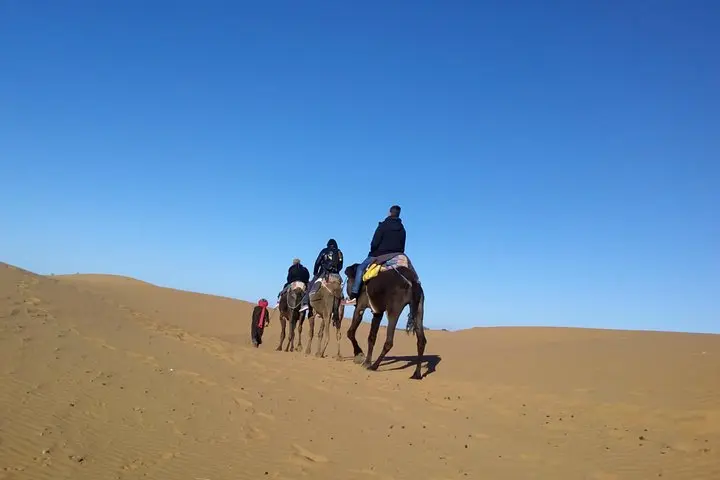
Expect close contact with nomadic hospitality: a camel ride at dusk, communal charcoal grills under palms in the Saf Saf oasis, and New Year’s rhythms of Gnawa and Berber music around a fire. Nights in the tent camp are cold and clear; days can swing hot and windy.
Practical points: the trip requires moderate fitness—short dune scrambles and a 500 m walk inside Todra Gorge—but no technical skills. Bring layered clothing, sun protection, at least 3 liters of water per day, and sturdy shoes for mixed sand and gravel. Plan for early starts to catch softer light on the dunes and reserve any mobility or health needs in advance (the operator flags cardiovascular limits and pregnancy restrictions). With basic preparation, this is a compact desert immersion: star-studded nights, tactile sand, and first‑hand Berber hospitality that lingers longer than the trip itself.
Most operators include hotel pickup in Marrakech and drive through the High Atlas via Tizi n'Tichka with stops at Ouarzazate and the Dades/Todra gorges, arriving in Merzouga on day two or three depending on itinerary.
Camel rides are low-impact but involve mounting and sitting on a swaying animal; riders should be able to step up and down and notify guides of any mobility limitations.
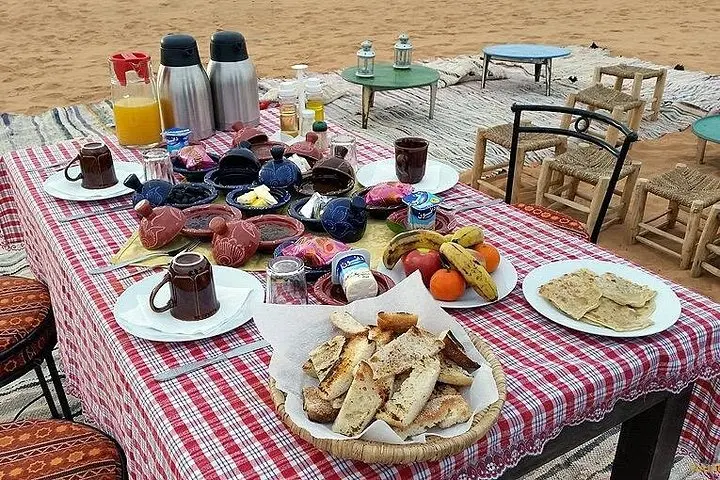
Overnight stays are in traditional khaimas (tents) on mattress bedding with basic facilities; expect shared ablution areas and local-style dinner around a communal fire.
Yes—winter brings cooler daytime temperatures and very cold nights, so warm sleeping layers are essential and daylight hours are shorter.
Tours Aladdina Viajeros operates guided outdoor trips and adventures with an emphasis on safety, stewardship, and memorable experiences.
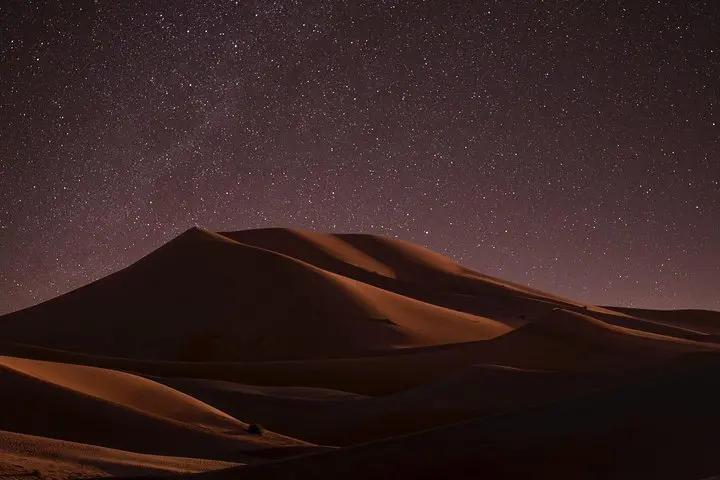
The first night in Erg Chebbi arrives like a slow tide: gold dunes cooling, a camel caravan outlined against a sky where stars crowd so close they seem to breathe. You step from the khaima—a low Berber tent—onto wind-polished sand and the silence answers with a dry, papery hush.
The first night in Erg Chebbi arrives like a slow tide: gold dunes cooling, a camel caravan outlined against a sky where stars crowd so close they seem to breathe. You step from the khaima—a low Berber tent—onto wind-polished sand and the silence answers with a dry, papery hush.
This four-day route threads Marrakech to Merzouga via the High Atlas, Dades and Todra gorges, and the fossil fields around Erfoud. Geologically, Erg Chebbi is a living dune sea built from Quaternary sediments and realigned by dominant northerly winds; culturally, the corridor is Berber country, where tea rituals, argan cooperatives and centuries-old kasbahs (Ait Ben Haddou on the return leg) anchor modern tourism to local life.
Expect close contact with nomadic hospitality: a camel ride at dusk, communal charcoal grills under palms in the Saf Saf oasis, and New Year’s rhythms of Gnawa and Berber music around a fire. Nights in the tent camp are cold and clear; days can swing hot and windy.
Practical points: the trip requires moderate fitness—short dune scrambles and a 500 m walk inside Todra Gorge—but no technical skills. Bring layered clothing, sun protection, at least 3 liters of water per day, and sturdy shoes for mixed sand and gravel. Plan for early starts to catch softer light on the dunes and reserve any mobility or health needs in advance (the operator flags cardiovascular limits and pregnancy restrictions). With basic preparation, this is a compact desert immersion: star-studded nights, tactile sand, and first‑hand Berber hospitality that lingers longer than the trip itself.