THE ADVENTURE COLLECTIVE® · Independent discovery and booking for outdoor travel

Spend a full day trading Newcastle’s streets for ocean spray, a summit that rewards a short climb, fresh seafood by the bay, and a three‑hour whale cruise past islands and migrating humpbacks. This tour stitches together Tomaree Head, a licensed lunch stop, a dedicated whale‑watching vessel, and a sunset lookover at the moving coastal dunes.
Spend a full day trading Newcastle’s streets for ocean spray, a summit that rewards a short climb, fresh seafood by the bay, and a three‑hour whale cruise past islands and migrating humpbacks. This tour stitches together Tomaree Head, a licensed lunch stop, a dedicated whale‑watching vessel, and a sunset lookover at the moving coastal dunes.
A cool wind off the Tasman Sea meets your face before the first step of the day — the road from Newcastle gives way to blue on all sides and the promise of movement: whales in transit, dunes that shift with the seasons, and a headland that climbs out of the bush like a lookout placed by the ocean itself.
Verified experiences and guided adventures in the surrounding area.
Operated by Newy Tour Co. · Nelson Bay, New South Wales
A cool wind off the Tasman Sea meets your face before the first step of the day — the road from Newcastle gives way to blue on all sides and the promise of movement: whales in transit, dunes that shift with the seasons, and a headland that climbs out of the bush like a lookout placed by the ocean itself.
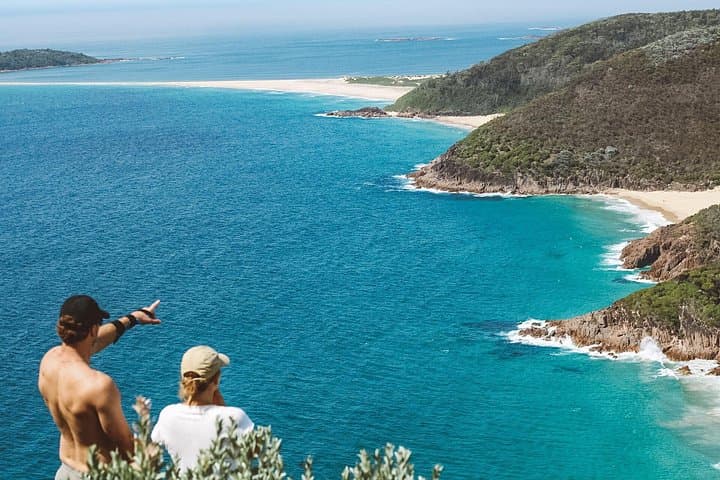
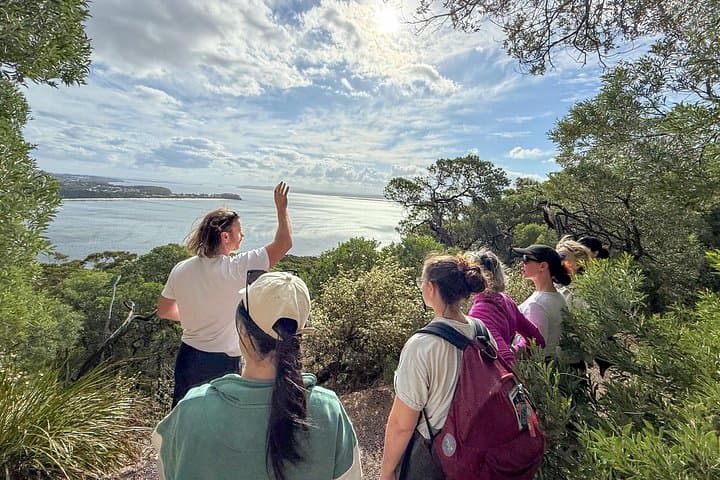
The day begins with the Tomaree Head Summit walk, a brisk ascent of roughly 161 meters that rewards hikers with sweeping, panoramic views of Port Stephens. From the north platform, islands and offshore nature reserves sit like punctuation marks on the horizon; from the south you can pick out Fingal Island and the Point Stephens Lighthouse. Tomaree’s ridge carries more than scenery: WWII gun emplacements and signal posts are tucked into rock, a reminder that this coastline has long been watched and defended.
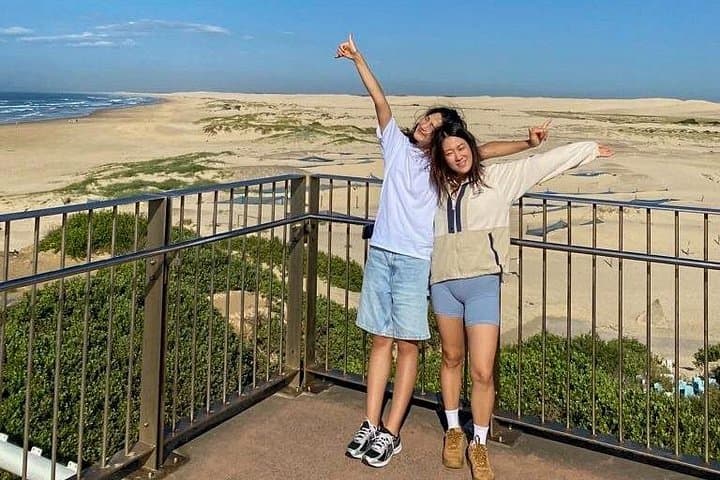
Geologically, Tomaree is coastal sandstone carved by wind and wave; nearby Stockton Beach holds vast mobile dunes of sand pushed by southerly winds, one of the largest moving coastal dune systems in the Southern Hemisphere. These dunes are part of the Worimi Conservation Lands, where Aboriginal and colonial histories intersect — the Worimi people have cared for this country for millennia, and the landscape still holds cultural sites and middens that speak to a living relationship with the sea.
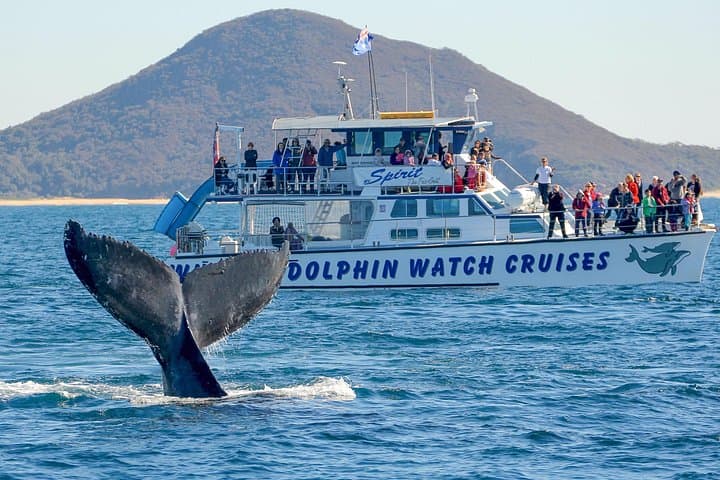
At midday the tour breaks for lunch at the Newcastle & Port Stephens Game Fish Club: seafood-heavy menus, generous portions, and water views that make the meal part of the map rather than just a pause. Then the boat ride begins. Aboard a comfortable vessel with indoor and deck space, you track the great northward migration of humpback whales (May–November). These animals are showy: pectoral slaps, breaches, and spy-hops are regular occurrences, while dolphins and fur seals inspect the boat with quick, curious passes.
Practicalities matter: the full program runs about 8–9 hours with a drive of roughly 1 hour 15 minutes each way from Newcastle. The summit walk is short but steep in places; an easier coastal walk is offered as an alternative. Lunch is at your own cost; beverages are available on board. Bring layered clothing, sun protection, and motion-sickness remedies if you’re prone to seasickness. Expect variable weather — wind amplifies chill on exposed decks and the summit.
For photographers, the best light is early morning on Tomaree or late afternoon at the dunes for golden side-light. Keep a telephoto ready for whales and a wide-angle for the headland and dunes. Above all, the day moves from land to sea and back again — it’s designed to show how the coast breathes, shifts, and passes through time.
The cruise lasts about 2.5–3 hours aboard a licensed vessel with indoor and outdoor viewing areas.
No—lunch at the Newcastle & Port Stephens Game Fish Club is at your own cost and offers seafood and non-seafood options.
The summit climb is short but can be steep with stairs and rocky steps; there is an easier coastal walk available as an alternative.
The operator targets the migration season (May–November) and sightings are common, but wildlife sightings cannot be guaranteed.
Yes—the tour includes pickup and drop-off across many Newcastle suburbs; you’ll provide your pickup address when booking.
The tour may be canceled for severe weather; cancelations for bad weather follow the supplier policy and you can receive a full refund if canceled at least 24 hours prior.
Newy Tour Co. operates guided outdoor trips and adventures with an emphasis on safety, stewardship, and memorable experiences.
A cool wind off the Tasman Sea meets your face before the first step of the day — the road from Newcastle gives way to blue on all sides and the promise of movement: whales in transit, dunes that shift with the seasons, and a headland that climbs out of the bush like a lookout placed by the ocean itself.
A cool wind off the Tasman Sea meets your face before the first step of the day — the road from Newcastle gives way to blue on all sides and the promise of movement: whales in transit, dunes that shift with the seasons, and a headland that climbs out of the bush like a lookout placed by the ocean itself.
The day begins with the Tomaree Head Summit walk, a brisk ascent of roughly 161 meters that rewards hikers with sweeping, panoramic views of Port Stephens. From the north platform, islands and offshore nature reserves sit like punctuation marks on the horizon; from the south you can pick out Fingal Island and the Point Stephens Lighthouse. Tomaree’s ridge carries more than scenery: WWII gun emplacements and signal posts are tucked into rock, a reminder that this coastline has long been watched and defended.
Geologically, Tomaree is coastal sandstone carved by wind and wave; nearby Stockton Beach holds vast mobile dunes of sand pushed by southerly winds, one of the largest moving coastal dune systems in the Southern Hemisphere. These dunes are part of the Worimi Conservation Lands, where Aboriginal and colonial histories intersect — the Worimi people have cared for this country for millennia, and the landscape still holds cultural sites and middens that speak to a living relationship with the sea.
At midday the tour breaks for lunch at the Newcastle & Port Stephens Game Fish Club: seafood-heavy menus, generous portions, and water views that make the meal part of the map rather than just a pause. Then the boat ride begins. Aboard a comfortable vessel with indoor and deck space, you track the great northward migration of humpback whales (May–November). These animals are showy: pectoral slaps, breaches, and spy-hops are regular occurrences, while dolphins and fur seals inspect the boat with quick, curious passes.
Practicalities matter: the full program runs about 8–9 hours with a drive of roughly 1 hour 15 minutes each way from Newcastle. The summit walk is short but steep in places; an easier coastal walk is offered as an alternative. Lunch is at your own cost; beverages are available on board. Bring layered clothing, sun protection, and motion-sickness remedies if you’re prone to seasickness. Expect variable weather — wind amplifies chill on exposed decks and the summit.
For photographers, the best light is early morning on Tomaree or late afternoon at the dunes for golden side-light. Keep a telephoto ready for whales and a wide-angle for the headland and dunes. Above all, the day moves from land to sea and back again — it’s designed to show how the coast breathes, shifts, and passes through time.