THE ADVENTURE COLLECTIVE® · Independent discovery and booking for outdoor travel

Spend a full day descending into the world’s largest intact caldera on a private, full-board safari. Expect concentrated wildlife viewing, Maasai cultural context, and a long but rewarding day of game drives across a dramatic volcanic basin.
Spend a full day descending into the world’s largest intact caldera on a private, full-board safari. Expect concentrated wildlife viewing, Maasai cultural context, and a long but rewarding day of game drives across a dramatic volcanic basin.
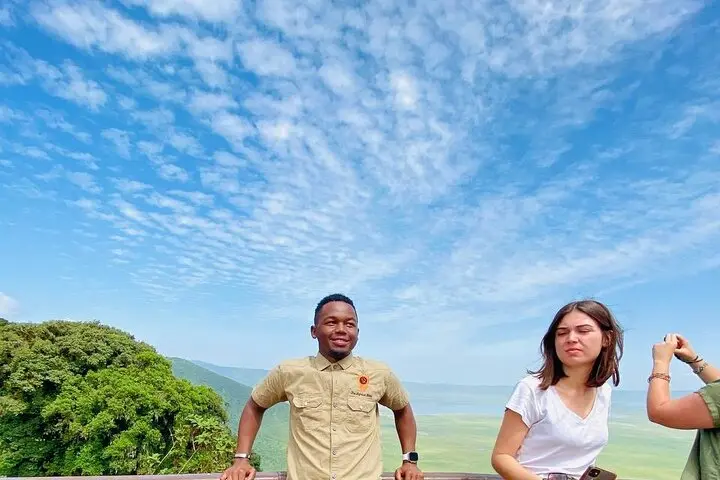
You climb the early light along a highland road and the rim appears—an enormous saucer of grass and forest folding inward. The land drops away in a single, visible descent: the Ngorongoro Crater, a living bowl where herds drift like currents and lions move with deliberate purpose.
Verified experiences and guided adventures in the surrounding area.
Operated by In-Africa Stay & Safaris · Ngorongoro Conservation Area, Arusha Region
You climb the early light along a highland road and the rim appears—an enormous saucer of grass and forest folding inward. The land drops away in a single, visible descent: the Ngorongoro Crater, a living bowl where herds drift like currents and lions move with deliberate purpose.
Geology here reads like deep time: an unbroken volcanic caldera roughly 20 km across and about 600–700 m deep, formed when an ancient volcano collapsed. Archaeology and human history are equally present—the broader Ngorongoro Conservation Area preserves pastoral Maasai traditions alongside dense wildlife populations, and nearby Olduvai Gorge records early hominid activity.
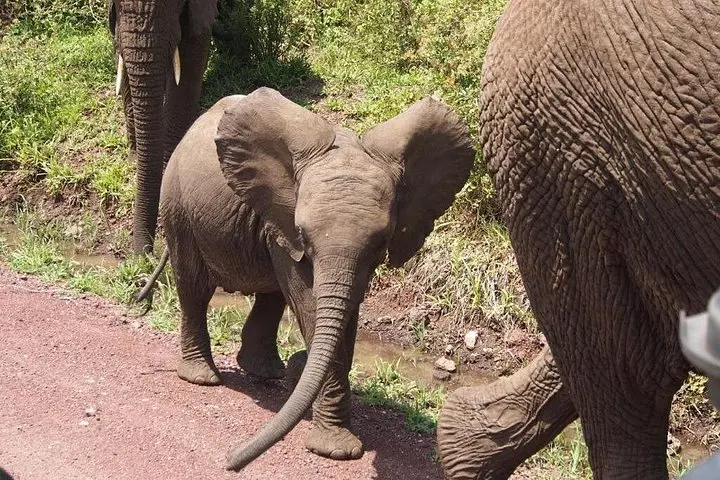
On a private full-board day tour expect long game drives on mixed gravel tracks, a descent from rim to floor (roughly 2,300 m rim elevation to about 1,700–1,800 m on the crater floor), and concentrated wildlife viewing—black rhino, lion, buffalo, wildebeest, zebra, and flocks of seasonal flamingos by the soda lakes. The Maasai still graze the outer highlands; guides will explain their role in park management and grazing zones.
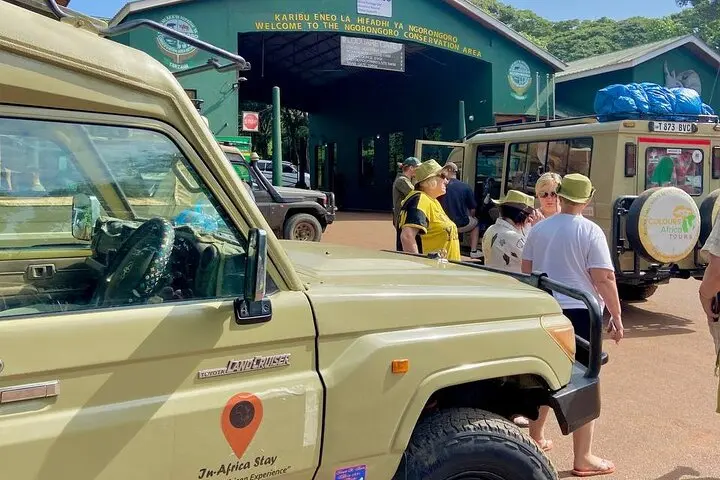
Practical notes: this is a full 12-hour day including transport—Arusha is ~3–4 hours’ drive; Karatu is closer. Bring layered clothing for morning chill and midday sun, binoculars and a camera with a long lens, and a reusable water bottle. Vehicles are the primary platform—respect park rules about exiting cars. Crater fees are required and typically included in operator pricing; lunch is usually a picnic onsite. Start early, keep patience for sightings, and let the crater’s scale set the pace.
Plan for roughly 3–4 hours each way from Arusha, depending on traffic and road conditions; Karatu is a shorter starting point (~1 hour).
Operators commonly include crater and conservation fees in the package—confirm before booking; this tour notes crater fees are covered.
Walking is restricted; most wildlife viewing is by vehicle; short guided walks are sometimes allowed in designated areas with permission.
The tour is listed as suitable for all fitness levels but infants must sit on an adult’s lap; discuss mobility concerns with the operator in advance.
In-Africa Stay & Safaris operates guided outdoor trips and adventures with an emphasis on safety, stewardship, and memorable experiences.
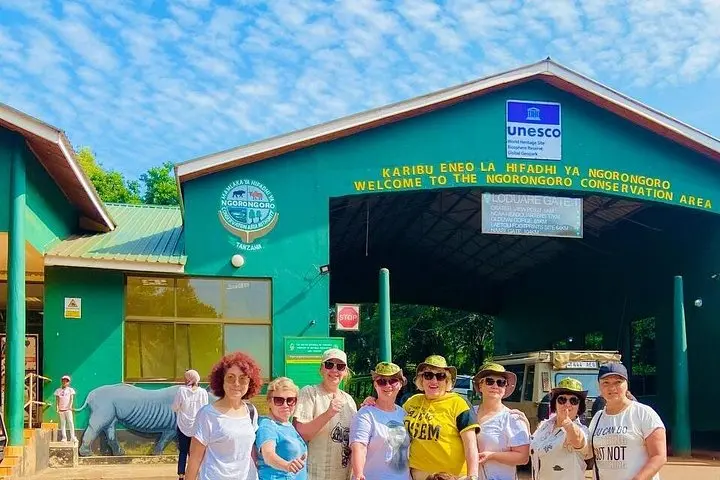
You climb the early light along a highland road and the rim appears—an enormous saucer of grass and forest folding inward. The land drops away in a single, visible descent: the Ngorongoro Crater, a living bowl where herds drift like currents and lions move with deliberate purpose.
You climb the early light along a highland road and the rim appears—an enormous saucer of grass and forest folding inward. The land drops away in a single, visible descent: the Ngorongoro Crater, a living bowl where herds drift like currents and lions move with deliberate purpose.
Geology here reads like deep time: an unbroken volcanic caldera roughly 20 km across and about 600–700 m deep, formed when an ancient volcano collapsed. Archaeology and human history are equally present—the broader Ngorongoro Conservation Area preserves pastoral Maasai traditions alongside dense wildlife populations, and nearby Olduvai Gorge records early hominid activity.
On a private full-board day tour expect long game drives on mixed gravel tracks, a descent from rim to floor (roughly 2,300 m rim elevation to about 1,700–1,800 m on the crater floor), and concentrated wildlife viewing—black rhino, lion, buffalo, wildebeest, zebra, and flocks of seasonal flamingos by the soda lakes. The Maasai still graze the outer highlands; guides will explain their role in park management and grazing zones.
Practical notes: this is a full 12-hour day including transport—Arusha is ~3–4 hours’ drive; Karatu is closer. Bring layered clothing for morning chill and midday sun, binoculars and a camera with a long lens, and a reusable water bottle. Vehicles are the primary platform—respect park rules about exiting cars. Crater fees are required and typically included in operator pricing; lunch is usually a picnic onsite. Start early, keep patience for sightings, and let the crater’s scale set the pace.