THE ADVENTURE COLLECTIVE® · Independent discovery and booking for outdoor travel

Descend into Ngorongoro’s immense caldera for a day of concentrated wildlife viewing and dramatic landscapes. This day trip pairs geological wonder with some of Africa’s densest big-game sightings—ideal for first-time safari-goers.
Descend into Ngorongoro’s immense caldera for a day of concentrated wildlife viewing and dramatic landscapes. This day trip pairs geological wonder with some of Africa’s densest big-game sightings—ideal for first-time safari-goers.
A pale sun climbs over highland grass, and the crater’s rim throws a long shadow across a bowl of grasses and shimmering dust. You drive along a rim road as the air cools, then descend into a landscape that seems to rearrange the idea of scale—flat, fertile floor, ringed by steep walls and dotted with grazing herds. Vehicles thread through families of elephants and bands of zebra; predators watch from nearer scrub.
Verified experiences and guided adventures in the surrounding area.
Operated by Euphoria Safaris · Ngorongoro, Arusha Region
A pale sun climbs over highland grass, and the crater’s rim throws a long shadow across a bowl of grasses and shimmering dust. You drive along a rim road as the air cools, then descend into a landscape that seems to rearrange the idea of scale—flat, fertile floor, ringed by steep walls and dotted with grazing herds. Vehicles thread through families of elephants and bands of zebra; predators watch from nearer scrub.
Geologically, Ngorongoro is the world’s largest intact volcanic caldera, formed when a giant volcano collapsed two to three million years ago. Its soil stayed rich, creating the richest concentration of large mammals on the planet. Culturally the surrounding highlands are Maasai country—pastoralists who still graze cattle on the crater rim and maintain strong ties to the land.
Expect a game-drive rhythm: long, slow scans interrupted by sudden activity where lions, buffalo, or rhinos appear. Drivers and guides work to put species in context—identification, behavior, and where rare black rhino are most often seen.
Practical notes: plan an early start from Arusha, bring layered sun protection and binoculars, and be ready for bumpy tracks and short walks. Lunch is typically a picnic; vehicles are usually air-conditioned but wildlife viewing requires patience and a steady camera hand. The area is managed as a conservation zone—follow guides’ instructions, keep windows partly closed near dangerous animals, and avoid littering. With basic planning, a day here gives concentrated, world-class safari viewing in a single, unforgettable bowl of biodiversity.
Typical tours are about 8 hours from Arusha, including travel time to and from the crater and multiple game-drive stops.
Ngorongoro has a high density of big game and often yields sightings of most Big Five species, but sightings cannot be guaranteed on any single day.
Yes; the crater is accessible year-round, though visibility and road conditions are best during the dry season (June–October). Heavy rains (March–May) can make some tracks rougher.
Most operators include a picnic lunch, bottled water, and air-conditioned vehicles; small comforts like charging ports and binoculars may also be provided.
Euphoria Safaris operates guided outdoor trips and adventures with an emphasis on safety, stewardship, and memorable experiences.
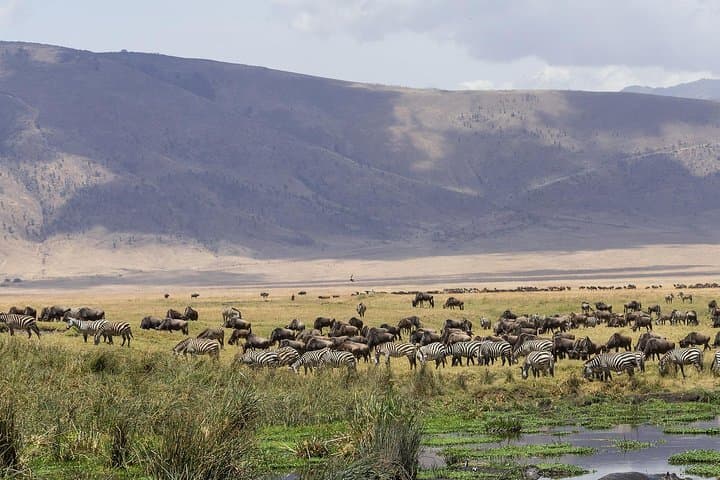


A pale sun climbs over highland grass, and the crater’s rim throws a long shadow across a bowl of grasses and shimmering dust. You drive along a rim road as the air cools, then descend into a landscape that seems to rearrange the idea of scale—flat, fertile floor, ringed by steep walls and dotted with grazing herds. Vehicles thread through families of elephants and bands of zebra; predators watch from nearer scrub.
A pale sun climbs over highland grass, and the crater’s rim throws a long shadow across a bowl of grasses and shimmering dust. You drive along a rim road as the air cools, then descend into a landscape that seems to rearrange the idea of scale—flat, fertile floor, ringed by steep walls and dotted with grazing herds. Vehicles thread through families of elephants and bands of zebra; predators watch from nearer scrub.
Geologically, Ngorongoro is the world’s largest intact volcanic caldera, formed when a giant volcano collapsed two to three million years ago. Its soil stayed rich, creating the richest concentration of large mammals on the planet. Culturally the surrounding highlands are Maasai country—pastoralists who still graze cattle on the crater rim and maintain strong ties to the land.
Expect a game-drive rhythm: long, slow scans interrupted by sudden activity where lions, buffalo, or rhinos appear. Drivers and guides work to put species in context—identification, behavior, and where rare black rhino are most often seen.
Practical notes: plan an early start from Arusha, bring layered sun protection and binoculars, and be ready for bumpy tracks and short walks. Lunch is typically a picnic; vehicles are usually air-conditioned but wildlife viewing requires patience and a steady camera hand. The area is managed as a conservation zone—follow guides’ instructions, keep windows partly closed near dangerous animals, and avoid littering. With basic planning, a day here gives concentrated, world-class safari viewing in a single, unforgettable bowl of biodiversity.