THE ADVENTURE COLLECTIVE® · Independent discovery and booking for outdoor travel

Descend 600 meters into a living caldera and spend a day tracking lions, rhinos and hippos across one of Africa’s most concentrated wildlife arenas. This full-day Ngorongoro tour blends geology, Maasai culture and guided game drives for travelers based in Arusha.
Descend 600 meters into a living caldera and spend a day tracking lions, rhinos and hippos across one of Africa’s most concentrated wildlife arenas. This full-day Ngorongoro tour blends geology, Maasai culture and guided game drives for travelers based in Arusha.
Dawn hits the rim and the plate-glass sky over Ngorongoro shivers with birdsong. The vehicle threads past acacia and coffee farms, then drops nearly 600 meters through mist and forest into the crater bowl — a seated world where grazing herds move like slow weather. Baboons chatter at the gate; hippos snort in hidden pools; a tower of wildebeest picks through morning grass.
Verified experiences and guided adventures in the surrounding area.
Operated by MERU SLOPES TOURS AND SAFARIS · Karatu, Arusha Region
Dawn hits the rim and the plate-glass sky over Ngorongoro shivers with birdsong. The vehicle threads past acacia and coffee farms, then drops nearly 600 meters through mist and forest into the crater bowl — a seated world where grazing herds move like slow weather. Baboons chatter at the gate; hippos snort in hidden pools; a tower of wildebeest picks through morning grass.
Geologically the crater is a collapsed volcanic caldera roughly 19 km across, formed millions of years ago and preserved as a distinct ecosystem. UNESCO protects its mosaic of highland forest, grassland, and shallow lakes; culturally the area is Maasai country, and pastoralist land-use shapes views across the rim.
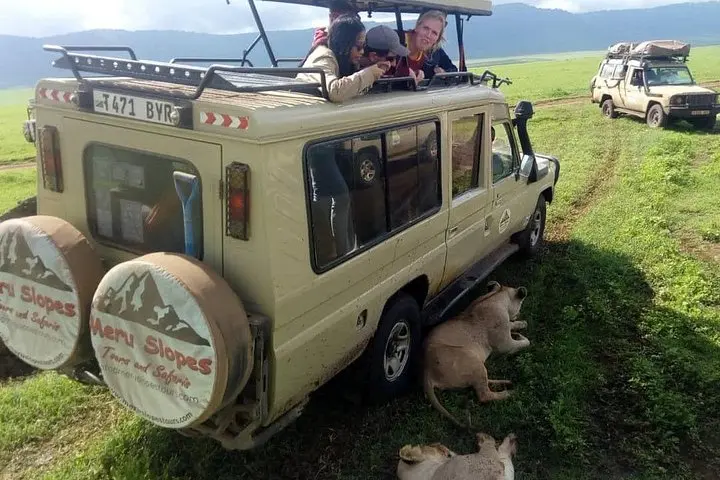
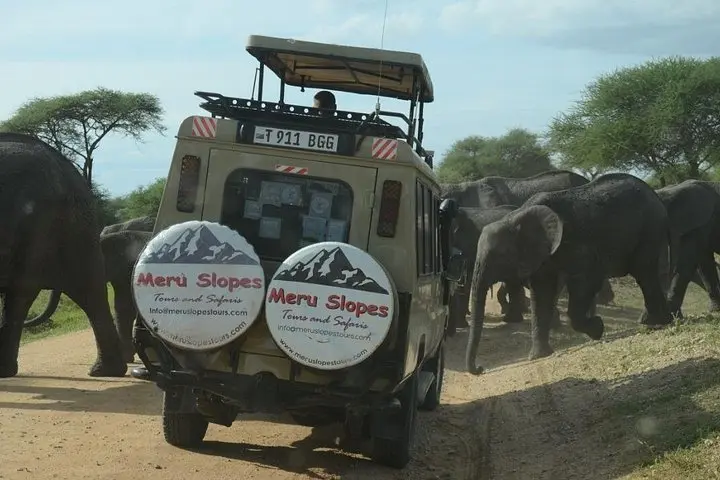
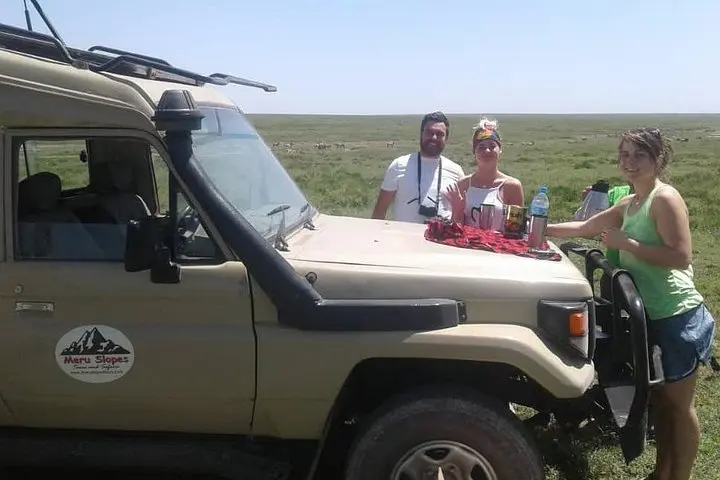
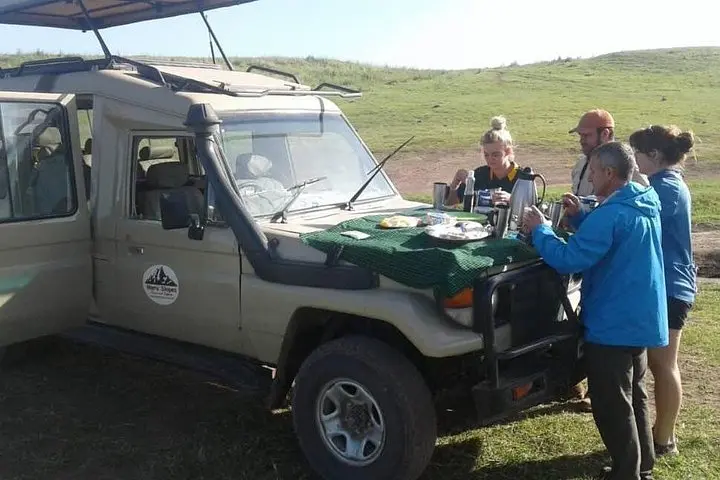
On a full-day tour you'll drive the crater floor, pull over for binocular moments, and eat picnic lunch under the Lerai forest canopy. Guides focus on sightings of the Big Five — lions, buffalo, elephant, rhino and leopard — while explaining animal behavior and seasonal movements.
Practical side: expect an 8-hour outing from Arusha with long stretches in a 4x4 and short, easy walks from vehicle to viewpoint. Wear layers for cool mornings and warmer afternoons, bring sun protection and binoculars, and keep to roads and guide instructions — animals are wild and unpredictable. Photography works best with a 200–400mm-equivalent lens; pack water and motion-sickness remedies if you’re prone.
This day trip is low on hiking but high on observation: plan early starts, respect permit and vehicle limits, and leave space for both wildlife and the Maasai communities who steward the crater.
The full-day tour is approximately 8 hours and typically includes hotel pickup in Arusha with round-trip transport and a crater-floor game drive.
This tour's inclusions list 'All Fees and Taxes' and typically covers park entry; confirm payment details at booking.
Ngorongoro hosts all Big Five species, but sightings depend on luck and season — guides increase chances with localized knowledge but sightings are never guaranteed.
The tour is vehicle-based and rated easy, but it's not recommended for travelers with spinal, serious cardiovascular conditions, or pregnant guests due to bumpy roads and long hours.
MERU SLOPES TOURS AND SAFARIS operates guided outdoor trips and adventures with an emphasis on safety, stewardship, and memorable experiences.
Dawn hits the rim and the plate-glass sky over Ngorongoro shivers with birdsong. The vehicle threads past acacia and coffee farms, then drops nearly 600 meters through mist and forest into the crater bowl — a seated world where grazing herds move like slow weather. Baboons chatter at the gate; hippos snort in hidden pools; a tower of wildebeest picks through morning grass.
Dawn hits the rim and the plate-glass sky over Ngorongoro shivers with birdsong. The vehicle threads past acacia and coffee farms, then drops nearly 600 meters through mist and forest into the crater bowl — a seated world where grazing herds move like slow weather. Baboons chatter at the gate; hippos snort in hidden pools; a tower of wildebeest picks through morning grass.
Geologically the crater is a collapsed volcanic caldera roughly 19 km across, formed millions of years ago and preserved as a distinct ecosystem. UNESCO protects its mosaic of highland forest, grassland, and shallow lakes; culturally the area is Maasai country, and pastoralist land-use shapes views across the rim.
On a full-day tour you'll drive the crater floor, pull over for binocular moments, and eat picnic lunch under the Lerai forest canopy. Guides focus on sightings of the Big Five — lions, buffalo, elephant, rhino and leopard — while explaining animal behavior and seasonal movements.
Practical side: expect an 8-hour outing from Arusha with long stretches in a 4x4 and short, easy walks from vehicle to viewpoint. Wear layers for cool mornings and warmer afternoons, bring sun protection and binoculars, and keep to roads and guide instructions — animals are wild and unpredictable. Photography works best with a 200–400mm-equivalent lens; pack water and motion-sickness remedies if you’re prone.
This day trip is low on hiking but high on observation: plan early starts, respect permit and vehicle limits, and leave space for both wildlife and the Maasai communities who steward the crater.