THE ADVENTURE COLLECTIVE® · Independent discovery and booking for outdoor travel

A five-hour private shore excursion from Nha Trang cruise port that stitches together Cham ruins, a colonial marine museum, a bustling lotus-inspired market, and windcarved coastal rocks — all with a private guide and included lunch.
A five-hour private shore excursion from Nha Trang cruise port that stitches together Cham ruins, a colonial marine museum, a bustling lotus-inspired market, and windcarved coastal rocks — all with a private guide and included lunch.
You step off the gangway into humid air tinged with diesel and salt; the harbor hisses, and a driver holds a sign with your name. In five hours you will move from colonial facades to red-brick Cham ruins, from a bustling lotus-shaped market to wind-sculpted rock outcrops where the ocean insists on being noticed. This is a shore excursion built for pace and presence — enough time to feel the city’s rhythm without missing your ship.
Verified experiences and guided adventures in the surrounding area.
Operated by Vietnam Explorer · Nha Trang, Khanh Hoa
You step off the gangway into humid air tinged with diesel and salt; the harbor hisses, and a driver holds a sign with your name. In five hours you will move from colonial facades to red-brick Cham ruins, from a bustling lotus-shaped market to wind-sculpted rock outcrops where the ocean insists on being noticed. This is a shore excursion built for pace and presence — enough time to feel the city’s rhythm without missing your ship.
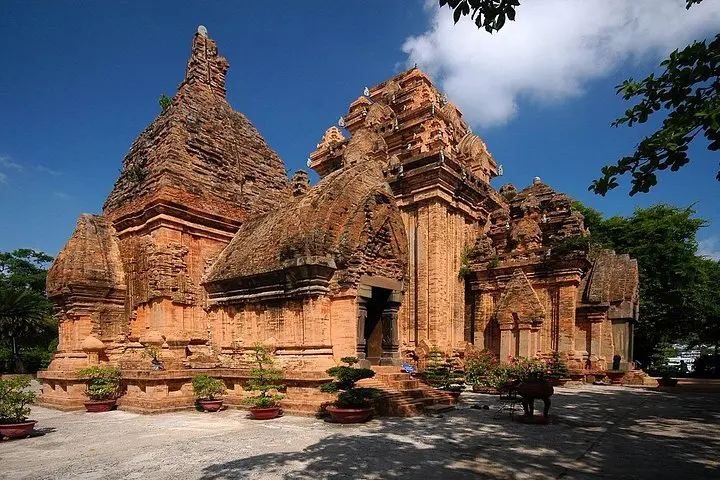
Begin where the city’s history is most visible: Po Nagar Cham Towers, built between the 7th and 12th centuries, where sculpted stone and sacred fire mark a civilization that once ruled the central Vietnamese coast. The guide pauses on the temple steps and explains Cham cosmology as fishermen mend nets below — an immediate lesson in layers of use and belief.
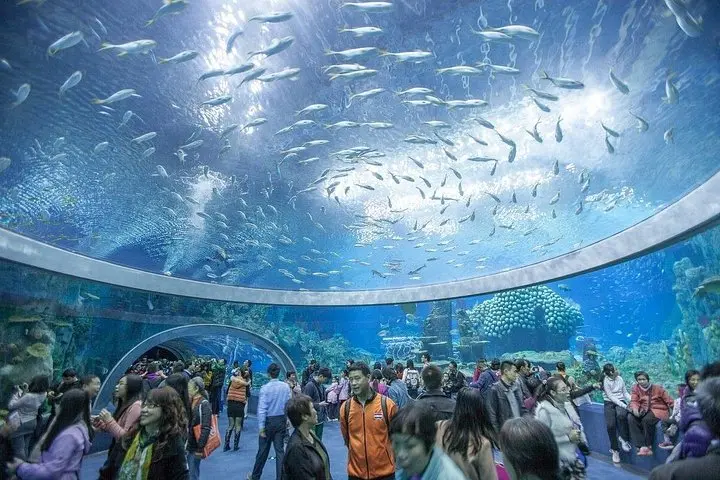
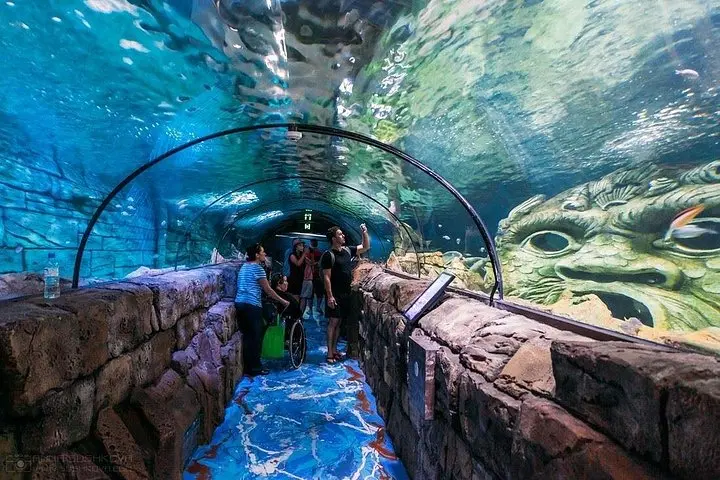
Across town, a French colonial building remade into the Institute of Oceanography offers a different kind of story: glass tanks and preserved specimen cabinets that speak to Vietnam’s maritime science and the colonial era’s penchant for cataloging the natural world. Nearby, ceramic-tiled roofs and the lotus-spired silhouette of the local market push you into a sensory economy: heaps of starfruit, clattering plastic bowls, and vendors calling out prices.
A short drive delivers you to Hon Chong, a cluster of granite boulders where the sea gnaws at the coastline and wind arranges the clouds into long sails. The rocks make a deliberate foreground for photographs and a raw reminder of the region’s geology: coastal uplift and wave action chiseling the shoreline.
Throughout the tour, small cultural beats keep the day intimate — a lacquerware stall, a roadside coffee punctuated by condensed milk, a temple incense smoke that seems to linger in conversation. Lunch at a local restaurant is included, offering light seafood and regional staples that balance spice and sweetness in ways that clarify both geography and history.
Practically: the tour is private and paced for cruise passengers, with hotel or port pickup and a firm return window to meet ship departure checks. Expect walking on paved streets and temple steps; wear comfortable shoes, bring sunscreen and modest clothing for sacred sites, and carry small local currency for market purchases and tips.
This 5-hour loop is not a deep dive into any single site; rather, it’s a curated cross-section of Nha Trang — geological edges, Cham spirituality, French-influenced institutions, and a market that still trades in both goods and stories. For visitors with limited time onshore, it’s an efficient, sensory-driven way to leave the harbor having seen how past and present argue politely along Vietnam’s southern shore.
Yes — port pickup and drop-off are included; the guide will meet you at the port entrance with a sign.
Admissions to the itinerary sites listed (Po Nagar, Cham temple, Hon Chong, market, Oceanography Museum) are included in the tour price as noted in the listing.
Lunch at a local restaurant is included; most places can accommodate vegetarian requests if informed in advance.
Expect short to moderate walking stretches — about 1–2 miles total around sites and markets, mostly on paved surfaces.
This is a private tour and offers flexibility; communicate priorities with your guide to adjust time allocation when possible.
Yes — the tour is family-friendly, though infants must sit on laps and some sites have steps that require caution.
Vietnam Explorer operates guided outdoor trips and adventures with an emphasis on safety, stewardship, and memorable experiences.
You step off the gangway into humid air tinged with diesel and salt; the harbor hisses, and a driver holds a sign with your name. In five hours you will move from colonial facades to red-brick Cham ruins, from a bustling lotus-shaped market to wind-sculpted rock outcrops where the ocean insists on being noticed. This is a shore excursion built for pace and presence — enough time to feel the city’s rhythm without missing your ship.
You step off the gangway into humid air tinged with diesel and salt; the harbor hisses, and a driver holds a sign with your name. In five hours you will move from colonial facades to red-brick Cham ruins, from a bustling lotus-shaped market to wind-sculpted rock outcrops where the ocean insists on being noticed. This is a shore excursion built for pace and presence — enough time to feel the city’s rhythm without missing your ship.
Begin where the city’s history is most visible: Po Nagar Cham Towers, built between the 7th and 12th centuries, where sculpted stone and sacred fire mark a civilization that once ruled the central Vietnamese coast. The guide pauses on the temple steps and explains Cham cosmology as fishermen mend nets below — an immediate lesson in layers of use and belief.
Across town, a French colonial building remade into the Institute of Oceanography offers a different kind of story: glass tanks and preserved specimen cabinets that speak to Vietnam’s maritime science and the colonial era’s penchant for cataloging the natural world. Nearby, ceramic-tiled roofs and the lotus-spired silhouette of the local market push you into a sensory economy: heaps of starfruit, clattering plastic bowls, and vendors calling out prices.
A short drive delivers you to Hon Chong, a cluster of granite boulders where the sea gnaws at the coastline and wind arranges the clouds into long sails. The rocks make a deliberate foreground for photographs and a raw reminder of the region’s geology: coastal uplift and wave action chiseling the shoreline.
Throughout the tour, small cultural beats keep the day intimate — a lacquerware stall, a roadside coffee punctuated by condensed milk, a temple incense smoke that seems to linger in conversation. Lunch at a local restaurant is included, offering light seafood and regional staples that balance spice and sweetness in ways that clarify both geography and history.
Practically: the tour is private and paced for cruise passengers, with hotel or port pickup and a firm return window to meet ship departure checks. Expect walking on paved streets and temple steps; wear comfortable shoes, bring sunscreen and modest clothing for sacred sites, and carry small local currency for market purchases and tips.
This 5-hour loop is not a deep dive into any single site; rather, it’s a curated cross-section of Nha Trang — geological edges, Cham spirituality, French-influenced institutions, and a market that still trades in both goods and stories. For visitors with limited time onshore, it’s an efficient, sensory-driven way to leave the harbor having seen how past and present argue politely along Vietnam’s southern shore.