THE ADVENTURE COLLECTIVE® · Independent discovery and booking for outdoor travel

Experience Pashupatinath’s night aarti: a three-hour guided walk along the Bagmati ghats where priests perform evening rituals to honor Lord Shiva. This tour combines cultural insight with close-up access to a living religious tradition.
Experience Pashupatinath’s night aarti: a three-hour guided walk along the Bagmati ghats where priests perform evening rituals to honor Lord Shiva. This tour combines cultural insight with close-up access to a living religious tradition.
Twilight tightens over the Bagmati and the temple's lamps begin to puncture the dark — the night aarti at Pashupatinath is immediate and intimate. Visitors move along stone ghats as priests chant, oil lamps sway, and river reflections flicker; the air carries incense, burning camphor and the cadence of repeated mantras.
Verified experiences and guided adventures in the surrounding area.
Operated by Peak to Peak Tours and Treks Pvt Ltd · Kathmandu, Bagmati Province
Twilight tightens over the Bagmati and the temple's lamps begin to puncture the dark — the night aarti at Pashupatinath is immediate and intimate. Visitors move along stone ghats as priests chant, oil lamps sway, and river reflections flicker; the air carries incense, burning camphor and the cadence of repeated mantras.
Pashupatinath is one of South Asia’s oldest and most venerated Shiva shrines, part of a UNESCO World Heritage complex that has drawn pilgrims for centuries. The temple sits on the Bagmati River, whose seasonal flows have shaped the steep banks and the layered ghats where rituals and cremations occur. The experience blends living religious practice with Kathmandu’s long cultural history — you'll see priestly families, mendicants and local worshippers participating in procedures passed down generations.
Local insight: evening aarti is communal and performative; it's as much about listening and observing as it is about photography. The eastern riverbank offers quieter vantage points and the adjacent Guhyeshwari shrine provides a complementary, less-crowded glimpse into Nepalese devotion.
Practical guidance: the tour lasts about three hours and is paced for all fitness levels, but bring modest clothing that covers shoulders and knees, comfortable shoes for uneven stone, and a small flashlight for steps. Photography is allowed in public areas but avoid photographing cremation sites or individuals without permission. Arrive early to secure a good view, stay respectful of rituals, and expect crowds; the river’s current seems to pull both light and focus downriver as the ceremony proceeds.
Photography is permitted in many public areas, but avoid photographing cremation ceremonies and ask individuals before taking portraits; follow your guide’s directions.
Dress modestly — cover shoulders and knees; remove shoes where indicated and avoid revealing or overly casual attire.
The tour is rated easy, but the ghats have uneven steps and limited railing; infants can be in strollers but caregivers should be prepared to carry children on stairs.
Tours typically include pickup by air-conditioned vehicle; confirm local pickup point and arrival time when booking to ensure timely access before the ceremony begins.
Peak to Peak Tours and Treks Pvt Ltd operates guided outdoor trips and adventures with an emphasis on safety, stewardship, and memorable experiences.
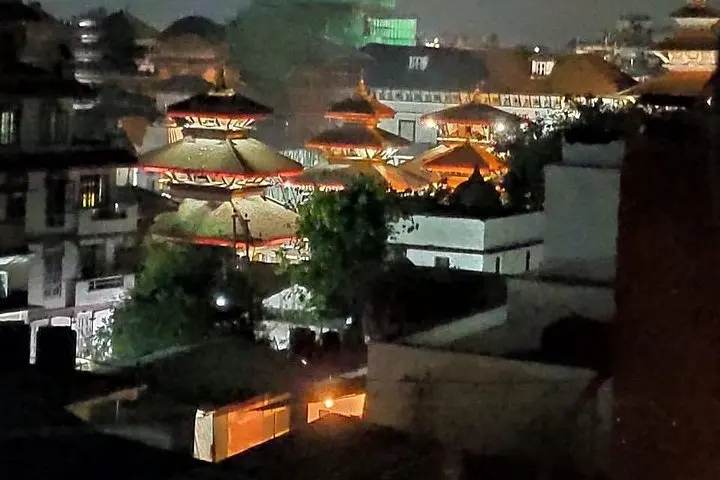
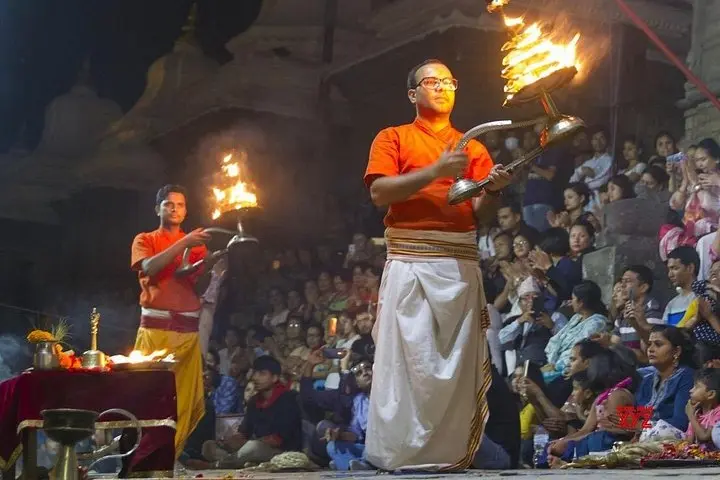
Twilight tightens over the Bagmati and the temple's lamps begin to puncture the dark — the night aarti at Pashupatinath is immediate and intimate. Visitors move along stone ghats as priests chant, oil lamps sway, and river reflections flicker; the air carries incense, burning camphor and the cadence of repeated mantras.
Twilight tightens over the Bagmati and the temple's lamps begin to puncture the dark — the night aarti at Pashupatinath is immediate and intimate. Visitors move along stone ghats as priests chant, oil lamps sway, and river reflections flicker; the air carries incense, burning camphor and the cadence of repeated mantras.
Pashupatinath is one of South Asia’s oldest and most venerated Shiva shrines, part of a UNESCO World Heritage complex that has drawn pilgrims for centuries. The temple sits on the Bagmati River, whose seasonal flows have shaped the steep banks and the layered ghats where rituals and cremations occur. The experience blends living religious practice with Kathmandu’s long cultural history — you'll see priestly families, mendicants and local worshippers participating in procedures passed down generations.
Local insight: evening aarti is communal and performative; it's as much about listening and observing as it is about photography. The eastern riverbank offers quieter vantage points and the adjacent Guhyeshwari shrine provides a complementary, less-crowded glimpse into Nepalese devotion.
Practical guidance: the tour lasts about three hours and is paced for all fitness levels, but bring modest clothing that covers shoulders and knees, comfortable shoes for uneven stone, and a small flashlight for steps. Photography is allowed in public areas but avoid photographing cremation sites or individuals without permission. Arrive early to secure a good view, stay respectful of rituals, and expect crowds; the river’s current seems to pull both light and focus downriver as the ceremony proceeds.