THE ADVENTURE COLLECTIVE® · Independent discovery and booking for outdoor travel

Move slowly: a guided night tour near Puerto Morelos puts you face-to-face with frogs, geckos, snakes and iguanas in karst forest and cenote fringe. Learn nocturnal behavior, basic herping ethics, and how local geology shapes these fragile habitats.
Move slowly: a guided night tour near Puerto Morelos puts you face-to-face with frogs, geckos, snakes and iguanas in karst forest and cenote fringe. Learn nocturnal behavior, basic herping ethics, and how local geology shapes these fragile habitats.
Humid night presses close as headlamps carve paths through the understory near Puerto Morelos. The guide’s beam finds tiny mud-slick hollows, a chorus of frogs answers, and a lone gecko freezes on a palm trunk—this is the tempo of a herping night tour.
Verified experiences and guided adventures in the surrounding area.
Operated by Contoy Excursions · Puerto Morelos, Quintana Roo
Humid night presses close as headlamps carve paths through the understory near Puerto Morelos. The guide’s beam finds tiny mud-slick hollows, a chorus of frogs answers, and a lone gecko freezes on a palm trunk—this is the tempo of a herping night tour.
The Yucatán’s flat limestone plain drains into cenotes and mangrove channels; rainwater carved caverns that became freshwater pockets and ideal amphibian refuges. Mayan communities revered cenotes for life and ritual, and the same karst geology that shaped ancient wells now holds frog choruses and rattling lizards. Local naturalists blend that cultural context with nocturnal tracking techniques suited to mangrove fringe, secondary forest, and cenote edges.
Expect a slow, methodical walk of trails, muddy banks and short bushwhacks over roots and limestone bedrock. Guides spotlight eyelash vipers, tree frogs, and spiny-tailed iguanas while explaining breeding calls, microhabitats, and how artificial light affects behavior. Photography is possible but requires low-light settings and patience.
Practicalities: tours run about 5–6 hours including pickup; bring a reliable headlamp (red filter preferred), closed-toe shoes with traction, long pants and light rain shell, and insect repellent. Hydration and steady footing matter; avoid touching animals and keep noise low. The best sightings happen after dusk when temperatures drop and amphibians emerge—arrive with charged electronics, spare batteries, and respect for sensitive cenote aquifers. This is a nocturnal, educational outing that favors curiosity, quiet, and moderate fitness.
Expect close encounters, patient observation windows, and a chance to learn local conservation practices from expert guides.
The tour is small-group and educational, but requires steady footing and moderate fitness; check age and mobility guidelines and ask about alternative pick-up options.
Yes—guides pause for photos, but low-light conditions demand a camera with good high-ISO performance or long-exposure technique and minimal flash use.
No—ethical herping tours prohibit handling and feeding to protect animal health and natural behavior; guides teach identification and observation techniques instead.
Tours may be canceled or rescheduled in heavy rain or unsafe conditions; check the cancellation policy and bring a light rain jacket and waterproof bag for electronics.
Contoy Excursions operates guided outdoor trips and adventures with an emphasis on safety, stewardship, and memorable experiences.


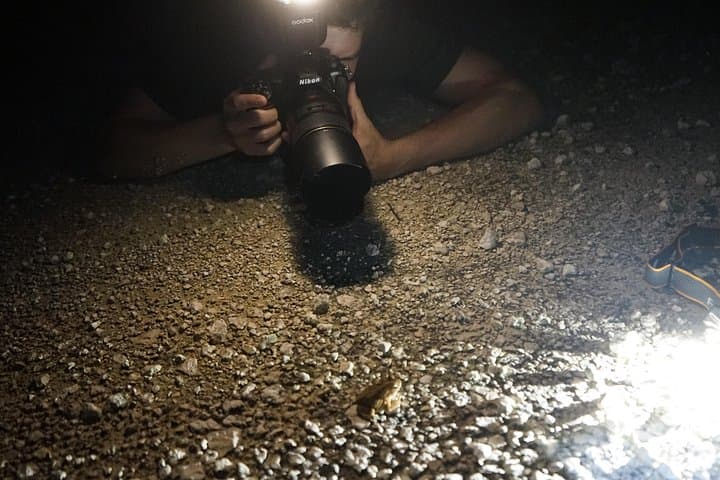

Humid night presses close as headlamps carve paths through the understory near Puerto Morelos. The guide’s beam finds tiny mud-slick hollows, a chorus of frogs answers, and a lone gecko freezes on a palm trunk—this is the tempo of a herping night tour.
Humid night presses close as headlamps carve paths through the understory near Puerto Morelos. The guide’s beam finds tiny mud-slick hollows, a chorus of frogs answers, and a lone gecko freezes on a palm trunk—this is the tempo of a herping night tour.
The Yucatán’s flat limestone plain drains into cenotes and mangrove channels; rainwater carved caverns that became freshwater pockets and ideal amphibian refuges. Mayan communities revered cenotes for life and ritual, and the same karst geology that shaped ancient wells now holds frog choruses and rattling lizards. Local naturalists blend that cultural context with nocturnal tracking techniques suited to mangrove fringe, secondary forest, and cenote edges.
Expect a slow, methodical walk of trails, muddy banks and short bushwhacks over roots and limestone bedrock. Guides spotlight eyelash vipers, tree frogs, and spiny-tailed iguanas while explaining breeding calls, microhabitats, and how artificial light affects behavior. Photography is possible but requires low-light settings and patience.
Practicalities: tours run about 5–6 hours including pickup; bring a reliable headlamp (red filter preferred), closed-toe shoes with traction, long pants and light rain shell, and insect repellent. Hydration and steady footing matter; avoid touching animals and keep noise low. The best sightings happen after dusk when temperatures drop and amphibians emerge—arrive with charged electronics, spare batteries, and respect for sensitive cenote aquifers. This is a nocturnal, educational outing that favors curiosity, quiet, and moderate fitness.
Expect close encounters, patient observation windows, and a chance to learn local conservation practices from expert guides.