THE ADVENTURE COLLECTIVE® · Independent discovery and booking for outdoor travel

Step into Monteverde’s forest after dark with a guided 2‑hour walk along Finca Lantana’s trails. Expect close-up nocturnal wildlife sightings, compact trails, and expert local interpretation that brings frogs, sloths and arachnids into focus.
Step into Monteverde’s forest after dark with a guided 2‑hour walk along Finca Lantana’s trails. Expect close-up nocturnal wildlife sightings, compact trails, and expert local interpretation that brings frogs, sloths and arachnids into focus.
A low beam cuts a silver line through damp leaves as the forest exhales around you — frogs answering in clicks, an olingo slipping like a shadow in the canopy, the path damp under careful steps. The 2‑hour night hike at Finca Lantana guides small groups onto purpose-built trails through a biological corridor that links private reserves with Monteverde’s protected cloud forest.
Verified experiences and guided adventures in the surrounding area.
Operated by Cloud Forest wildlife tour · Monteverde (Santa Elena), Puntarenas
A low beam cuts a silver line through damp leaves as the forest exhales around you — frogs answering in clicks, an olingo slipping like a shadow in the canopy, the path damp under careful steps. The 2‑hour night hike at Finca Lantana guides small groups onto purpose-built trails through a biological corridor that links private reserves with Monteverde’s protected cloud forest.
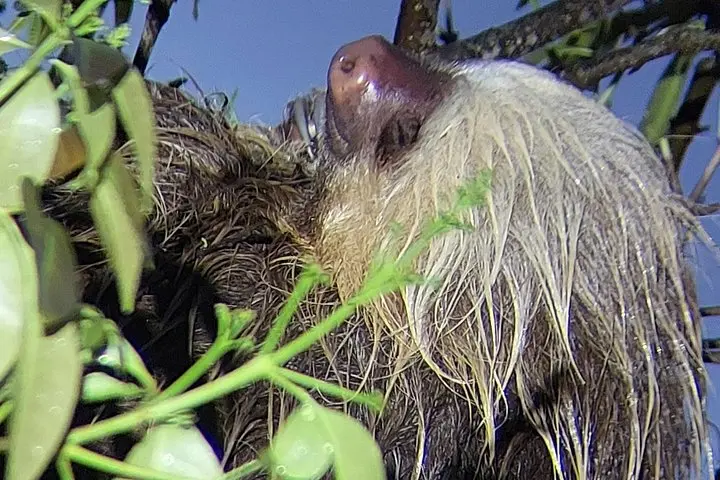
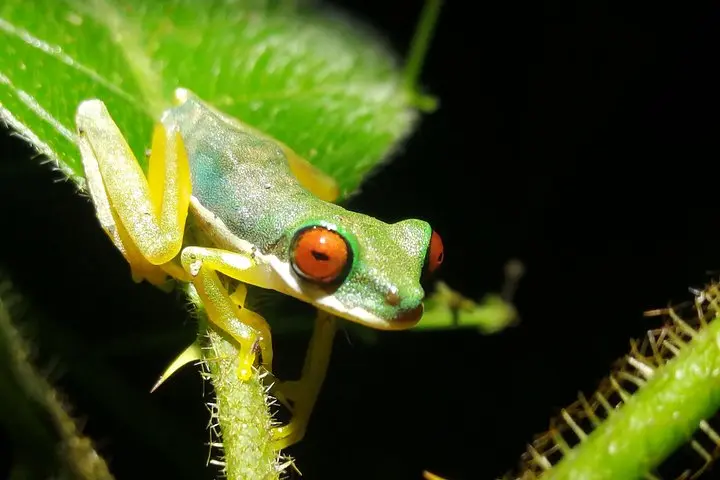
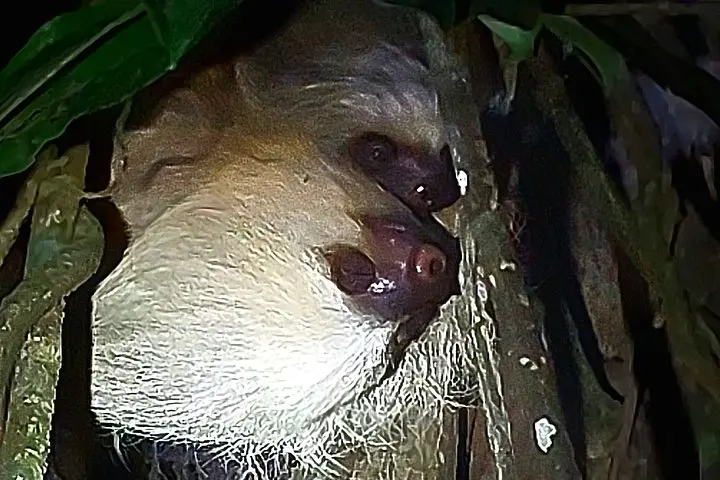
The Monteverde area rose to international attention in the mid‑20th century as settlers and scientists began documenting its unusual cloud forest ecology; the land here is volcanic in origin, with steep ridges, nutrient‑rich soils and microclimates that drive high levels of endemism. Local culture blends Costa Rican rural life with a community of conservationists and guides trained to read nocturnal signs — the calls of glass frogs, the slow movements of two‑toed sloths, the glint of tarantulas on low branches.
Practically, the route is designed for accessibility: compacted, narrow trails with roots and occasional steps, illuminated by guide lanterns and flashlights. Guides supply light and ecological context, pointing out species identification cues, mating choruses, and safe viewing distances. Expect cooler, wetter air than daytime trails; progress is deliberate, slow and quiet.
Bring a reliable headlamp as backup, waterproof layers for sudden showers, closed‑toe shoes with grip, and insect repellent. Move softly, keep conversation low and follow your guide’s directions — night wildlife is best observed when it’s undisturbed. The walk rewards patience: small, unexpected encounters that reveal the forest’s active night life.
The tour runs about 2–2.5 hours; guides move deliberately and slowly to maximize wildlife viewing and minimize disturbance.
Children are welcome but must be supervised; service animals are allowed but pets are not recommended because of wildlife sensitivity.
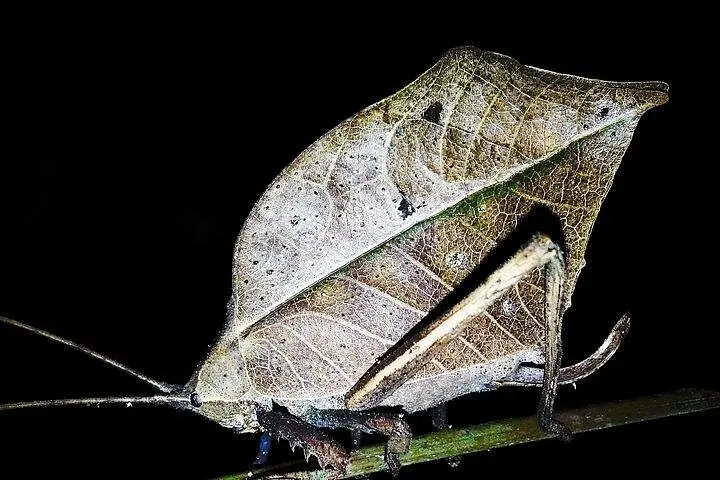
Sightings can’t be guaranteed because animals are wild, but guides know hotspots and behavior patterns and commonly locate glass frogs, tarantulas, sloths and nocturnal mammals.
Trails are designed to be easy but include narrow, uneven sections and roots; travelers with limited mobility should contact the operator to discuss suitability.
Cloud Forest wildlife tour operates guided outdoor trips and adventures with an emphasis on safety, stewardship, and memorable experiences.
A low beam cuts a silver line through damp leaves as the forest exhales around you — frogs answering in clicks, an olingo slipping like a shadow in the canopy, the path damp under careful steps. The 2‑hour night hike at Finca Lantana guides small groups onto purpose-built trails through a biological corridor that links private reserves with Monteverde’s protected cloud forest.
A low beam cuts a silver line through damp leaves as the forest exhales around you — frogs answering in clicks, an olingo slipping like a shadow in the canopy, the path damp under careful steps. The 2‑hour night hike at Finca Lantana guides small groups onto purpose-built trails through a biological corridor that links private reserves with Monteverde’s protected cloud forest.
The Monteverde area rose to international attention in the mid‑20th century as settlers and scientists began documenting its unusual cloud forest ecology; the land here is volcanic in origin, with steep ridges, nutrient‑rich soils and microclimates that drive high levels of endemism. Local culture blends Costa Rican rural life with a community of conservationists and guides trained to read nocturnal signs — the calls of glass frogs, the slow movements of two‑toed sloths, the glint of tarantulas on low branches.
Practically, the route is designed for accessibility: compacted, narrow trails with roots and occasional steps, illuminated by guide lanterns and flashlights. Guides supply light and ecological context, pointing out species identification cues, mating choruses, and safe viewing distances. Expect cooler, wetter air than daytime trails; progress is deliberate, slow and quiet.
Bring a reliable headlamp as backup, waterproof layers for sudden showers, closed‑toe shoes with grip, and insect repellent. Move softly, keep conversation low and follow your guide’s directions — night wildlife is best observed when it’s undisturbed. The walk rewards patience: small, unexpected encounters that reveal the forest’s active night life.