THE ADVENTURE COLLECTIVE® · Independent discovery and booking for outdoor travel

Walk the rainforest where jaguar conservation began: a guided night hike in Cockscomb Basin brings nocturnal mammals, insects, and forest sounds into sharp focus. Practical guidance and local expertise make this a safe, illuminating way to experience Belize’s jungle after dark.
Walk the rainforest where jaguar conservation began: a guided night hike in Cockscomb Basin brings nocturnal mammals, insects, and forest sounds into sharp focus. Practical guidance and local expertise make this a safe, illuminating way to experience Belize’s jungle after dark.
A humid darkness presses close as you step off the trailhead, headlamp cutting a narrow cone through fern and buttress root. In Cockscomb Basin, night is when the rainforest rearranges its senses: tree frogs reply from the understory, insects stitch a continuous percussion, and small mammals move like whispers between trunks.
Verified experiences and guided adventures in the surrounding area.
Operated by Bucket List Tours & Transfers Belize · Maya Centre, Stann Creek District
A humid darkness presses close as you step off the trailhead, headlamp cutting a narrow cone through fern and buttress root. In Cockscomb Basin, night is when the rainforest rearranges its senses: tree frogs reply from the understory, insects stitch a continuous percussion, and small mammals move like whispers between trunks.
The sanctuary, established in the 1980s as the world’s first jaguar preserve, protects lowland tropical forest on the Maya Mountains’ eastern slopes. Geology here is folded limestone and sandstone, carved by seasonal creeks that swell during rains. Culturally, the area lies within the traditional territory of Maya-speaking communities and is managed with conservation and eco-tourism in mind.
On a guided night hike you’ll learn to read tracks, spot reflective eyes with a red-filtered beam, and identify calls that mean something important to a field biologist. Jaguars are rarely seen—this is about presence more than guarantee—but kinkajous, coatimundis, opossums and agoutis are common companions. Guides emphasize quiet, small-group movement and low-impact observation.
Practicalities: expect uneven, often muddy trails, roots and low branches; bring a reliable headlamp, closed-toe footwear with good tread, long sleeves and insect protection. Plan for 3–4 hours total, including transport from Hopkins Village. Weather changes quickly—pack a light rain layer—and leave no trace: in a dark forest, every discarded item draws animals and alters behavior. A night hike here is a careful negotiation with the wild—equal parts patience, attentiveness, and respect.
Sightings are extremely rare; the preserve focuses on habitat protection—most guests see smaller nocturnal mammals and signs like tracks and scat.
Older, attentive children used to hiking may do well; check age limits with the operator and consider fitness and night-time apprehension.
Snacks and water are typically provided, but if you have dietary needs bring your own light snacks; avoid scented foods that attract wildlife.
Tours may run in light rain but can be canceled for heavy rain or unsafe conditions—confirm cancellation and refund policies when booking.
Bucket List Tours & Transfers Belize operates guided outdoor trips and adventures with an emphasis on safety, stewardship, and memorable experiences.
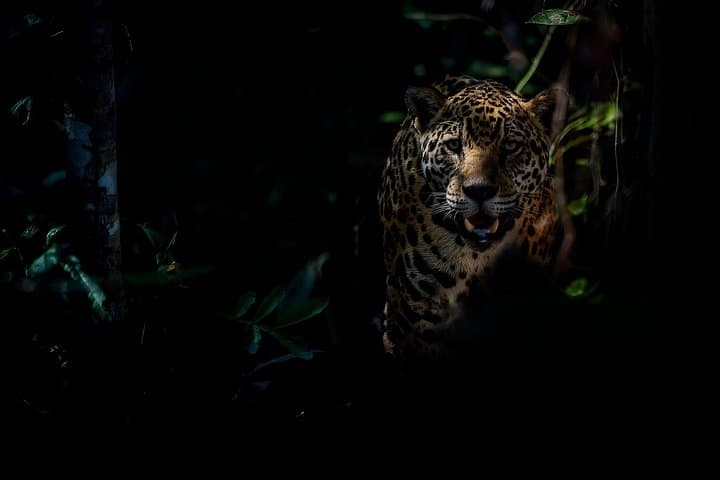


A humid darkness presses close as you step off the trailhead, headlamp cutting a narrow cone through fern and buttress root. In Cockscomb Basin, night is when the rainforest rearranges its senses: tree frogs reply from the understory, insects stitch a continuous percussion, and small mammals move like whispers between trunks.
A humid darkness presses close as you step off the trailhead, headlamp cutting a narrow cone through fern and buttress root. In Cockscomb Basin, night is when the rainforest rearranges its senses: tree frogs reply from the understory, insects stitch a continuous percussion, and small mammals move like whispers between trunks.
The sanctuary, established in the 1980s as the world’s first jaguar preserve, protects lowland tropical forest on the Maya Mountains’ eastern slopes. Geology here is folded limestone and sandstone, carved by seasonal creeks that swell during rains. Culturally, the area lies within the traditional territory of Maya-speaking communities and is managed with conservation and eco-tourism in mind.
On a guided night hike you’ll learn to read tracks, spot reflective eyes with a red-filtered beam, and identify calls that mean something important to a field biologist. Jaguars are rarely seen—this is about presence more than guarantee—but kinkajous, coatimundis, opossums and agoutis are common companions. Guides emphasize quiet, small-group movement and low-impact observation.
Practicalities: expect uneven, often muddy trails, roots and low branches; bring a reliable headlamp, closed-toe footwear with good tread, long sleeves and insect protection. Plan for 3–4 hours total, including transport from Hopkins Village. Weather changes quickly—pack a light rain layer—and leave no trace: in a dark forest, every discarded item draws animals and alters behavior. A night hike here is a careful negotiation with the wild—equal parts patience, attentiveness, and respect.