THE ADVENTURE COLLECTIVE® · Independent discovery and booking for outdoor travel

Walk a short, easy trail through Miyako Island’s night jungle, then raise your head to one of Japan’s clearest Milky Way displays. This guided 90‑minute combo tour blends natural history, local lore, and prime stargazing—ideal for anyone comfortable on uneven ground in low light.
Walk a short, easy trail through Miyako Island’s night jungle, then raise your head to one of Japan’s clearest Milky Way displays. This guided 90‑minute combo tour blends natural history, local lore, and prime stargazing—ideal for anyone comfortable on uneven ground in low light.
A warm wind threads through the leaves as you step off the shoreline and into the island’s nocturnal green. Torches cut shallow cones through the dark; insects answer like a distant chorus. Above, the Milky Way spills bright and narrow across a sky free of city glow, and the jungle seems to lean in, curious.
Verified experiences and guided adventures in the surrounding area.
Operated by オースリーシュノーケル宮古島 · Miyakojima, Okinawa
A warm wind threads through the leaves as you step off the shoreline and into the island’s nocturnal green. Torches cut shallow cones through the dark; insects answer like a distant chorus. Above, the Milky Way spills bright and narrow across a sky free of city glow, and the jungle seems to lean in, curious.
Miyako Island sits on a raised coral platform—low, limestone coastlines carved by waves and time—and its human story is Ryukyuan: islanders with distinct language, fishing traditions, and a quiet relationship with sea and sky. Geologically simple but visually dramatic, the karst pavement and pocket beaches create intimate pockets of forest where night life is concentrated. Locals have long used dark nights for navigation and myth; today, the island’s clear skies and limited urban light make it one of Japan’s best places to see the Milky Way.
The guided night walk pairs short, flat trails through coastal scrub and low jungle with extended pauses for stargazing. Expect soft sand, exposed roots and brief sections of compacted limestone—no climbs, but uneven footing and low light. Guides point out constellations, explain local star lore, and highlight nocturnal fauna.
Practical guidance: book around new moon and a clear forecast, wear closed-toe shoes and mosquito protection, and bring a headlamp with a red filter to preserve night vision. There are no restrooms on-site and tours cancel in high wind or rough seas, so plan an indoor backup. For photographers, a tripod and wide-aperture lens will capture the Milky Way best—otherwise, simply stand still and let the island’s night do the work.
Yes—target age range is roughly 3–65; kids can join but should be supervised and steady on uneven ground.
Yes, organizers include a flashlight, but a personal headlamp with red light is recommended for convenience.
Tours are canceled for high winds, rough seas, or heavy cloud that compromise safety or visibility; check cancellation and refund policies when booking.
Visibility depends on moon phase and cloud cover—new moon, clear nights offer the best chance, but light and weather can still limit views.
オースリーシュノーケル宮古島 operates guided outdoor trips and adventures with an emphasis on safety, stewardship, and memorable experiences.


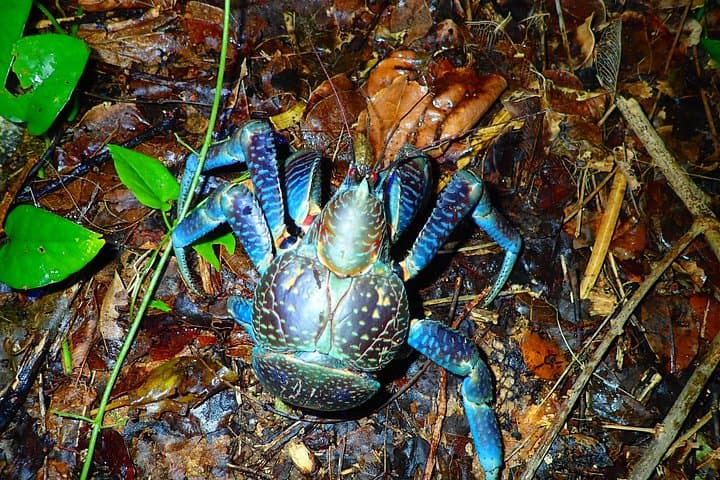

A warm wind threads through the leaves as you step off the shoreline and into the island’s nocturnal green. Torches cut shallow cones through the dark; insects answer like a distant chorus. Above, the Milky Way spills bright and narrow across a sky free of city glow, and the jungle seems to lean in, curious.
A warm wind threads through the leaves as you step off the shoreline and into the island’s nocturnal green. Torches cut shallow cones through the dark; insects answer like a distant chorus. Above, the Milky Way spills bright and narrow across a sky free of city glow, and the jungle seems to lean in, curious.
Miyako Island sits on a raised coral platform—low, limestone coastlines carved by waves and time—and its human story is Ryukyuan: islanders with distinct language, fishing traditions, and a quiet relationship with sea and sky. Geologically simple but visually dramatic, the karst pavement and pocket beaches create intimate pockets of forest where night life is concentrated. Locals have long used dark nights for navigation and myth; today, the island’s clear skies and limited urban light make it one of Japan’s best places to see the Milky Way.
The guided night walk pairs short, flat trails through coastal scrub and low jungle with extended pauses for stargazing. Expect soft sand, exposed roots and brief sections of compacted limestone—no climbs, but uneven footing and low light. Guides point out constellations, explain local star lore, and highlight nocturnal fauna.
Practical guidance: book around new moon and a clear forecast, wear closed-toe shoes and mosquito protection, and bring a headlamp with a red filter to preserve night vision. There are no restrooms on-site and tours cancel in high wind or rough seas, so plan an indoor backup. For photographers, a tripod and wide-aperture lens will capture the Milky Way best—otherwise, simply stand still and let the island’s night do the work.