THE ADVENTURE COLLECTIVE® · Independent discovery and booking for outdoor travel

Paddle through mangrove channels to witness Laguna Grande’s famed bioluminescence on a guided night kayak tour from Fajardo. Small groups, stable doubles, and experienced guides make this two-hour eco-adventure accessible for first-time kayakers.
Paddle through mangrove channels to witness Laguna Grande’s famed bioluminescence on a guided night kayak tour from Fajardo. Small groups, stable doubles, and experienced guides make this two-hour eco-adventure accessible for first-time kayakers.
A low-slung moon frees the sky and the mangroves close behind you as your paddle breaks the black water into a shower of blue sparks. Guided double kayaks slip through narrow channels of Laguna Grande, the mangrove roots pressing like ribs along the current while insects and nocturnal birds call from the canopy.
Verified experiences and guided adventures in the surrounding area.
Operated by Peniel Access Eco Tours · Fajardo, Puerto Rico
A low-slung moon frees the sky and the mangroves close behind you as your paddle breaks the black water into a shower of blue sparks. Guided double kayaks slip through narrow channels of Laguna Grande, the mangrove roots pressing like ribs along the current while insects and nocturnal birds call from the canopy.
Laguna Grande sits at the tip of Fajardo on Puerto Rico’s east coast. The glow you see comes from dinoflagellates — microscopic plankton that flash when disturbed — a biological phenomenon cataloged by scientists and protected by local conservation efforts. The bay formed where coastal limestone and sand created a shallow lagoon sheltered by thick mangrove forest; those same roots trap nutrients and create the calm, warm water that supports the bioluminescence.
Locals treat the bay as both scientific wonder and cultural landmark: fishing communities have long relied on these waters, and nearby Las Cabezas de San Juan Reserve preserves the island’s lighthouse, salt flats and coastal ecology.
Practicalities: tours depart from Kayaking Village (Road 987 Km 6.8) after sunset and run about two hours. Guides provide a short paddling lesson and lead small groups in stable doubles; flotation devices are mandatory and participants must be able to swim. To protect the display, avoid flash photography and don’t touch or stir the water unnecessarily. Bring a change of clothes, reef-safe sunscreen for daytime, and a dry bag for your phone.
The experience is sensory and deliberate: the mangroves seem to breathe around you, the water dares you to move, and the glow rewards quiet curiosity—best enjoyed on a moonless night with an experienced guide.
No. Tours include a short lesson and use stable tandem kayaks, but you should be comfortable in the water and able to follow a guide’s instructions.
The operator advertises attainable adaptations; contact them in advance to arrange accessibility needs and confirm launch logistics.
Avoid repeatedly stirring or dunking hands—brief contact won’t harm you, but excessive disturbance and sunscreen contamination can degrade the phenomenon over time.
Tours may cancel for bad weather or insufficient travelers; full refunds are typically available if canceled at least 24 hours prior, and also if the operator cancels due to conditions.
Peniel Access Eco Tours operates guided outdoor trips and adventures with an emphasis on safety, stewardship, and memorable experiences.
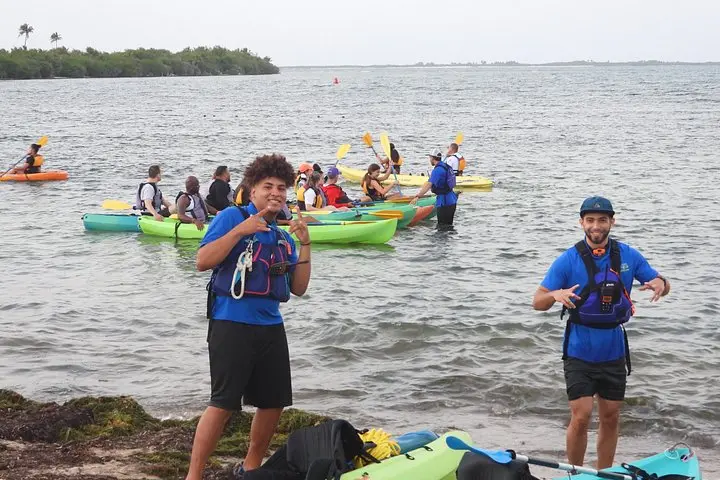
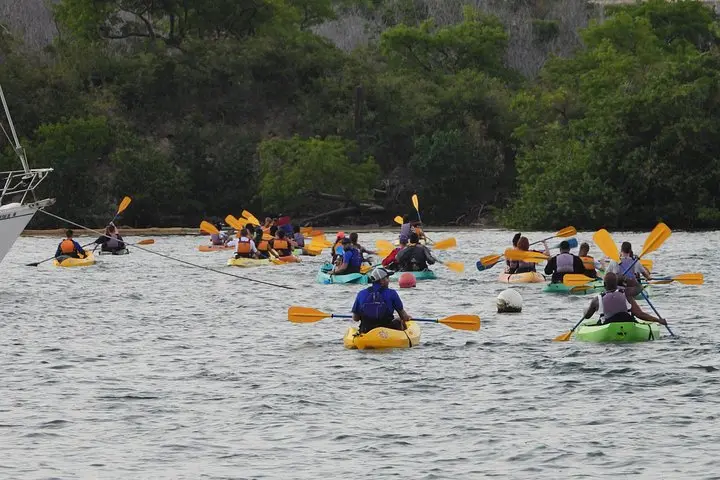
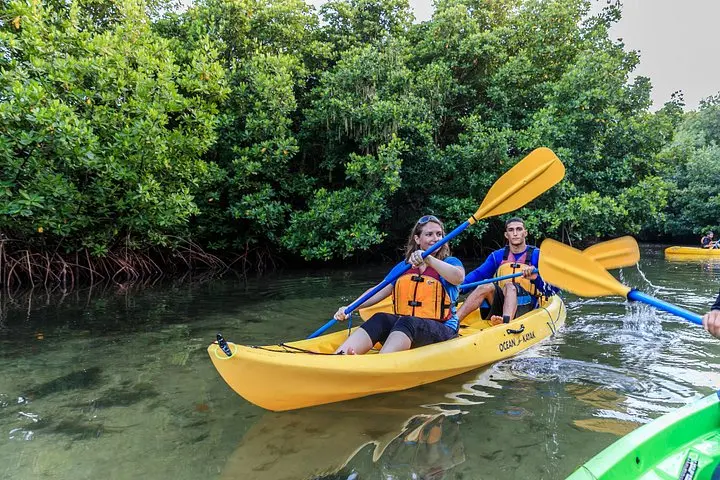
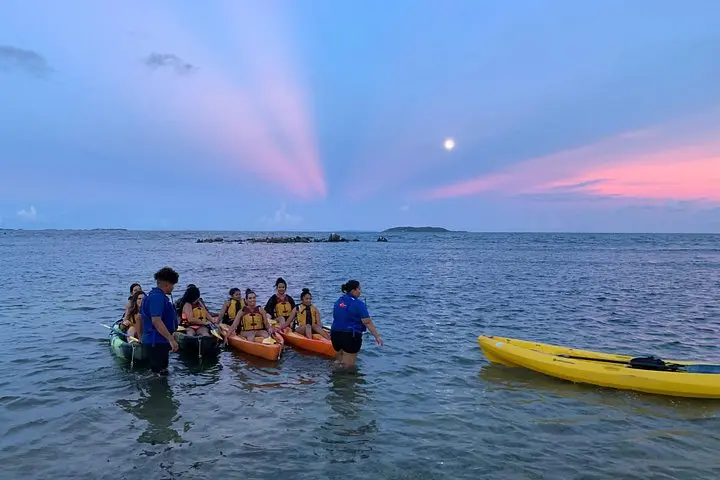
A low-slung moon frees the sky and the mangroves close behind you as your paddle breaks the black water into a shower of blue sparks. Guided double kayaks slip through narrow channels of Laguna Grande, the mangrove roots pressing like ribs along the current while insects and nocturnal birds call from the canopy.
A low-slung moon frees the sky and the mangroves close behind you as your paddle breaks the black water into a shower of blue sparks. Guided double kayaks slip through narrow channels of Laguna Grande, the mangrove roots pressing like ribs along the current while insects and nocturnal birds call from the canopy.
Laguna Grande sits at the tip of Fajardo on Puerto Rico’s east coast. The glow you see comes from dinoflagellates — microscopic plankton that flash when disturbed — a biological phenomenon cataloged by scientists and protected by local conservation efforts. The bay formed where coastal limestone and sand created a shallow lagoon sheltered by thick mangrove forest; those same roots trap nutrients and create the calm, warm water that supports the bioluminescence.
Locals treat the bay as both scientific wonder and cultural landmark: fishing communities have long relied on these waters, and nearby Las Cabezas de San Juan Reserve preserves the island’s lighthouse, salt flats and coastal ecology.
Practicalities: tours depart from Kayaking Village (Road 987 Km 6.8) after sunset and run about two hours. Guides provide a short paddling lesson and lead small groups in stable doubles; flotation devices are mandatory and participants must be able to swim. To protect the display, avoid flash photography and don’t touch or stir the water unnecessarily. Bring a change of clothes, reef-safe sunscreen for daytime, and a dry bag for your phone.
The experience is sensory and deliberate: the mangroves seem to breathe around you, the water dares you to move, and the glow rewards quiet curiosity—best enjoyed on a moonless night with an experienced guide.