THE ADVENTURE COLLECTIVE® · Independent discovery and booking for outdoor travel

Experience a low-light wildlife walk in Sinharaja—guided searches for the slow-moving, wide-eyed slender loris. Learn what to expect and how to prepare for this focused nocturnal encounter.
Experience a low-light wildlife walk in Sinharaja—guided searches for the slow-moving, wide-eyed slender loris. Learn what to expect and how to prepare for this focused nocturnal encounter.
The forest breathes differently after dusk: trunks become dark columns, leaves whisper, and small eyes begin to reflect the beam of a red-filtered torch. On a guided night walk around Sam Popham’s Arboretum at the edge of Sinharaja, you move quietly along raised roots and narrow paths while naturalists scan the canopy for the slow, deliberate silhouette of the slender loris.
Verified experiences and guided adventures in the surrounding area.
Operated by Lakpura LLC · Deniyaya, Southern Province
The forest breathes differently after dusk: trunks become dark columns, leaves whisper, and small eyes begin to reflect the beam of a red-filtered torch. On a guided night walk around Sam Popham’s Arboretum at the edge of Sinharaja, you move quietly along raised roots and narrow paths while naturalists scan the canopy for the slow, deliberate silhouette of the slender loris.
Sinharaja is one of Sri Lanka’s last tracts of primary lowland rainforest and a designated UNESCO World Heritage Site. The geology here—ancient gneiss and schist folded into steep ridges—feeds a dense, humid understory where endemic plants support a high diversity of insects, birds and mammals. Cultural touches are close by: small tea and cinnamon holdings, and villages where local trackers and guides have passed knowledge of nocturnal species down through generations.
Expect focused, low-light searching: guides use red light to avoid startling animals and only switch on white lights to show a sighting. Besides slender lorises you may spot mouse deer, civets and nocturnal birds; the forest can be unexpectedly vocal with frogs and insects.
Practical guidance: the walk is roughly three hours on uneven, sometimes muddy trails—sturdy, grippy footwear and insect protection matter. Move slowly, follow your guide’s instructions about light and noise, and keep cameras on silent mode. Carry water, a small headlamp with a red filter, and a light rain shell in case of tropical showers. This is a quiet wildlife encounter: patience and respect will increase your chances of seeing the loris.
Sightings depend on season and conditions, but guided walks led by experienced naturalists significantly increase your chances through targeted searching and local knowledge.
No—flash and white light can stress lorises and terminate an encounter; guides will advise when low-light photos are appropriate using red filters.
Children with good trail discipline can join, but the tour requires quiet, steady movement—check age limits with the operator and supervise closely.
Walks may continue in light rain; heavy rain can cancel for safety and wildlife welfare—bring a packable rain shell and confirm cancellation policy when booking.
Lakpura LLC operates guided outdoor trips and adventures with an emphasis on safety, stewardship, and memorable experiences.
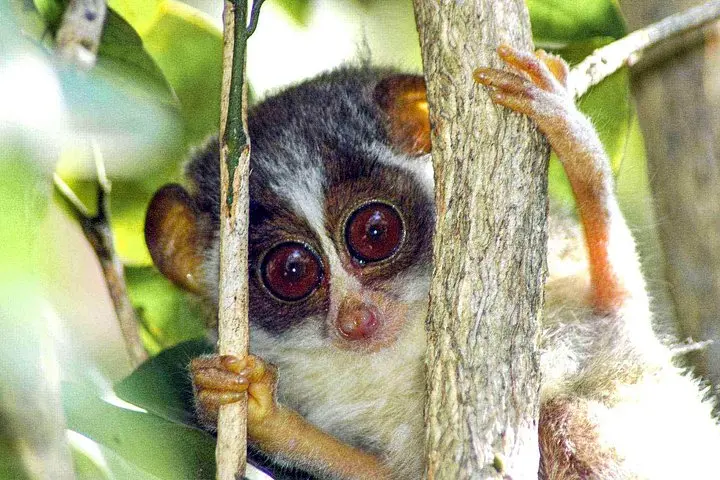
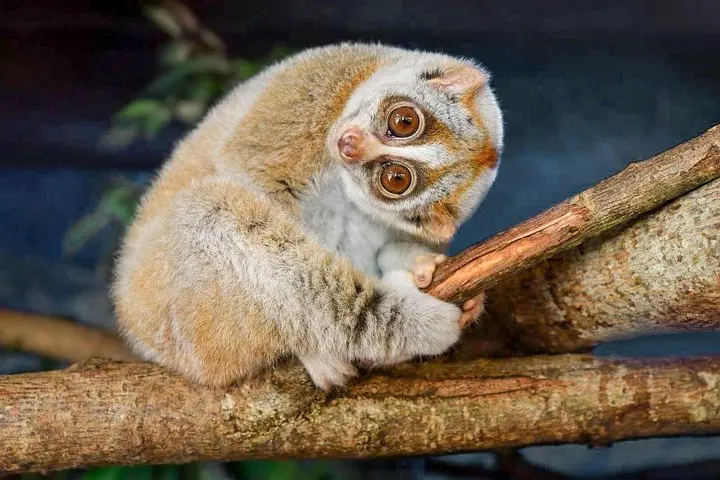
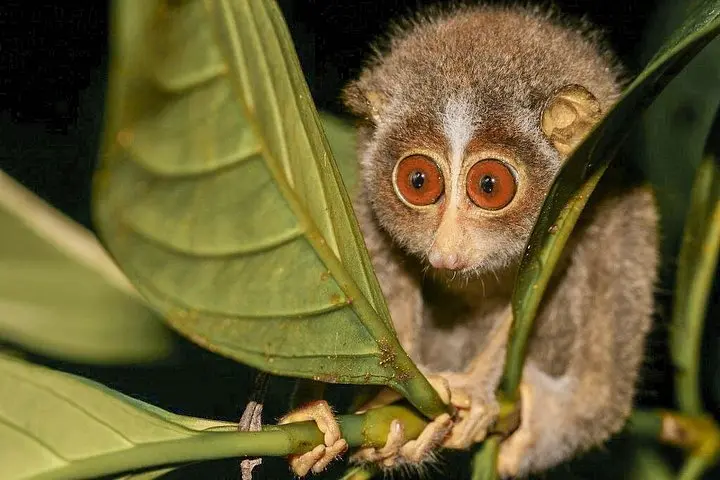

The forest breathes differently after dusk: trunks become dark columns, leaves whisper, and small eyes begin to reflect the beam of a red-filtered torch. On a guided night walk around Sam Popham’s Arboretum at the edge of Sinharaja, you move quietly along raised roots and narrow paths while naturalists scan the canopy for the slow, deliberate silhouette of the slender loris.
The forest breathes differently after dusk: trunks become dark columns, leaves whisper, and small eyes begin to reflect the beam of a red-filtered torch. On a guided night walk around Sam Popham’s Arboretum at the edge of Sinharaja, you move quietly along raised roots and narrow paths while naturalists scan the canopy for the slow, deliberate silhouette of the slender loris.
Sinharaja is one of Sri Lanka’s last tracts of primary lowland rainforest and a designated UNESCO World Heritage Site. The geology here—ancient gneiss and schist folded into steep ridges—feeds a dense, humid understory where endemic plants support a high diversity of insects, birds and mammals. Cultural touches are close by: small tea and cinnamon holdings, and villages where local trackers and guides have passed knowledge of nocturnal species down through generations.
Expect focused, low-light searching: guides use red light to avoid startling animals and only switch on white lights to show a sighting. Besides slender lorises you may spot mouse deer, civets and nocturnal birds; the forest can be unexpectedly vocal with frogs and insects.
Practical guidance: the walk is roughly three hours on uneven, sometimes muddy trails—sturdy, grippy footwear and insect protection matter. Move slowly, follow your guide’s instructions about light and noise, and keep cameras on silent mode. Carry water, a small headlamp with a red filter, and a light rain shell in case of tropical showers. This is a quiet wildlife encounter: patience and respect will increase your chances of seeing the loris.