THE ADVENTURE COLLECTIVE® · Independent discovery and booking for outdoor travel

Step into the rainforest after dark beside Arenal Volcano and watch ponds and leaf litter come alive. This guided night walk around Ecoglide Arenal Park focuses on amphibians, bats and nocturnal behaviors with accessible trails and expert interpretation.
Step into the rainforest after dark beside Arenal Volcano and watch ponds and leaf litter come alive. This guided night walk around Ecoglide Arenal Park focuses on amphibians, bats and nocturnal behaviors with accessible trails and expert interpretation.
The path opens like a different world after dusk: leaf litter hushes underfoot, frogs punctuate the darkness with bright clicks, and the silhouette of Arenal presses the horizon like a quiet sentinel. On this 2½-hour night walk at Ecoglide Arenal Park you move slowly around ponds and along a trail built for low-impact viewing, held in the steady light of guide lamps while the forest rearranges itself for night.
Verified experiences and guided adventures in the surrounding area.
Operated by Ecoglide Arenal Park · La Fortuna, Alajuela
The path opens like a different world after dusk: leaf litter hushes underfoot, frogs punctuate the darkness with bright clicks, and the silhouette of Arenal presses the horizon like a quiet sentinel. On this 2½-hour night walk at Ecoglide Arenal Park you move slowly around ponds and along a trail built for low-impact viewing, held in the steady light of guide lamps while the forest rearranges itself for night.
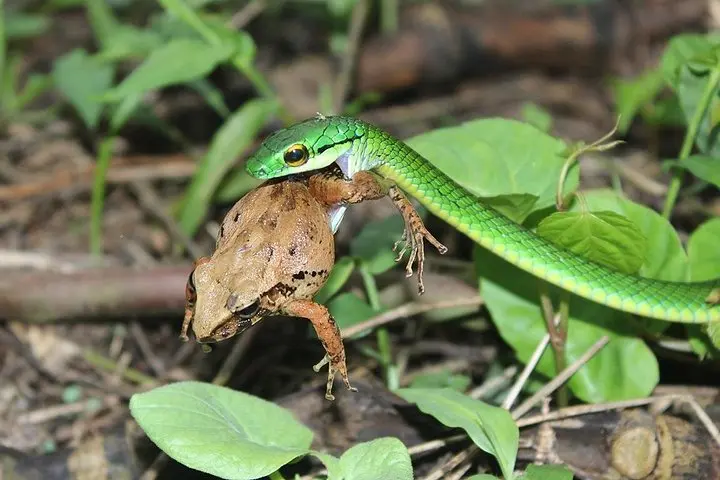
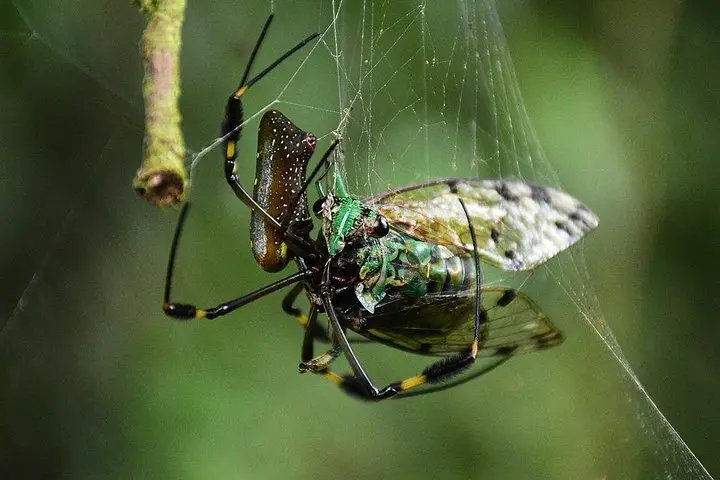
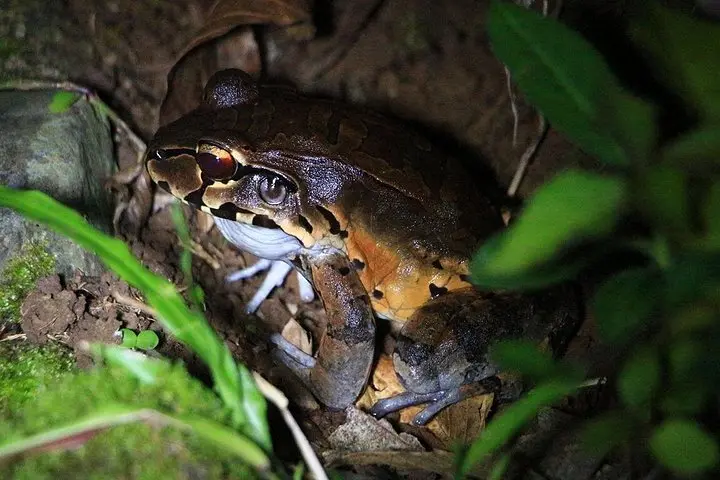
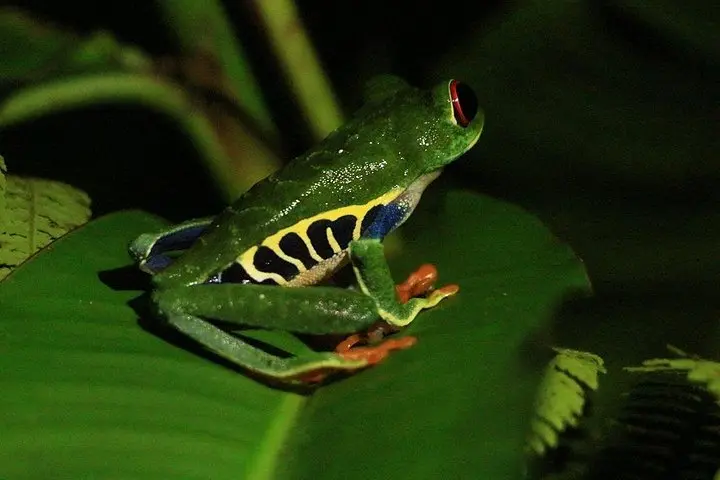
Geologically the area is shaped by Arenal’s eruptions and the volcanic soils that feed a humid tropical forest. Culturally, La Fortuna grew from cattle and coffeefrontiers and now supports ecotourism tied to both the volcano and the surrounding protected areas. The walk centers on pond-edge microhabitats where poison-dart frogs, glass frogs and red-eyed tree frogs advertise their presence, and where basilisks—lizards that sprint across water—may skitter past. Guides interpret animal calls, explain amphibian breeding cycles, and point out how the forest structure supports nocturnal predators such as bats and spiders.
Practical guidance: the route is short, largely level, and wheelchair-accessible in places, but expect mud and uneven boardwalks. Wear closed-toe shoes, carry a headlamp with a red filter to reduce disturbance, and bring insect repellent. Tours run in small groups (up to 12) and include equipment and a post-walk refreshment. Photographers should avoid flash and keep distance from wildlife.
The experience is equal parts natural history lesson and slow-motion safari—best for travelers curious about how tropical forests live after dark and who want a close, guided look at amphibian and invertebrate life with minimal footprint.
The walk is approximately 150 minutes (about 2½ hours) including time at ponds and interpretive stops.
Yes—trails have accessible sections and the activity is rated easy, but check with the operator about specific mobility needs before booking.
No wildlife is guaranteed; guides maximize sightings through experience and timing, but encounters depend on weather and animal behavior.
No—flash disturbs nocturnal animals and can harm amphibians; use a red-filter headlamp and a high-ISO camera instead.
Ecoglide Arenal Park operates guided outdoor trips and adventures with an emphasis on safety, stewardship, and memorable experiences.
The path opens like a different world after dusk: leaf litter hushes underfoot, frogs punctuate the darkness with bright clicks, and the silhouette of Arenal presses the horizon like a quiet sentinel. On this 2½-hour night walk at Ecoglide Arenal Park you move slowly around ponds and along a trail built for low-impact viewing, held in the steady light of guide lamps while the forest rearranges itself for night.
The path opens like a different world after dusk: leaf litter hushes underfoot, frogs punctuate the darkness with bright clicks, and the silhouette of Arenal presses the horizon like a quiet sentinel. On this 2½-hour night walk at Ecoglide Arenal Park you move slowly around ponds and along a trail built for low-impact viewing, held in the steady light of guide lamps while the forest rearranges itself for night.
Geologically the area is shaped by Arenal’s eruptions and the volcanic soils that feed a humid tropical forest. Culturally, La Fortuna grew from cattle and coffeefrontiers and now supports ecotourism tied to both the volcano and the surrounding protected areas. The walk centers on pond-edge microhabitats where poison-dart frogs, glass frogs and red-eyed tree frogs advertise their presence, and where basilisks—lizards that sprint across water—may skitter past. Guides interpret animal calls, explain amphibian breeding cycles, and point out how the forest structure supports nocturnal predators such as bats and spiders.
Practical guidance: the route is short, largely level, and wheelchair-accessible in places, but expect mud and uneven boardwalks. Wear closed-toe shoes, carry a headlamp with a red filter to reduce disturbance, and bring insect repellent. Tours run in small groups (up to 12) and include equipment and a post-walk refreshment. Photographers should avoid flash and keep distance from wildlife.
The experience is equal parts natural history lesson and slow-motion safari—best for travelers curious about how tropical forests live after dark and who want a close, guided look at amphibian and invertebrate life with minimal footprint.