THE ADVENTURE COLLECTIVE® · Independent discovery and booking for outdoor travel

Walk a private rainforest reserve after dusk near Playa Flamingo to encounter frogs, sloths and snakes when they are most active. Expect muddy trails, keen local guides, and a strong dose of nocturnal wildlife.
Walk a private rainforest reserve after dusk near Playa Flamingo to encounter frogs, sloths and snakes when they are most active. Expect muddy trails, keen local guides, and a strong dose of nocturnal wildlife.
A headlamp beam cuts a narrow lane through wet leaves as a chorus of frogs claims the night; the air presses cool and humid against your skin while unseen animals move in the understory. On a private reserve near Playa Flamingo, guides lead small groups along faint trails where the rainforest comes alive after dusk — frogs calling like sentries, sloths shifting slowly through shadowed branches, and snakes slipping between roots.
Verified experiences and guided adventures in the surrounding area.
Operated by Seven Sense Costa Rica · Playa Flamingo, Guanacaste
A headlamp beam cuts a narrow lane through wet leaves as a chorus of frogs claims the night; the air presses cool and humid against your skin while unseen animals move in the understory. On a private reserve near Playa Flamingo, guides lead small groups along faint trails where the rainforest comes alive after dusk — frogs calling like sentries, sloths shifting slowly through shadowed branches, and snakes slipping between roots.
The terrain sits on volcanic-influenced soils of Guanacaste, shaped by ancient eruptions and coastal weather patterns that create fertile pockets of biodiversity. The area’s human history mixes indigenous Chorotega influence with later cattle ranching and, more recently, conservation efforts that protect fragments of wet forest along Costa Rica’s Pacific rim. Local guides bring cultural familiarity, quiet storytelling, and an eye for signs most visitors miss.
Expect muddy, root-strewn paths and tight observation windows when animals appear; night wildlife viewing rewards patience and silence. The tour includes bottled water, a lamp, dinner, and air-conditioned transport from Playa Flamingo, but practical preparation matters: wear closed-toe shoes with grip, bring insect repellent, and carry a lightweight rain layer. Cameras with low-light settings or smartphones with night modes work best; flash photography is generally discouraged to avoid stressing animals.
Move slowly, keep voices low, and follow the guide’s direction — the forest is an active, watchful partner that will reveal its nocturnal inhabitants if you give it room and respect.
Total tour time is about 4–6 hours, with the night hike portion typically lasting around 2–4 hours; exact pickup and start times vary by booking and local sunset times.
Children are usually allowed; infant seats are available for transport, but check age and supervision guidelines when booking and follow the guide’s safety instructions.
Wildlife sightings are likely but never guaranteed; nocturnal animals are more active at night, increasing chances, but sightings depend on conditions and animal behavior.
Photography is permitted, but guides typically ask visitors to avoid flash to prevent disturbing animals and to use low-light settings or steadying techniques instead.
Seven Sense Costa Rica operates guided outdoor trips and adventures with an emphasis on safety, stewardship, and memorable experiences.
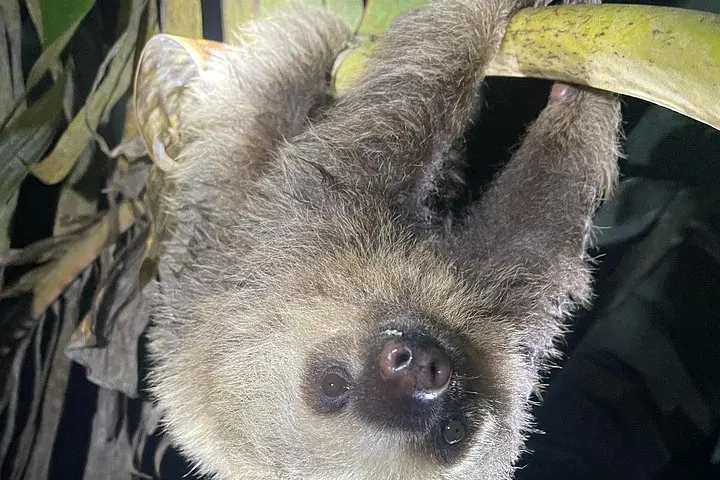
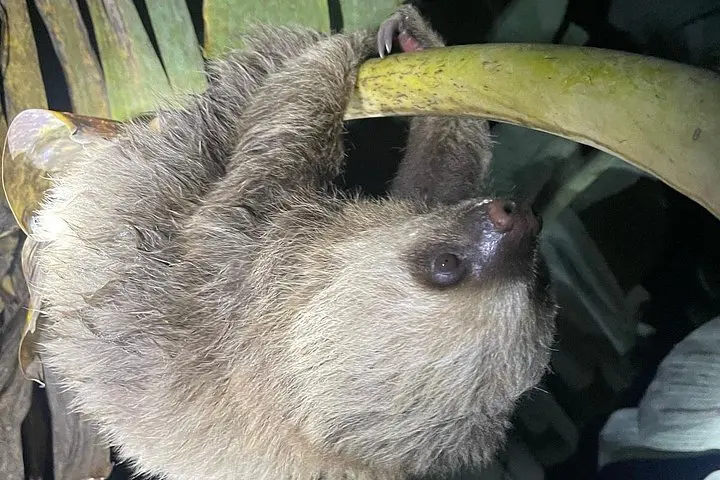
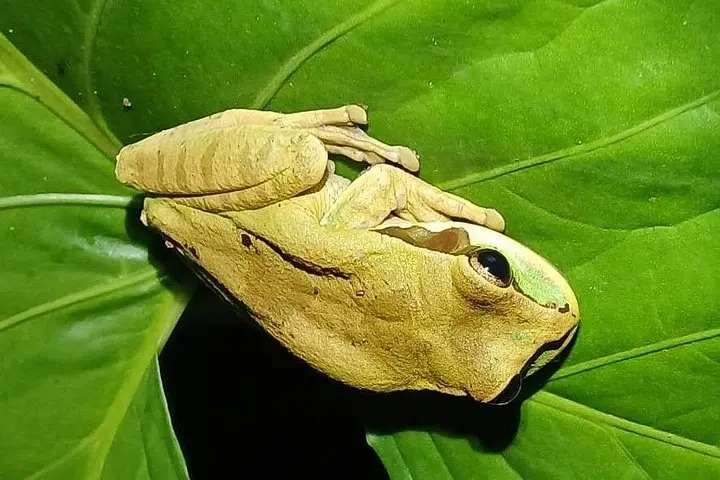
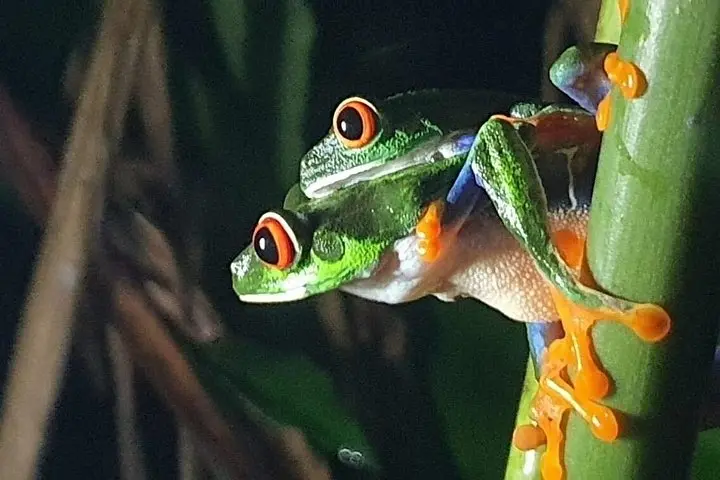
A headlamp beam cuts a narrow lane through wet leaves as a chorus of frogs claims the night; the air presses cool and humid against your skin while unseen animals move in the understory. On a private reserve near Playa Flamingo, guides lead small groups along faint trails where the rainforest comes alive after dusk — frogs calling like sentries, sloths shifting slowly through shadowed branches, and snakes slipping between roots.
A headlamp beam cuts a narrow lane through wet leaves as a chorus of frogs claims the night; the air presses cool and humid against your skin while unseen animals move in the understory. On a private reserve near Playa Flamingo, guides lead small groups along faint trails where the rainforest comes alive after dusk — frogs calling like sentries, sloths shifting slowly through shadowed branches, and snakes slipping between roots.
The terrain sits on volcanic-influenced soils of Guanacaste, shaped by ancient eruptions and coastal weather patterns that create fertile pockets of biodiversity. The area’s human history mixes indigenous Chorotega influence with later cattle ranching and, more recently, conservation efforts that protect fragments of wet forest along Costa Rica’s Pacific rim. Local guides bring cultural familiarity, quiet storytelling, and an eye for signs most visitors miss.
Expect muddy, root-strewn paths and tight observation windows when animals appear; night wildlife viewing rewards patience and silence. The tour includes bottled water, a lamp, dinner, and air-conditioned transport from Playa Flamingo, but practical preparation matters: wear closed-toe shoes with grip, bring insect repellent, and carry a lightweight rain layer. Cameras with low-light settings or smartphones with night modes work best; flash photography is generally discouraged to avoid stressing animals.
Move slowly, keep voices low, and follow the guide’s direction — the forest is an active, watchful partner that will reveal its nocturnal inhabitants if you give it room and respect.