THE ADVENTURE COLLECTIVE® · Independent discovery and booking for outdoor travel

Step aboard an open-air tram and enter Night Safari Singapore, the world’s first nocturnal park. This guide covers what you’ll see, the park’s history and practical tips—timed tickets, low light rules, and the best trails to explore after dark.
Step aboard an open-air tram and enter Night Safari Singapore, the world’s first nocturnal park. This guide covers what you’ll see, the park’s history and practical tips—timed tickets, low light rules, and the best trails to explore after dark.
The tram eases out of shadow and the rainforest inhales; a low hum of nocturnal life rises as the beam washes across a sleeping family of deer. Night Safari Singapore turns the city’s green edge into a stage where eyes reflect back at you and creatures move with the quiet confidence of the dark.
Verified experiences and guided adventures in the surrounding area.
The tram eases out of shadow and the rainforest inhales; a low hum of nocturnal life rises as the beam washes across a sleeping family of deer. Night Safari Singapore turns the city’s green edge into a stage where eyes reflect back at you and creatures move with the quiet confidence of the dark.
Opened in 1994 as the world’s first nocturnal park, the Night Safari occupies the fringe of Mandai’s protected greenbelt. The park’s landscape is reclaimed secondary rainforest on sandstone and alluvial soils—flat to gently rolling terrain that channels monsoon runoff into sheltered waterways. Culture in Singapore’s wildlife precinct blends education with entertainment: narrated tram circuits, interpretive exhibits, and the running Creatures of the Night theatre show that frames animal behavior in plain language.
Expect to travel by open-air tram for about 30 minutes through seven geographical zones that mimic Asian, African and other habitats, then step off onto four short walking trails—Leopard Trail, Fishing Cat Trail, Wallaby Trail and East Lodge Trail—to spot smaller, more secretive species. Lighting is deliberately low; animals are encouraged to exhibit natural nocturnal routines, not perform for camera flashes.
Practical tips: book timed tram tickets in advance and arrive 20–30 minutes early for seat choice; use a fast lens or smartphone night mode but never use flash; wear breathable, moisture-wicking clothing and good walking shoes for uneven, sometimes muddy paths.
Trails and shows are family-friendly but bring insect repellent and a light rain layer during monsoon months. Moving slowly and listening closely reveals what the dark will offer—the shimmer of eyes, a rustle in the understory, the patient watch of a leopard as it decides the night.
The guided tram circuit runs about 30 minutes and covers multiple animal zones with English commentary.
No—flash is not allowed because it stresses animals; use night mode or a fast lens instead.
Trails are short but have steps and uneven ground; some are not stroller-friendly—check accessibility at entry points.
Showtimes vary by evening; check the park timetable on arrival or on the official site and arrive early for seating.
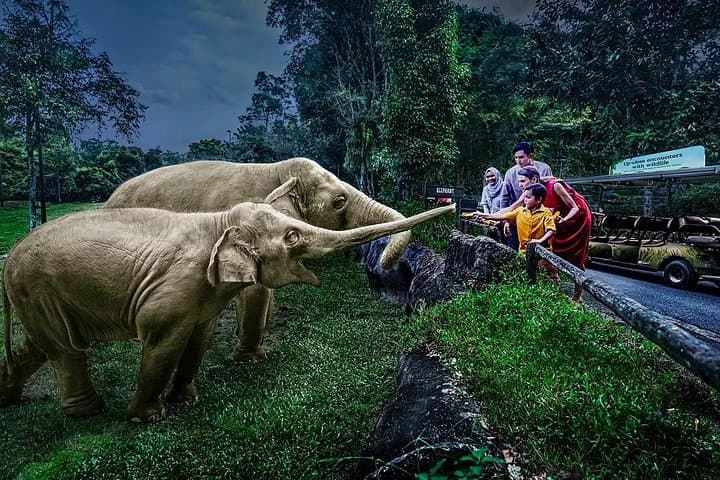
The tram eases out of shadow and the rainforest inhales; a low hum of nocturnal life rises as the beam washes across a sleeping family of deer. Night Safari Singapore turns the city’s green edge into a stage where eyes reflect back at you and creatures move with the quiet confidence of the dark.
The tram eases out of shadow and the rainforest inhales; a low hum of nocturnal life rises as the beam washes across a sleeping family of deer. Night Safari Singapore turns the city’s green edge into a stage where eyes reflect back at you and creatures move with the quiet confidence of the dark.
Opened in 1994 as the world’s first nocturnal park, the Night Safari occupies the fringe of Mandai’s protected greenbelt. The park’s landscape is reclaimed secondary rainforest on sandstone and alluvial soils—flat to gently rolling terrain that channels monsoon runoff into sheltered waterways. Culture in Singapore’s wildlife precinct blends education with entertainment: narrated tram circuits, interpretive exhibits, and the running Creatures of the Night theatre show that frames animal behavior in plain language.
Expect to travel by open-air tram for about 30 minutes through seven geographical zones that mimic Asian, African and other habitats, then step off onto four short walking trails—Leopard Trail, Fishing Cat Trail, Wallaby Trail and East Lodge Trail—to spot smaller, more secretive species. Lighting is deliberately low; animals are encouraged to exhibit natural nocturnal routines, not perform for camera flashes.
Practical tips: book timed tram tickets in advance and arrive 20–30 minutes early for seat choice; use a fast lens or smartphone night mode but never use flash; wear breathable, moisture-wicking clothing and good walking shoes for uneven, sometimes muddy paths.
Trails and shows are family-friendly but bring insect repellent and a light rain layer during monsoon months. Moving slowly and listening closely reveals what the dark will offer—the shimmer of eyes, a rustle in the understory, the patient watch of a leopard as it decides the night.