THE ADVENTURE COLLECTIVE® · Independent discovery and booking for outdoor travel

Walk into one of Romania’s most talked-about woodlands after dark and listen to the forest’s quiet anomalies. This guided night tour leads to Poiana Rotunda, combines local lore with documented sightings, and covers about 3.5 km of uneven trail.
Walk into one of Romania’s most talked-about woodlands after dark and listen to the forest’s quiet anomalies. This guided night tour leads to Poiana Rotunda, combines local lore with documented sightings, and covers about 3.5 km of uneven trail.
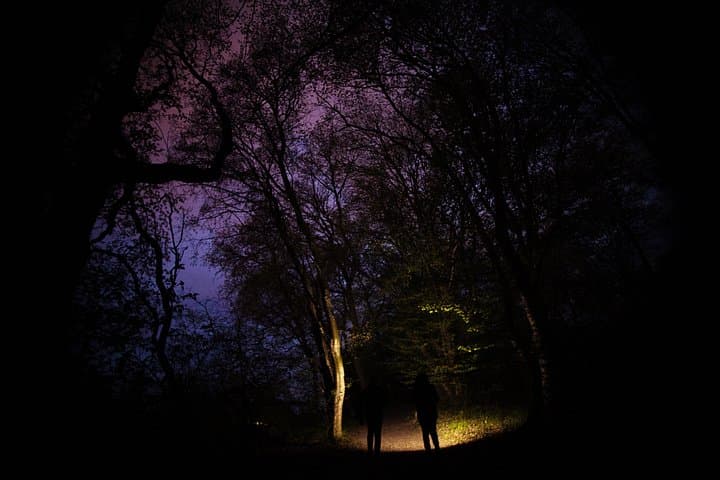
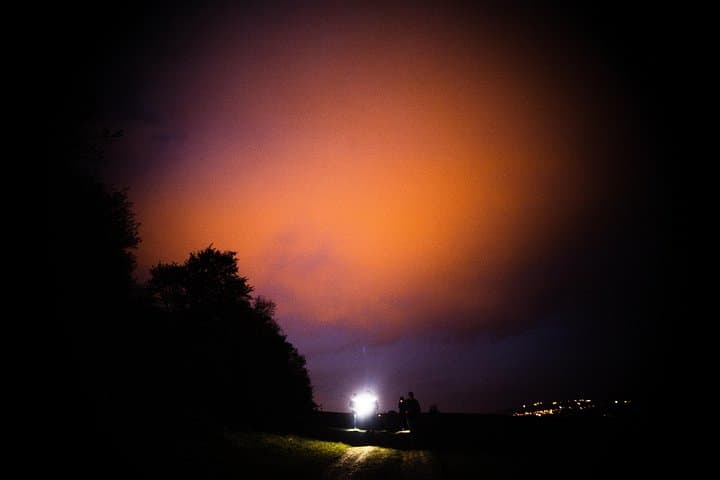
A hush falls over the trail as the last light of Cluj-Napoca slips behind the ridge and the Hoia Baciu trees lean in like curious hosts. On this guided night tour, visitors walk soft earth and fallen needles for roughly 3.5 km toward Poiana Rotunda, the clearing most associated with the forest's strange reports. Flashlights cut swaths through an understory that can feel oddly arranged; branches grow at strange angles and patches of young pines are stunted, lending an uncanny geometry to the dark.
Verified experiences and guided adventures in the surrounding area.
Operated by Hoia-Baciu Project · Cluj-Napoca, Cluj County
A hush falls over the trail as the last light of Cluj-Napoca slips behind the ridge and the Hoia Baciu trees lean in like curious hosts. On this guided night tour, visitors walk soft earth and fallen needles for roughly 3.5 km toward Poiana Rotunda, the clearing most associated with the forest's strange reports. Flashlights cut swaths through an understory that can feel oddly arranged; branches grow at strange angles and patches of young pines are stunted, lending an uncanny geometry to the dark.
The forest gained broader attention in 1968 after a photograph purportedly captured an unidentified object overhead; since then locals and researchers have catalogued unexplained lights, electromagnetic anomalies, and reports of nausea or disorientation. Geologically the area sits on gentle hills of Transylvanian loess and clay, and the soil and microclimate support a mix of beech, oak, and pine which age into dense canopies that amplify sound or swallow it entirely.
Culturally, Hoia Baciu blends local folklore and modern curiosity tourism—storytellers and amateur investigators converge here at dusk. Guides present documented sightings and local testimony while keeping safety central: the route is moderate, with uneven ground and low visibility.
Practical tip: wear sturdy shoes, bring a charged headlamp and layers for sudden temperature drops, and expect 3–4 hours including transport from Cluj. The tour emphasizes observation and discussion over staged scares, making it suitable for travelers who want atmospheric night hiking with a focus on history and local lore.
The guided walk is about 3–3.5 km to the Round Clearing with uneven surfaces and some low branches; it’s rated moderate and requires steady footing.
The tour is a presentation of local reports and documented events rather than a staged scare; paranormal phenomena are not guaranteed.
Private transportation is listed as included—confirm pickup point at booking and arrive on time for transfers.
Service animals are permitted and infants must sit on an adult’s lap; check age recommendations with the operator for suitability.
Hoia-Baciu Project operates guided outdoor trips and adventures with an emphasis on safety, stewardship, and memorable experiences.

A hush falls over the trail as the last light of Cluj-Napoca slips behind the ridge and the Hoia Baciu trees lean in like curious hosts. On this guided night tour, visitors walk soft earth and fallen needles for roughly 3.5 km toward Poiana Rotunda, the clearing most associated with the forest's strange reports. Flashlights cut swaths through an understory that can feel oddly arranged; branches grow at strange angles and patches of young pines are stunted, lending an uncanny geometry to the dark.
A hush falls over the trail as the last light of Cluj-Napoca slips behind the ridge and the Hoia Baciu trees lean in like curious hosts. On this guided night tour, visitors walk soft earth and fallen needles for roughly 3.5 km toward Poiana Rotunda, the clearing most associated with the forest's strange reports. Flashlights cut swaths through an understory that can feel oddly arranged; branches grow at strange angles and patches of young pines are stunted, lending an uncanny geometry to the dark.
The forest gained broader attention in 1968 after a photograph purportedly captured an unidentified object overhead; since then locals and researchers have catalogued unexplained lights, electromagnetic anomalies, and reports of nausea or disorientation. Geologically the area sits on gentle hills of Transylvanian loess and clay, and the soil and microclimate support a mix of beech, oak, and pine which age into dense canopies that amplify sound or swallow it entirely.
Culturally, Hoia Baciu blends local folklore and modern curiosity tourism—storytellers and amateur investigators converge here at dusk. Guides present documented sightings and local testimony while keeping safety central: the route is moderate, with uneven ground and low visibility.
Practical tip: wear sturdy shoes, bring a charged headlamp and layers for sudden temperature drops, and expect 3–4 hours including transport from Cluj. The tour emphasizes observation and discussion over staged scares, making it suitable for travelers who want atmospheric night hiking with a focus on history and local lore.