THE ADVENTURE COLLECTIVE® · Independent discovery and booking for outdoor travel

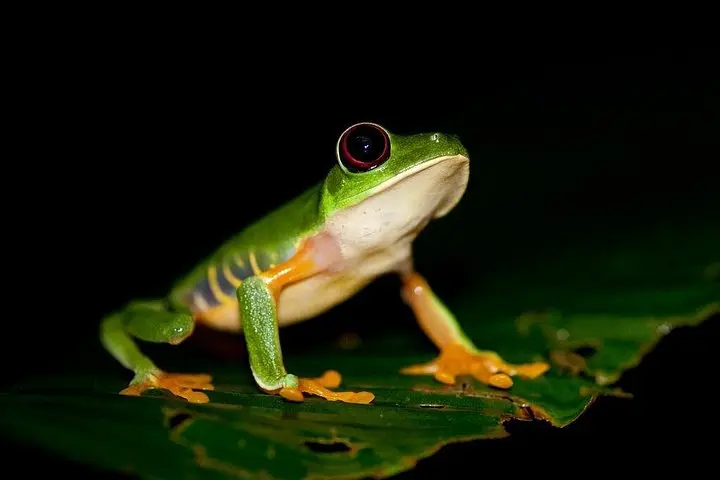
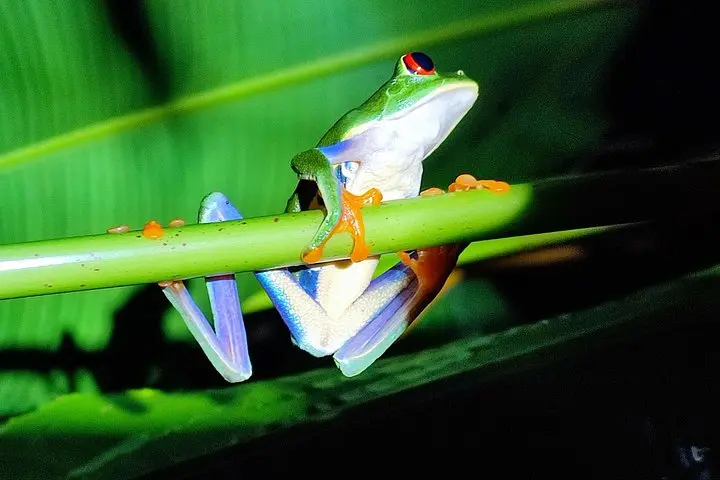
Step off the dock into the wet dark of Tortuguero and follow a guide into rainforest trails where frogs sing, snakes glide and nocturnal mammals emerge. This 2–2.5 hour guided night walk reveals the Caribbean lowland’s unseen life while emphasizing low-impact viewing.
Step off the dock into the wet dark of Tortuguero and follow a guide into rainforest trails where frogs sing, snakes glide and nocturnal mammals emerge. This 2–2.5 hour guided night walk reveals the Caribbean lowland’s unseen life while emphasizing low-impact viewing.
A humid breath of forest meets you at the dock as the village lights shrink behind. On a guided night walk in Tortuguero you step from the small town into a ribbed dark of leafy trunks and the high, insect-thick chorus that only the Caribbean lowlands know. Headlamps cut slices of light across wet roots; calls and rustles answer every step.
Verified experiences and guided adventures in the surrounding area.
Operated by Green Tours · Tortuguero, Limón
A humid breath of forest meets you at the dock as the village lights shrink behind. On a guided night walk in Tortuguero you step from the small town into a ribbed dark of leafy trunks and the high, insect-thick chorus that only the Caribbean lowlands know. Headlamps cut slices of light across wet roots; calls and rustles answer every step.
Tortuguero National Park—carved from coastal swamp, riverine canals and low rainforest—was created to protect sea turtle nesting and the complex wetland network that supports them. The geology here is recent alluvial soils and peat built at the mouth of small rivers; trails are often raised boardwalks or narrow earth paths that drain slowly after rain. Local communities are Afro–Caribbean and indigenous, with cultures shaped by fishing, banana work and conservation partnerships that shepherd nesting turtles every year.
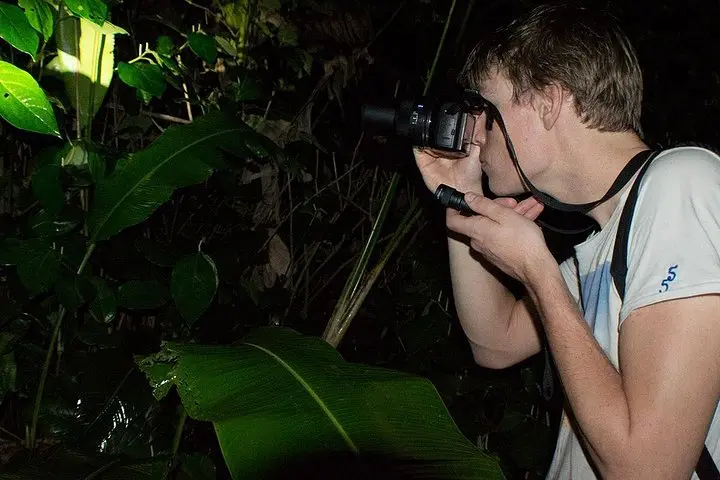
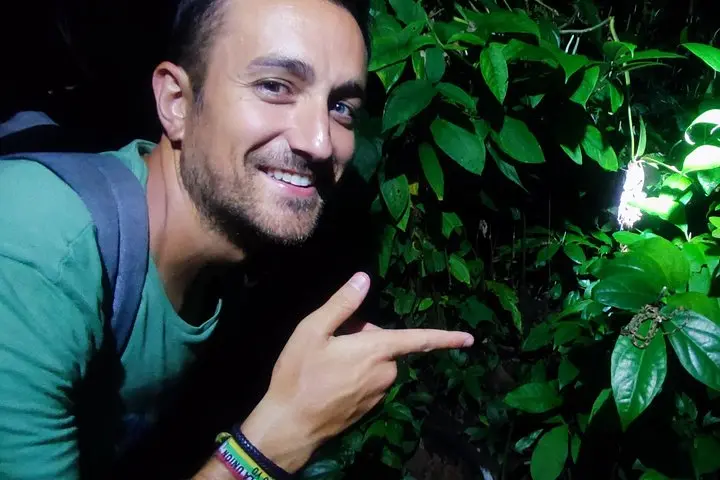
Expect 2–2.5 hours of slow, deliberate walking led by experienced guides who search for frogs, snakes, nocturnal marsupials and the occasional tamandua. Terrain is uneven, muddy in places and low-visibility; the guide’s torch and quiet approach do most of the work. Bring insect protection, a reliable headlamp, closed shoes with grip and a light rain layer—the rainforest’s mood can change within minutes.
The walk is as much about listening as seeing: cane frogs answering from the understory, the furtive cadence of small mammals, and a river that seems to push you back toward the canal with a soft, persistent current. Follow guide instructions, limit bright lights and move slowly: you’ll see more, and you’ll leave less trace.
The experience typically lasts 2 to 2.5 hours, starting and ending at the main dock in Tortuguero village.
Children must be accompanied by an adult; operators advise against bringing children under 5 and those with back problems.
Turtle nesting happens on the beaches and at specific seasons—this night walk focuses on rainforest species like frogs, snakes and nocturnal mammals, not sea turtles.
Trails are uneven and can be muddy; the pace is slow but steady—participants should have moderate fitness and be prepared for low visibility.
Green Tours operates guided outdoor trips and adventures with an emphasis on safety, stewardship, and memorable experiences.
A humid breath of forest meets you at the dock as the village lights shrink behind. On a guided night walk in Tortuguero you step from the small town into a ribbed dark of leafy trunks and the high, insect-thick chorus that only the Caribbean lowlands know. Headlamps cut slices of light across wet roots; calls and rustles answer every step.
A humid breath of forest meets you at the dock as the village lights shrink behind. On a guided night walk in Tortuguero you step from the small town into a ribbed dark of leafy trunks and the high, insect-thick chorus that only the Caribbean lowlands know. Headlamps cut slices of light across wet roots; calls and rustles answer every step.
Tortuguero National Park—carved from coastal swamp, riverine canals and low rainforest—was created to protect sea turtle nesting and the complex wetland network that supports them. The geology here is recent alluvial soils and peat built at the mouth of small rivers; trails are often raised boardwalks or narrow earth paths that drain slowly after rain. Local communities are Afro–Caribbean and indigenous, with cultures shaped by fishing, banana work and conservation partnerships that shepherd nesting turtles every year.
Expect 2–2.5 hours of slow, deliberate walking led by experienced guides who search for frogs, snakes, nocturnal marsupials and the occasional tamandua. Terrain is uneven, muddy in places and low-visibility; the guide’s torch and quiet approach do most of the work. Bring insect protection, a reliable headlamp, closed shoes with grip and a light rain layer—the rainforest’s mood can change within minutes.
The walk is as much about listening as seeing: cane frogs answering from the understory, the furtive cadence of small mammals, and a river that seems to push you back toward the canal with a soft, persistent current. Follow guide instructions, limit bright lights and move slowly: you’ll see more, and you’ll leave less trace.