THE ADVENTURE COLLECTIVE® · Independent discovery and booking for outdoor travel

When the sun drops behind Oahu’s ridgelines, Coral Crater’s night zipline turns speed into a sensory game: headlamps, s’mores by firelight, and three adrenaline lines threaded across volcanic gullies. This 75‑minute after‑dark run blends thrills with practical prep—weights, shoes and a 24‑hour transport call.
When the sun drops behind Oahu’s ridgelines, Coral Crater’s night zipline turns speed into a sensory game: headlamps, s’mores by firelight, and three adrenaline lines threaded across volcanic gullies. This 75‑minute after‑dark run blends thrills with practical prep—weights, shoes and a 24‑hour transport call.
The jungle exhales as daylight slips away and a different kind of edge moves in: night. On the trail to the first platform at Coral Crater Adventure Park, flashlights pick out fern fronds and the occasional hibiscus, while the guide’s voice cuts through the dark with clipped, confident commands. When you step off the platform the world narrows to a single cable, the rope humming under harness and helmet, and the island’s nocturnal chorus rises—coqui frogs, distant surf, a wind that seems to push you forward.
Verified experiences and guided adventures in the surrounding area.
Operated by Coral Crater LLC · Kapolei, Hawaii
The jungle exhales as daylight slips away and a different kind of edge moves in: night. On the trail to the first platform at Coral Crater Adventure Park, flashlights pick out fern fronds and the occasional hibiscus, while the guide’s voice cuts through the dark with clipped, confident commands. When you step off the platform the world narrows to a single cable, the rope humming under harness and helmet, and the island’s nocturnal chorus rises—coqui frogs, distant surf, a wind that seems to push you forward.
Coral Crater sits on Oahu’s leeward side, a playground carved into old volcanic deposits and quarried terrain. The park’s ziplines thread across ridges and gullies that formed from volcanic flows and subsequent erosion—rock that remembers both fire and water. For Hawaiians, the landscape has long held practical and spiritual meaning: areas like these supported canoe-building timber and native plants used in kapa making, though the park itself is a modern adaptation for recreation.
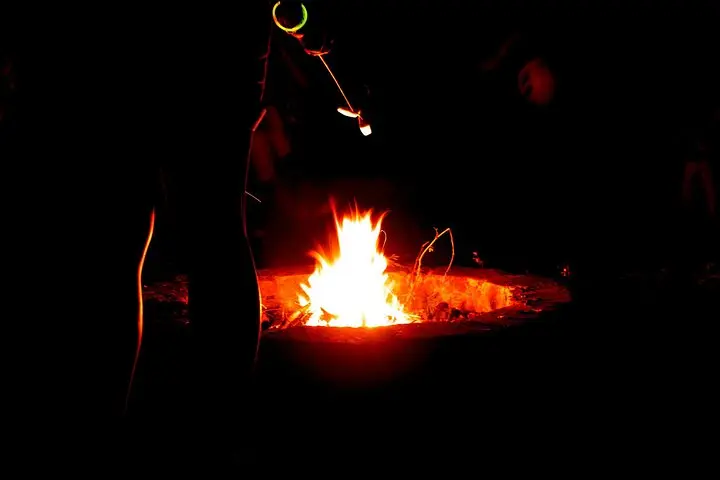
The night tour reframes ziplining as a sensory exercise rather than just a speed rush. S’mores and a small campfire are woven into the itinerary, an anchor point for stories about the island and the stars above. Guides brief you on technique and safety—how to ride, how to brake, how to trust teammates—and you watch their headlamps flit like moths as they clip and check each harness.
Practicalities matter here. The advertised run is roughly 75 minutes from check-in to return; the operator uses selected ziplines in the Coral Crater network (the park includes six lines overall, with night tours typically running three primary lines). Minimum age is 6; independent zipping generally requires a minimum weight of 60 lb, with a hard maximum of 275 lb. Closed‑toed shoes are mandatory; crocs and athletic water shoes are acceptable. The tour is not recommended for pregnant travelers or those with heart or spinal conditions.
Timing and logistics: arrive 15 minutes early, and if you need pickup from Waikiki you must call at least 24 hours beforehand to arrange transportation. The weather can cancel night runs; heavy rain or high winds will usually cause rescheduling. Pack a headlamp and a light jacket—the temperature drops after sunset and wind on exposed lines can feel sharp. Hydrate before you arrive and leave valuables locked in your vehicle or the provided storage.
This after‑dark zipline strips the usual daytime spectacle down to motion, sound and the peculiar intimacy of moving through the night. It’s equal parts adrenaline and quiet wonder—an Oahu evening that asks you to move forward, look up, and trust the line beneath you.
The advertised duration is about 75 minutes from check‑in to return; the in‑canopy time includes three primary night lines.
Minimum age is 6; minimum weight to ride is 40 lb (tandem with guide) and 60 lb to ride independently; maximum weight is 275 lb.
No—closed‑toed shoes are required but not provided; crocs and athletic water shoes are acceptable.
No—the tour is not recommended for pregnant travelers or those with serious heart or spinal conditions.
Transportation is not automatically included; you must call the operator at least 24 hours before your tour to arrange pickup.
Tours may be canceled for heavy rain or high winds; you’ll be eligible for a full refund if canceled at least 24 hours before departure per policy, and operators will cancel for unsafe weather.
Coral Crater LLC operates guided outdoor trips and adventures with an emphasis on safety, stewardship, and memorable experiences.
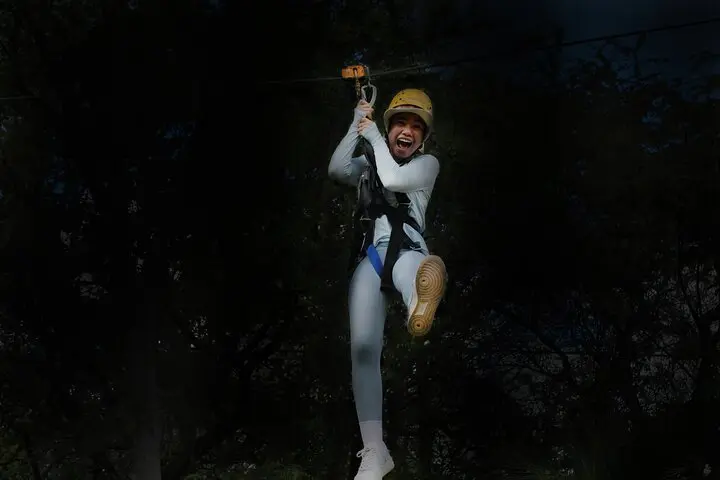
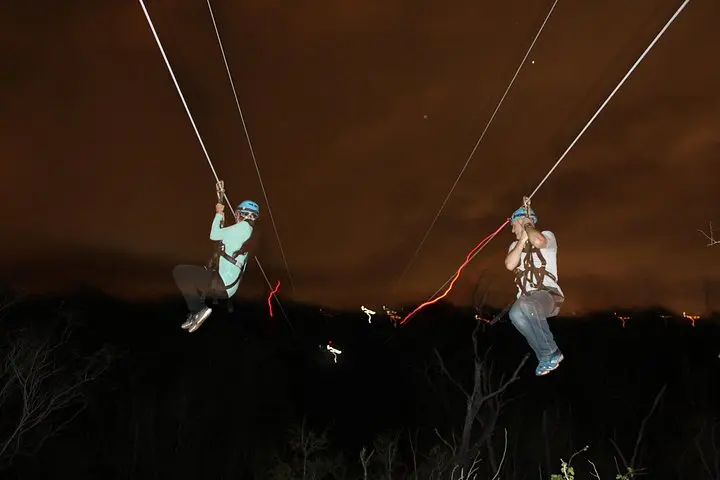
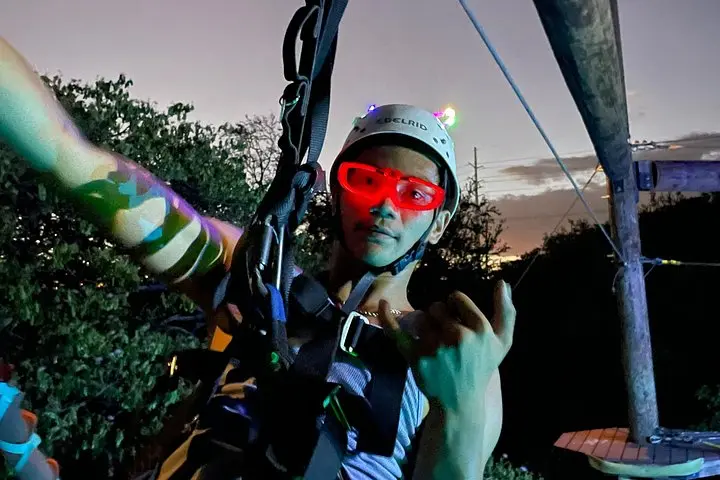
The jungle exhales as daylight slips away and a different kind of edge moves in: night. On the trail to the first platform at Coral Crater Adventure Park, flashlights pick out fern fronds and the occasional hibiscus, while the guide’s voice cuts through the dark with clipped, confident commands. When you step off the platform the world narrows to a single cable, the rope humming under harness and helmet, and the island’s nocturnal chorus rises—coqui frogs, distant surf, a wind that seems to push you forward.
The jungle exhales as daylight slips away and a different kind of edge moves in: night. On the trail to the first platform at Coral Crater Adventure Park, flashlights pick out fern fronds and the occasional hibiscus, while the guide’s voice cuts through the dark with clipped, confident commands. When you step off the platform the world narrows to a single cable, the rope humming under harness and helmet, and the island’s nocturnal chorus rises—coqui frogs, distant surf, a wind that seems to push you forward.
Coral Crater sits on Oahu’s leeward side, a playground carved into old volcanic deposits and quarried terrain. The park’s ziplines thread across ridges and gullies that formed from volcanic flows and subsequent erosion—rock that remembers both fire and water. For Hawaiians, the landscape has long held practical and spiritual meaning: areas like these supported canoe-building timber and native plants used in kapa making, though the park itself is a modern adaptation for recreation.
The night tour reframes ziplining as a sensory exercise rather than just a speed rush. S’mores and a small campfire are woven into the itinerary, an anchor point for stories about the island and the stars above. Guides brief you on technique and safety—how to ride, how to brake, how to trust teammates—and you watch their headlamps flit like moths as they clip and check each harness.
Practicalities matter here. The advertised run is roughly 75 minutes from check-in to return; the operator uses selected ziplines in the Coral Crater network (the park includes six lines overall, with night tours typically running three primary lines). Minimum age is 6; independent zipping generally requires a minimum weight of 60 lb, with a hard maximum of 275 lb. Closed‑toed shoes are mandatory; crocs and athletic water shoes are acceptable. The tour is not recommended for pregnant travelers or those with heart or spinal conditions.
Timing and logistics: arrive 15 minutes early, and if you need pickup from Waikiki you must call at least 24 hours beforehand to arrange transportation. The weather can cancel night runs; heavy rain or high winds will usually cause rescheduling. Pack a headlamp and a light jacket—the temperature drops after sunset and wind on exposed lines can feel sharp. Hydrate before you arrive and leave valuables locked in your vehicle or the provided storage.
This after‑dark zipline strips the usual daytime spectacle down to motion, sound and the peculiar intimacy of moving through the night. It’s equal parts adrenaline and quiet wonder—an Oahu evening that asks you to move forward, look up, and trust the line beneath you.