THE ADVENTURE COLLECTIVE® · Independent discovery and booking for outdoor travel

Walk Duke of Gloucester Street after dark with a costumed guide who threads Civil War history and local ghost stories through the Old Capital’s brick streets. Learn about the Battle of Williamsburg, wartime hospitals, and the odd photograph that keeps visitors looking twice.
Walk Duke of Gloucester Street after dark with a costumed guide who threads Civil War history and local ghost stories through the Old Capital’s brick streets. Learn about the Battle of Williamsburg, wartime hospitals, and the odd photograph that keeps visitors looking twice.
A lantern-lit hush falls over Duke of Gloucester Street as the group steps off the paved walk and into the dim outline of Williamsburg’s Old Capital. The guide in period dress paces easily, voice low, and the buildings—barracks, old hospitals, and an 18th-century morgue—seem to watch the procession as if remembering the press of soldiers and the rattle of carts long after the cannons fell silent.
Verified experiences and guided adventures in the surrounding area.
Operated by Spooks and Legends Haunted Ghost Tours, LLC · Williamsburg, Virginia
A lantern-lit hush falls over Duke of Gloucester Street as the group steps off the paved walk and into the dim outline of Williamsburg’s Old Capital. The guide in period dress paces easily, voice low, and the buildings—barracks, old hospitals, and an 18th-century morgue—seem to watch the procession as if remembering the press of soldiers and the rattle of carts long after the cannons fell silent.
Williamsburg is best known for Revolutionary-era reconstructions, but May 5, 1862, brought the Battle of Williamsburg here and left scars that locals still point to in stone and story. The evening tour traces Civil War footprints across urban fabric and social history: Union occupation, makeshift hospitals, and the civilian decisions forced by wartime shortages. The architecture—brick warehouses and timber framed houses—carries signs of 19th-century adaptation rather than large-scale battlefield earthworks, offering a different, intimate angle on conflict.
Expect close-up views of preserved façades on a mostly flat, paved walk suited to slow, reflective pace. The narrative balances medical history, military movements, and reported hauntings; the ghost stories are local lore layered over documented events. Guides encourage respectful photography—some guests look for anomalies in night shots—and maintain safety as the group moves through narrow streets.
Practical notes: bring a warm layer, comfortable flat footwear, and a small flashlight for steps and curbing. Tours run about 90 minutes and are wheelchair accessible, but confirm lighting and mobility needs when booking. Go early in the season for milder nights and arrive 10–15 minutes early to check in and orient to meeting points.
Yes; the tour is family-friendly, but content includes wartime medical history that may be sensitive for very young children—use discretion.
The operator lists the route as wheelchair accessible, but lighting and street surfaces vary; contact the tour provider ahead to confirm specific needs.
The tour lasts about 90 minutes and covers a short, mostly flat loop along Duke of Gloucester Street with frequent stops for stories.
Service animals are allowed; pets are not listed as welcome, so leave non-service animals at home.
Spooks and Legends Haunted Ghost Tours, LLC operates guided outdoor trips and adventures with an emphasis on safety, stewardship, and memorable experiences.

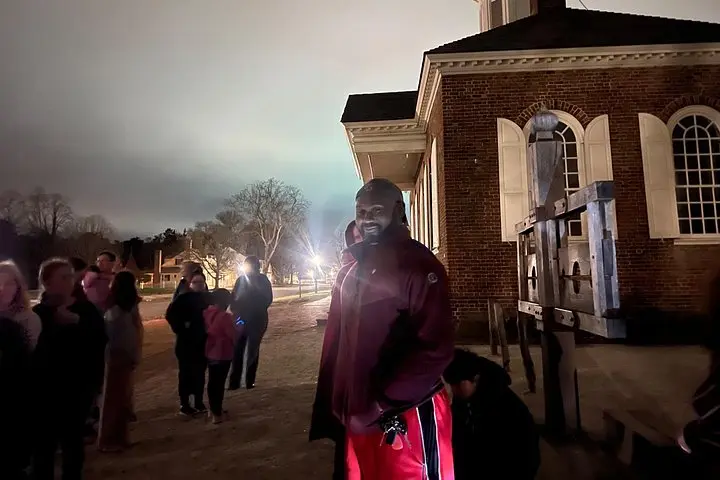
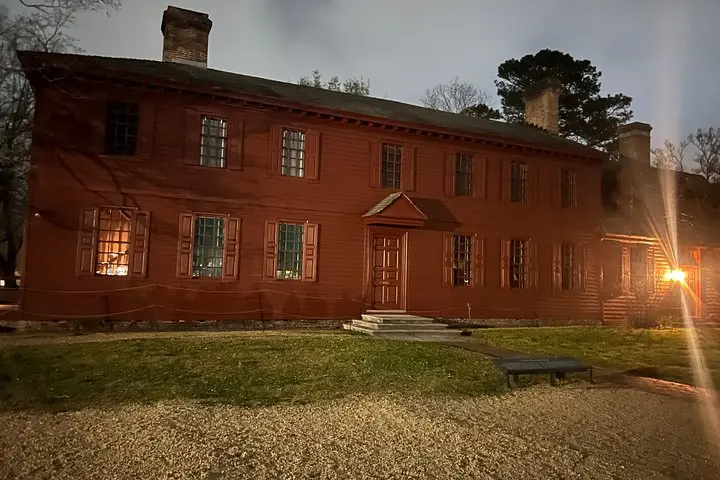
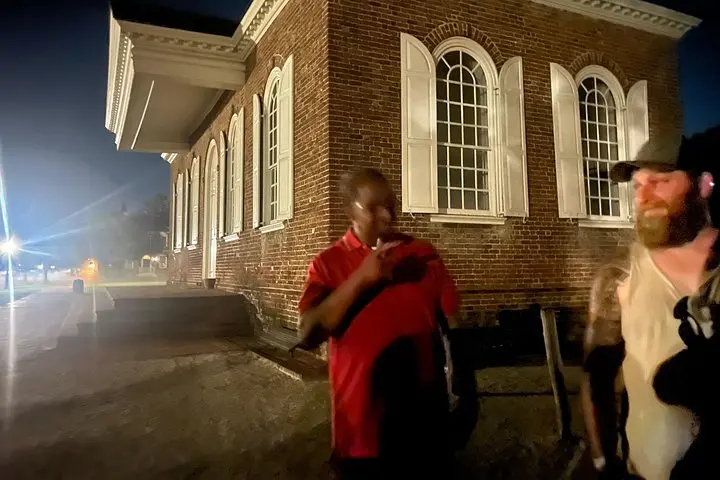
A lantern-lit hush falls over Duke of Gloucester Street as the group steps off the paved walk and into the dim outline of Williamsburg’s Old Capital. The guide in period dress paces easily, voice low, and the buildings—barracks, old hospitals, and an 18th-century morgue—seem to watch the procession as if remembering the press of soldiers and the rattle of carts long after the cannons fell silent.
A lantern-lit hush falls over Duke of Gloucester Street as the group steps off the paved walk and into the dim outline of Williamsburg’s Old Capital. The guide in period dress paces easily, voice low, and the buildings—barracks, old hospitals, and an 18th-century morgue—seem to watch the procession as if remembering the press of soldiers and the rattle of carts long after the cannons fell silent.
Williamsburg is best known for Revolutionary-era reconstructions, but May 5, 1862, brought the Battle of Williamsburg here and left scars that locals still point to in stone and story. The evening tour traces Civil War footprints across urban fabric and social history: Union occupation, makeshift hospitals, and the civilian decisions forced by wartime shortages. The architecture—brick warehouses and timber framed houses—carries signs of 19th-century adaptation rather than large-scale battlefield earthworks, offering a different, intimate angle on conflict.
Expect close-up views of preserved façades on a mostly flat, paved walk suited to slow, reflective pace. The narrative balances medical history, military movements, and reported hauntings; the ghost stories are local lore layered over documented events. Guides encourage respectful photography—some guests look for anomalies in night shots—and maintain safety as the group moves through narrow streets.
Practical notes: bring a warm layer, comfortable flat footwear, and a small flashlight for steps and curbing. Tours run about 90 minutes and are wheelchair accessible, but confirm lighting and mobility needs when booking. Go early in the season for milder nights and arrive 10–15 minutes early to check in and orient to meeting points.