THE ADVENTURE COLLECTIVE® · Independent discovery and booking for outdoor travel

Small-boat dives off Nilaveli deliver coral gardens, shallow rock dives and occasional wrecks within easy reach of Pigeon Island. These guided outings are ideal for certified divers seeking dramatic reef life and good visibility on the east coast of Sri Lanka.
Small-boat dives off Nilaveli deliver coral gardens, shallow rock dives and occasional wrecks within easy reach of Pigeon Island. These guided outings are ideal for certified divers seeking dramatic reef life and good visibility on the east coast of Sri Lanka.
The boat slips away from Nilaveli beach at dawn, engines ticking like a pulse beneath a pale sky. Within 20–40 minutes the silhouette of Pigeon Island rises—a coral ridge breaking the flat blue—and the water opens into gardens of hard and soft coral. Schools of fusiliers circle like moving silver leaves while a blacktip reef shark noses the sand beyond the bommie.
Verified experiences and guided adventures in the surrounding area.
Operated by Divinguru Sri Lanka · Nilaveli, Eastern Province
The boat slips away from Nilaveli beach at dawn, engines ticking like a pulse beneath a pale sky. Within 20–40 minutes the silhouette of Pigeon Island rises—a coral ridge breaking the flat blue—and the water opens into gardens of hard and soft coral. Schools of fusiliers circle like moving silver leaves while a blacktip reef shark noses the sand beyond the bommie.
Trincomalee’s eastern shelf is volcanic in origin; shallow platforms and submerged rock outcrops create diverse dive profiles from 6–30 m. The region has long been a crossroads—ancient ports, colonial forts, and a fishing culture that still sets the rhythm for coastal villages. Conservation of Pigeon Island Marine Park matters here: a paid entrance supports protection of over 200 hard coral species and the fish communities that depend on them.
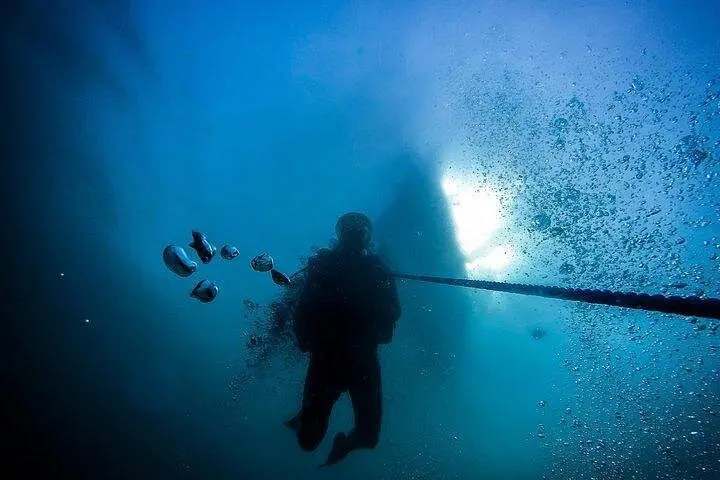
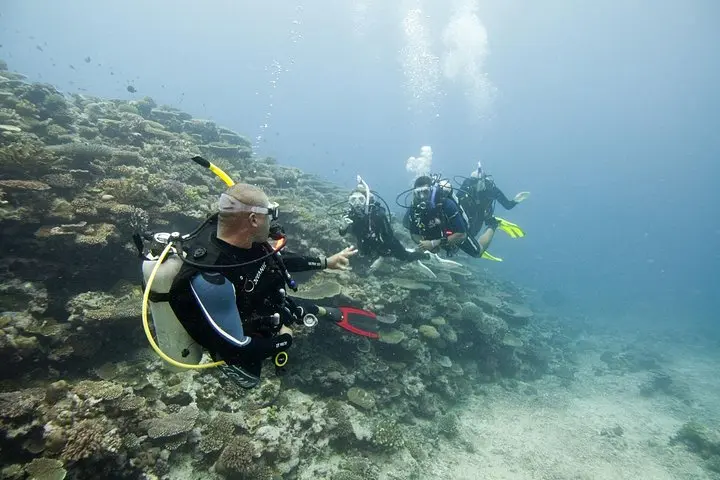
Practical guide: certified divers can book single or double boat dives with small groups (max 5 divers) and 12 L aluminum tanks with INT/DIN options provided. Registration is 8:30 am for morning dives or 1:30 pm for afternoon trips; expect to be back in roughly 2 hours for a single-dive outing or about 4 hours for two dives. Nitrox is available free of charge. Depths range 6–30 m—bring a dive computer and a logbook, and carry certification cards; good buoyancy control is essential for reef protection.
Visibility is often excellent in the dry season and lower during monsoon swells; April–June brings the best chance—though rare—of seeing manta and whale sharks. Plan surface intervals, hydrate, and follow local briefings: the ocean here can feel like a willing partner, but it will always have the final say.
Yes—dives are for certified SCUBA divers only; you will be asked to show your certification card at check-in.
Nitrox is offered free of charge at this dive center and can extend no-decompression bottom times for qualified nitrox divers.
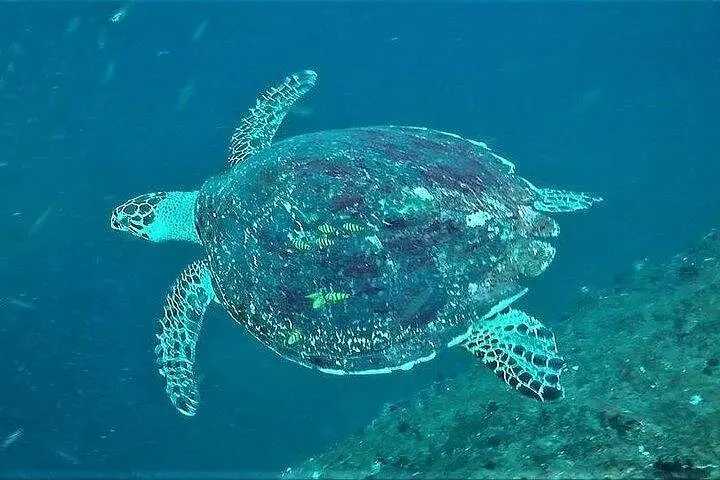
Common sightings include turtles, blacktip reef sharks, eagle rays, cuttlefish and abundant reef fish; larger pelagics like whale sharks or mantas appear rarely, most often between April and June.
The €15 entrance fee is typically paid locally at the park or through the operator on the day of the visit—confirm with the dive center when you book.
Divinguru Sri Lanka operates guided outdoor trips and adventures with an emphasis on safety, stewardship, and memorable experiences.
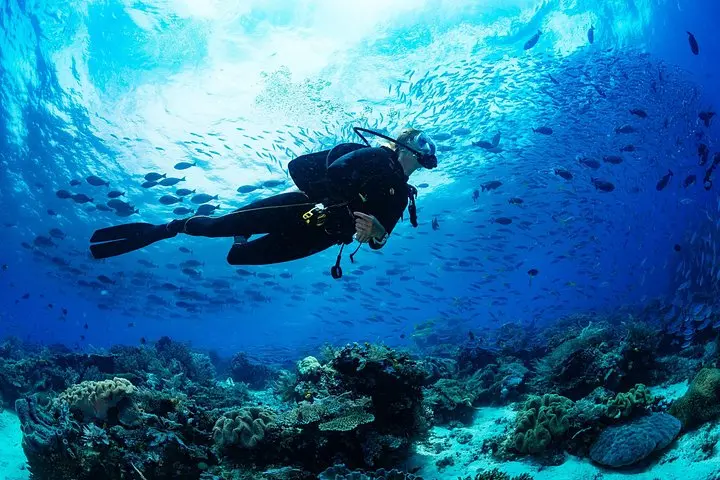
The boat slips away from Nilaveli beach at dawn, engines ticking like a pulse beneath a pale sky. Within 20–40 minutes the silhouette of Pigeon Island rises—a coral ridge breaking the flat blue—and the water opens into gardens of hard and soft coral. Schools of fusiliers circle like moving silver leaves while a blacktip reef shark noses the sand beyond the bommie.
The boat slips away from Nilaveli beach at dawn, engines ticking like a pulse beneath a pale sky. Within 20–40 minutes the silhouette of Pigeon Island rises—a coral ridge breaking the flat blue—and the water opens into gardens of hard and soft coral. Schools of fusiliers circle like moving silver leaves while a blacktip reef shark noses the sand beyond the bommie.
Trincomalee’s eastern shelf is volcanic in origin; shallow platforms and submerged rock outcrops create diverse dive profiles from 6–30 m. The region has long been a crossroads—ancient ports, colonial forts, and a fishing culture that still sets the rhythm for coastal villages. Conservation of Pigeon Island Marine Park matters here: a paid entrance supports protection of over 200 hard coral species and the fish communities that depend on them.
Practical guide: certified divers can book single or double boat dives with small groups (max 5 divers) and 12 L aluminum tanks with INT/DIN options provided. Registration is 8:30 am for morning dives or 1:30 pm for afternoon trips; expect to be back in roughly 2 hours for a single-dive outing or about 4 hours for two dives. Nitrox is available free of charge. Depths range 6–30 m—bring a dive computer and a logbook, and carry certification cards; good buoyancy control is essential for reef protection.
Visibility is often excellent in the dry season and lower during monsoon swells; April–June brings the best chance—though rare—of seeing manta and whale sharks. Plan surface intervals, hydrate, and follow local briefings: the ocean here can feel like a willing partner, but it will always have the final say.