THE ADVENTURE COLLECTIVE® · Independent discovery and booking for outdoor travel

Float between Aswan and Luxor on a 3‑night Nile cruise that pairs ancient temples with a sunrise hot‑air balloon over Luxor. Expect early starts, short onshore walks, and unforgettable views of Abu Simbel, Karnak, Edfu and Kom Ombo.
Float between Aswan and Luxor on a 3‑night Nile cruise that pairs ancient temples with a sunrise hot‑air balloon over Luxor. Expect early starts, short onshore walks, and unforgettable views of Abu Simbel, Karnak, Edfu and Kom Ombo.
Morning light slides across palm-fringed riverbanks as your cruise slips free of Aswan’s quay and the Nile begins to push you downstream. On deck, the air smells of river mud and diesel; gulls quarrel with fishermen and the landscape alternates between cultivated green and ochre desert bluffs.
Verified experiences and guided adventures in the surrounding area.
Operated by Best Of Egypt Tours · Aswan, Aswan Governorate
Morning light slides across palm-fringed riverbanks as your cruise slips free of Aswan’s quay and the Nile begins to push you downstream. On deck, the air smells of river mud and diesel; gulls quarrel with fishermen and the landscape alternates between cultivated green and ochre desert bluffs.
This itinerary threads Egypt’s most visible eras: Pharaonic tombs carved into Theban cliffs, Greco‑Roman temples at Edfu, and Ramses II’s colossal façade at Abu Simbel, hewn from sandstone and quartzite and transported across centuries of politics and engineering. Aswan bears Nubian culture—bright-painted houses, boatmen’s songs—and the High Dam, a 20th‑century engineering pivot that reshaped Nile hydrology and modern Egypt.
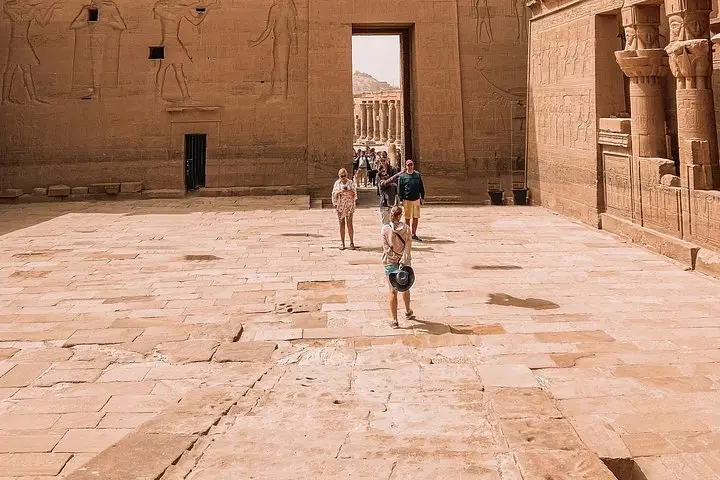
Expect short onshore hikes: temple complexes are largely flat but include long colonnades, compacted sand, and steps into tomb chambers; plan for 1–3 km of walking at most sites and stair descents in the Valley of the Kings. The hot-air balloon launch over Luxor’s West Bank delivers 30–60 minutes of low, silent flight over desert ridges and scattered ruins—an early start but a unique vantage.
Practical edge: mornings are cool, afternoons hot; hydration and sun protection are nonnegotiable. Wear sturdy walking shoes and be ready for uneven stone and dust. Abu Simbel is a 3–4 hour round trip from Aswan by road (shared transfer on many programs), so bring ear plugs and motion remedies if you’re sensitive. Keep photocopies of passports, carry small bills for local guides and vendors, and avoid touching ancient reliefs. With a mix of steady river travel and brisk site walking, this cruise is an efficient, immersive way to move through Egypt’s layered history.
Most visitors require an Egyptian visa—check your national requirements and obtain a visa before travel or via the e‑visa system where available.
The road transfer is roughly 3–4 hours each way; many operators schedule a very early departure to fit the round trip into the day.
Balloon operators set age and health limits; the flight is gentle but involves an early pickup and a landing that can be bumpy—check restrictions and mobility needs in advance.
Major sites have limited accessibility: ramps and flat approaches exist in some areas, but tomb interiors and many ancient stairs are not wheelchair‑friendly—confirm specifics with the operator.
Best Of Egypt Tours operates guided outdoor trips and adventures with an emphasis on safety, stewardship, and memorable experiences.

Morning light slides across palm-fringed riverbanks as your cruise slips free of Aswan’s quay and the Nile begins to push you downstream. On deck, the air smells of river mud and diesel; gulls quarrel with fishermen and the landscape alternates between cultivated green and ochre desert bluffs.
Morning light slides across palm-fringed riverbanks as your cruise slips free of Aswan’s quay and the Nile begins to push you downstream. On deck, the air smells of river mud and diesel; gulls quarrel with fishermen and the landscape alternates between cultivated green and ochre desert bluffs.
This itinerary threads Egypt’s most visible eras: Pharaonic tombs carved into Theban cliffs, Greco‑Roman temples at Edfu, and Ramses II’s colossal façade at Abu Simbel, hewn from sandstone and quartzite and transported across centuries of politics and engineering. Aswan bears Nubian culture—bright-painted houses, boatmen’s songs—and the High Dam, a 20th‑century engineering pivot that reshaped Nile hydrology and modern Egypt.
Expect short onshore hikes: temple complexes are largely flat but include long colonnades, compacted sand, and steps into tomb chambers; plan for 1–3 km of walking at most sites and stair descents in the Valley of the Kings. The hot-air balloon launch over Luxor’s West Bank delivers 30–60 minutes of low, silent flight over desert ridges and scattered ruins—an early start but a unique vantage.
Practical edge: mornings are cool, afternoons hot; hydration and sun protection are nonnegotiable. Wear sturdy walking shoes and be ready for uneven stone and dust. Abu Simbel is a 3–4 hour round trip from Aswan by road (shared transfer on many programs), so bring ear plugs and motion remedies if you’re sensitive. Keep photocopies of passports, carry small bills for local guides and vendors, and avoid touching ancient reliefs. With a mix of steady river travel and brisk site walking, this cruise is an efficient, immersive way to move through Egypt’s layered history.