THE ADVENTURE COLLECTIVE® · Independent discovery and booking for outdoor travel

A compact four-day Nile cruise linking Aswan and Luxor with Abu Simbel, Kom Ombo, Edfu and a sunrise hot-air balloon over the West Bank. Expect archaeological giants, calm river crossings, early starts and practical travel logistics to maximize your time at the sites.
A compact four-day Nile cruise linking Aswan and Luxor with Abu Simbel, Kom Ombo, Edfu and a sunrise hot-air balloon over the West Bank. Expect archaeological giants, calm river crossings, early starts and practical travel logistics to maximize your time at the sites.
You step off the tender into cool Nile air as the sun lifts over Aswan — the river pulls you forward, quietly confident, and the cruise becomes a slow-moving basecamp for ancient stone and desert wind.
Verified experiences and guided adventures in the surrounding area.
Operated by Egypt Travel Line · Aswan, Aswan Governorate
You step off the tender into cool Nile air as the sun lifts over Aswan — the river pulls you forward, quietly confident, and the cruise becomes a slow-moving basecamp for ancient stone and desert wind.
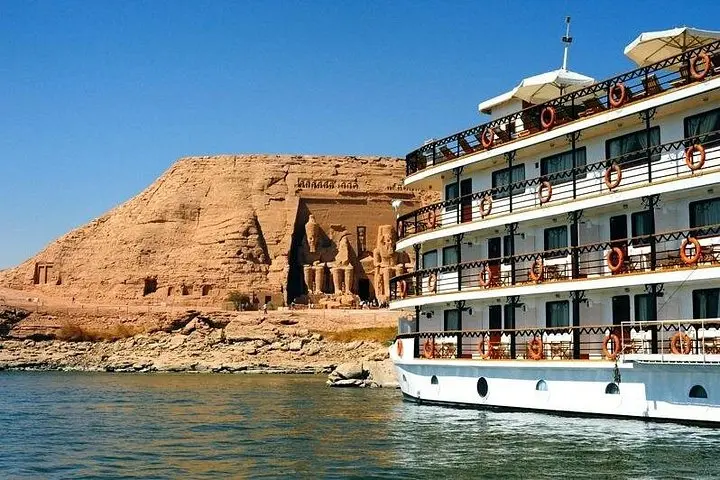
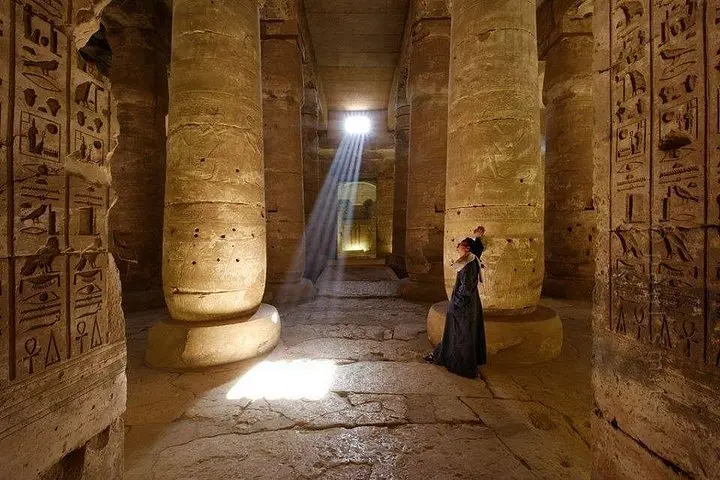
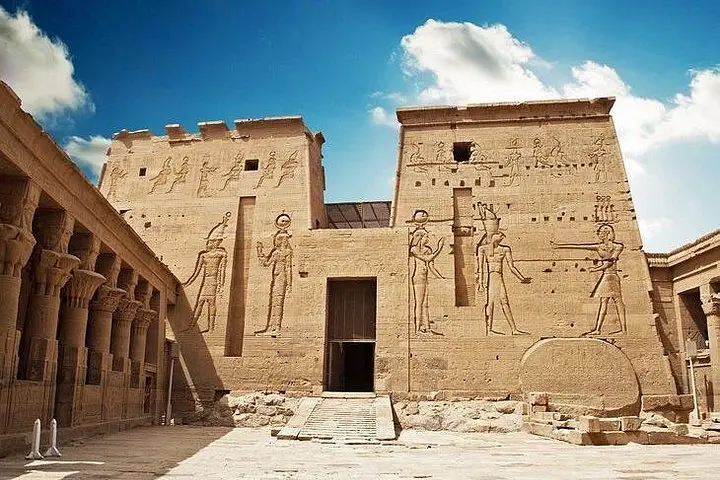
This four-day itinerary stitches Upper Egypt’s highlights into a single loop: Philae and the Aswan High Dam, the colossal rock-cut façade of Abu Simbel, the twin temples of Kom Ombo, the well-preserved temple of Edfu, and Luxor’s Karnak and the Valley of the Kings. Geology here is visible in the baked Nubian sandstone and limestone cliffs that frame the river; culture is in the hieroglyphs, the ritual axes of pharaonic power and the living Nubian neighborhoods of Aswan.
History runs close — Ramesses II’s propaganda at Abu Simbel and Hatshepsut’s terraces at Deir el-Bahari provide contrasts across millennia. Local life still orbits the Nile: feluccas tack windward, market sellers call out produce, and the current seems to urge you downstream toward each next ruin.
Practical guidance: plan early starts (balloon launches around 4:30–5:00 a.m.), carry sun protection and a lightweight layer for cooler mornings, and expect cobbled ramps and uneven temple floors. Hydrate constantly—temps rise quickly—and bring comfortable slip-resistant shoes for short climbs and steps. Confirm luggage transfers and check visa/ticketing for Abu Simbel in advance; windows at iconic sites can get crowded mid-morning, so aim for the earliest visits to beat both heat and lines.
Most visitors require a visa to enter Egypt—check your nationality-specific requirements and arrange a visa in advance or on arrival where applicable.
The itinerary includes the balloon experience; operators follow safety checks but confirm pilot credentials and passenger limits at booking.
Visits are low-impact but involve uneven ground and steps; mobility limitations should be discussed with the operator for accessible routing.
Major towns accept cards, but smaller markets and tips often require cash (Egyptian pounds); bring some local currency and notify your bank before travel.
Egypt Travel Line operates guided outdoor trips and adventures with an emphasis on safety, stewardship, and memorable experiences.
You step off the tender into cool Nile air as the sun lifts over Aswan — the river pulls you forward, quietly confident, and the cruise becomes a slow-moving basecamp for ancient stone and desert wind.
You step off the tender into cool Nile air as the sun lifts over Aswan — the river pulls you forward, quietly confident, and the cruise becomes a slow-moving basecamp for ancient stone and desert wind.
This four-day itinerary stitches Upper Egypt’s highlights into a single loop: Philae and the Aswan High Dam, the colossal rock-cut façade of Abu Simbel, the twin temples of Kom Ombo, the well-preserved temple of Edfu, and Luxor’s Karnak and the Valley of the Kings. Geology here is visible in the baked Nubian sandstone and limestone cliffs that frame the river; culture is in the hieroglyphs, the ritual axes of pharaonic power and the living Nubian neighborhoods of Aswan.
History runs close — Ramesses II’s propaganda at Abu Simbel and Hatshepsut’s terraces at Deir el-Bahari provide contrasts across millennia. Local life still orbits the Nile: feluccas tack windward, market sellers call out produce, and the current seems to urge you downstream toward each next ruin.
Practical guidance: plan early starts (balloon launches around 4:30–5:00 a.m.), carry sun protection and a lightweight layer for cooler mornings, and expect cobbled ramps and uneven temple floors. Hydrate constantly—temps rise quickly—and bring comfortable slip-resistant shoes for short climbs and steps. Confirm luggage transfers and check visa/ticketing for Abu Simbel in advance; windows at iconic sites can get crowded mid-morning, so aim for the earliest visits to beat both heat and lines.