THE ADVENTURE COLLECTIVE® · Independent discovery and booking for outdoor travel

Glide between Luxor and Aswan on a four-night Nile cruise that pairs major pharaonic sites with leisurely river sailing. This guide covers what you’ll see, when to go, and practical tips for visiting temples, locks and felucca-lined islands.
Glide between Luxor and Aswan on a four-night Nile cruise that pairs major pharaonic sites with leisurely river sailing. This guide covers what you’ll see, when to go, and practical tips for visiting temples, locks and felucca-lined islands.
You step onto the sun-warmed deck as the Nile pulls its slow current past date palms and low island shoals; the ship breathes and the city of Luxor slides away. Teak rails, copper lamps and the distant call to prayer set the rhythm while the river keeps time — villages, temple pylons and fishermen’s skiffs punctuate the horizon.
Verified experiences and guided adventures in the surrounding area.
Operated by Special trips · Luxor, Luxor Governorate
You step onto the sun-warmed deck as the Nile pulls its slow current past date palms and low island shoals; the ship breathes and the city of Luxor slides away. Teak rails, copper lamps and the distant call to prayer set the rhythm while the river keeps time — villages, temple pylons and fishermen’s skiffs punctuate the horizon.
This five-day, four-night itinerary threads Upper Egypt’s major antiquities: the Valley of the Kings and Queens on Luxor’s west bank, Karnak and Luxor Temples on the east, the Ptolemaic temples of Edfu and Kom Ombo, and Aswan’s High Dam, quarries and Philae. Geologically the valley follows a fertile Nile floodplain carved by millennia of silt and water, which is why temples line the riverbanks: the Nile was both highway and lifeblood for pharaonic power.
Culturally expect layered influence — New Kingdom pharaohs, Ptolemaic priests and later Coptic and Islamic communities all left marks you’ll see in hieroglyphs, reliefs and local markets. Guides are usually Egyptologists who put architectural details and burial rites into context while you walk stone colonnades and shadowed tomb corridors.
Practical guidance: bring a hat, high-SPF sunscreen and comfortable walking shoes for uneven temple stones. Plan early mornings at major sites to avoid heat and crowds; crossings (like Esna Lock) are leisurely but require careful footing. Hydrate between excursions — bottled water is standard on board — and carry small Egyptian pounds for tips and local purchases. With modest mobility you’ll enjoy a low-effort, high-impact way to experience Ancient Egypt from the one artery that made it possible.
Yes — the itinerary includes domestic flights Cairo–Luxor and Aswan–Cairo as listed in the inclusions.
Abu Simbel is an optional extension; the standard cruise disembarks in Aswan and can be combined with a separate flight excursion to Abu Simbel.
The cruise itself is low-impact, but temple sites and tombs involve uneven ground, steps and sometimes narrow passages; check specific accessibility needs with the operator before booking.
Gratuities are not specified as included — bring small cash for tipping guides, boat crew and local helpers.
Special trips operates guided outdoor trips and adventures with an emphasis on safety, stewardship, and memorable experiences.
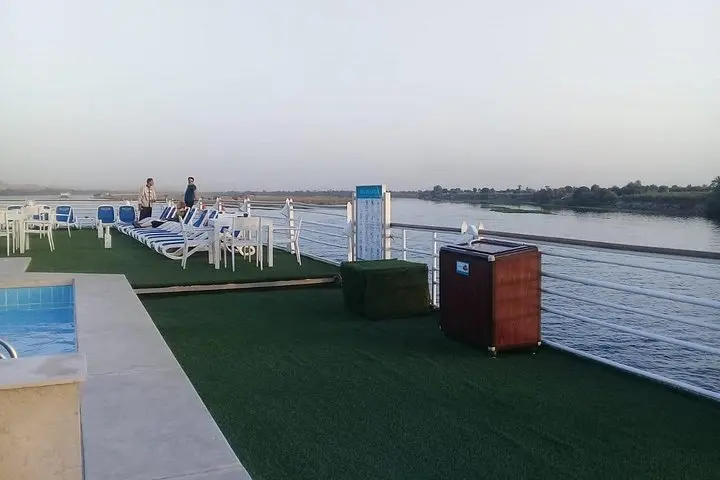
You step onto the sun-warmed deck as the Nile pulls its slow current past date palms and low island shoals; the ship breathes and the city of Luxor slides away. Teak rails, copper lamps and the distant call to prayer set the rhythm while the river keeps time — villages, temple pylons and fishermen’s skiffs punctuate the horizon.
You step onto the sun-warmed deck as the Nile pulls its slow current past date palms and low island shoals; the ship breathes and the city of Luxor slides away. Teak rails, copper lamps and the distant call to prayer set the rhythm while the river keeps time — villages, temple pylons and fishermen’s skiffs punctuate the horizon.
This five-day, four-night itinerary threads Upper Egypt’s major antiquities: the Valley of the Kings and Queens on Luxor’s west bank, Karnak and Luxor Temples on the east, the Ptolemaic temples of Edfu and Kom Ombo, and Aswan’s High Dam, quarries and Philae. Geologically the valley follows a fertile Nile floodplain carved by millennia of silt and water, which is why temples line the riverbanks: the Nile was both highway and lifeblood for pharaonic power.
Culturally expect layered influence — New Kingdom pharaohs, Ptolemaic priests and later Coptic and Islamic communities all left marks you’ll see in hieroglyphs, reliefs and local markets. Guides are usually Egyptologists who put architectural details and burial rites into context while you walk stone colonnades and shadowed tomb corridors.
Practical guidance: bring a hat, high-SPF sunscreen and comfortable walking shoes for uneven temple stones. Plan early mornings at major sites to avoid heat and crowds; crossings (like Esna Lock) are leisurely but require careful footing. Hydrate between excursions — bottled water is standard on board — and carry small Egyptian pounds for tips and local purchases. With modest mobility you’ll enjoy a low-effort, high-impact way to experience Ancient Egypt from the one artery that made it possible.