THE ADVENTURE COLLECTIVE® · Independent discovery and booking for outdoor travel

Float through cavernous waterways, trace the first capital’s temple lines, then climb Mua Cave for a sweeping view of Tam Coc’s rice-carved bends. This full-day tour pairs calm boat travel with a brisk viewpoint ascent—ideal for active travelers wanting a concentrated slice of Ninh Binh.
Float through cavernous waterways, trace the first capital’s temple lines, then climb Mua Cave for a sweeping view of Tam Coc’s rice-carved bends. This full-day tour pairs calm boat travel with a brisk viewpoint ascent—ideal for active travelers wanting a concentrated slice of Ninh Binh.
Late-morning light slices between limestone towers as a narrow sampan slips from the riverbank—paddles whisper, water parts, and the karst landscape of Ninh Binh opens like a map of time. Travelers begin at Hoa Lu, where 10th-century temples sit beneath sheer cliffs, then move into the waterways of Trang An and Tam Coc, where stooped boatmen steer through cave mouths and rice paddies edge every channel.
Verified experiences and guided adventures in the surrounding area.
Operated by Vn Bike Tour · Ninh Binh, Ninh Bình Province
Late-morning light slices between limestone towers as a narrow sampan slips from the riverbank—paddles whisper, water parts, and the karst landscape of Ninh Binh opens like a map of time. Travelers begin at Hoa Lu, where 10th-century temples sit beneath sheer cliffs, then move into the waterways of Trang An and Tam Coc, where stooped boatmen steer through cave mouths and rice paddies edge every channel.
This region is carved from carboniferous limestone: caves, sinkholes and climbing ridges created by millennia of uplift and erosion. Trang An’s UNESCO designation highlights both its geological drama and the layers of Vietnamese history—ancient burial sites and imperial-era temples in Hoa Lu recall the area’s role as the country’s first capital. Local life still orbits the river: farmers tend seasonal paddies, and small temples hug karst bases where legends attach meaning to caves and pools.
The day wraps with the climb to Mua Cave (Hang Mua), a near-vertical set of stone steps—roughly 500—rewarding climbers with a broad, photographic view over the Tam Coc bends and patchwork rice fields below. Expect mixed terrain: flat boat routes, paved temple grounds, and steep, exposed stair sections at the viewpoint.
Practicalities: start early to avoid mid-day heat, bring water and sun protection, and wear shoes with grip for the Mua steps. Boats are calm but low—prepare to sit low and steady. Entrance fees and lunch are normally included on guided tours; the full itinerary runs around 10 hours. This is an accessible, full-day blend of culture, geology and straightforward walking that suits active travelers who want a concentrated taste of northern Vietnam’s karst country.
The climb is steep—roughly 500 steps—with some exposed sections; it’s a short but vigorous ascent that most moderately fit travelers can complete with breaks.
Sampan boats are stable but low; they’re suitable for many travelers, including older visitors, though those with severe mobility limits may find boarding difficult.
Yes, the typical full-day tour includes a local lunch and entrance fees as part of the itinerary.
Early mornings on weekdays are quietest; late afternoon at Mua Cave offers softer light but can be busier with tour groups.
Vn Bike Tour operates guided outdoor trips and adventures with an emphasis on safety, stewardship, and memorable experiences.


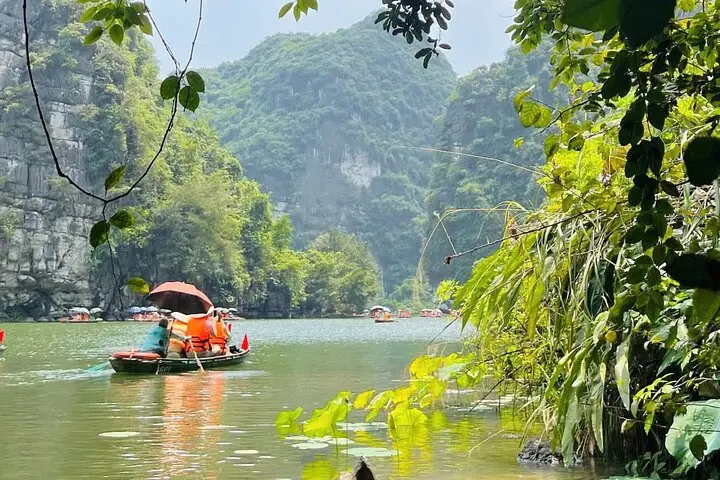

Late-morning light slices between limestone towers as a narrow sampan slips from the riverbank—paddles whisper, water parts, and the karst landscape of Ninh Binh opens like a map of time. Travelers begin at Hoa Lu, where 10th-century temples sit beneath sheer cliffs, then move into the waterways of Trang An and Tam Coc, where stooped boatmen steer through cave mouths and rice paddies edge every channel.
Late-morning light slices between limestone towers as a narrow sampan slips from the riverbank—paddles whisper, water parts, and the karst landscape of Ninh Binh opens like a map of time. Travelers begin at Hoa Lu, where 10th-century temples sit beneath sheer cliffs, then move into the waterways of Trang An and Tam Coc, where stooped boatmen steer through cave mouths and rice paddies edge every channel.
This region is carved from carboniferous limestone: caves, sinkholes and climbing ridges created by millennia of uplift and erosion. Trang An’s UNESCO designation highlights both its geological drama and the layers of Vietnamese history—ancient burial sites and imperial-era temples in Hoa Lu recall the area’s role as the country’s first capital. Local life still orbits the river: farmers tend seasonal paddies, and small temples hug karst bases where legends attach meaning to caves and pools.
The day wraps with the climb to Mua Cave (Hang Mua), a near-vertical set of stone steps—roughly 500—rewarding climbers with a broad, photographic view over the Tam Coc bends and patchwork rice fields below. Expect mixed terrain: flat boat routes, paved temple grounds, and steep, exposed stair sections at the viewpoint.
Practicalities: start early to avoid mid-day heat, bring water and sun protection, and wear shoes with grip for the Mua steps. Boats are calm but low—prepare to sit low and steady. Entrance fees and lunch are normally included on guided tours; the full itinerary runs around 10 hours. This is an accessible, full-day blend of culture, geology and straightforward walking that suits active travelers who want a concentrated taste of northern Vietnam’s karst country.