THE ADVENTURE COLLECTIVE® · Independent discovery and booking for outdoor travel

Climb the stone steps of Hang Mua for sweeping views over Tam Coc, glide through cave-carved waterways on a bamboo sampan, and visit Hoa Lu’s ancient temples—all in a focused, accessible day trip from Hanoi or Ninh Binh.
Climb the stone steps of Hang Mua for sweeping views over Tam Coc, glide through cave-carved waterways on a bamboo sampan, and visit Hoa Lu’s ancient temples—all in a focused, accessible day trip from Hanoi or Ninh Binh.
Morning light slices between limestone towers as you climb the long stone steps of Hang Mua, the viewpoint commonly called Dragon Mountain. From the switchback stairs the valley opens: a slow ribbon of the Ngo Dong River threading bright rice fields, karst cliffs standing like old guardians. The air smells of wet earth and cooking fires from nearby villages.
Verified experiences and guided adventures in the surrounding area.
Operated by Tinny Travel · Ninh Bình, Ninh Bình Province
Morning light slices between limestone towers as you climb the long stone steps of Hang Mua, the viewpoint commonly called Dragon Mountain. From the switchback stairs the valley opens: a slow ribbon of the Ngo Dong River threading bright rice fields, karst cliffs standing like old guardians. The air smells of wet earth and cooking fires from nearby villages.
This one-day circuit stitches together layered history and raw geology. Hoa Lu was Vietnam’s 10th–11th century capital; its low stone temples and earthen walls hint at an early kingdom that used these limestone ridges for defense. The karst landscape itself is ancient reef limestone compacted and uplifted, then sculpted by monsoon rains and underground rivers—hence the caves that Tam Coc’s sampans slide through.
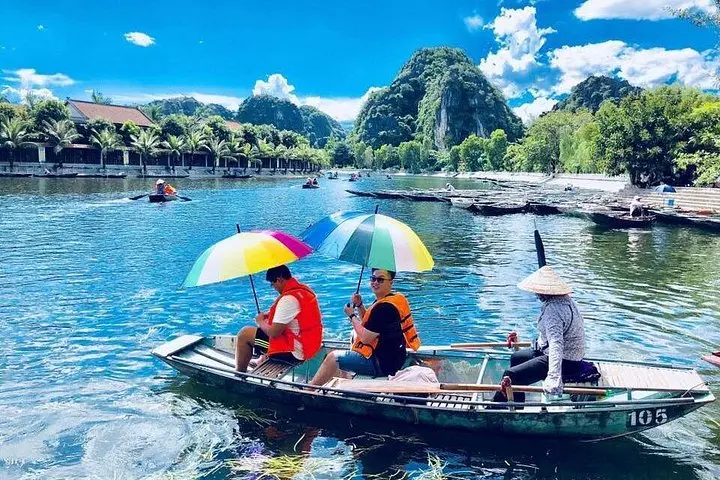
Culturally the route moves from quiet temple courtyards to working paddies and village lanes; vendors sell goat meat and spring rolls alongside basket boats and conical hats. Expect easy to moderate exertion: steep, exposed steps at Hang Mua, flat cycling on rural lanes, and a passive bamboo-boat glide through three short caves on the Ngo Dong.
Practical notes: start early to avoid midday heat and the crowds at the viewpoint; bring sun protection and water for the climb; wear good-grip shoes for uneven steps. If you’re sensitive to motion, the sampan ride is calm but low and shaded. Timing your visit in late autumn or spring gives cooler air and vivid rice colors. This day trip balances accessible hiking, a slow riverscape, and direct contact with northern Vietnam’s geological and cultural heart.
The climb involves roughly 300–500 uneven stone steps depending on route; plan 20–40 minutes up at a steady pace.
No—the bamboo sampan is a seated, mostly passive trip steered by a local rower; motion is gentle though low seating may be uncomfortable for some.
This tour lists admission included for main attractions (Hoa Lu, Hang Mua, Tam Coc boat) but confirm at booking for any recent changes.
Children can join; infants must sit on laps. The tour provider advises that pregnant travelers not participate in certain activities—check with your doctor and the operator.
Tinny Travel operates guided outdoor trips and adventures with an emphasis on safety, stewardship, and memorable experiences.



Morning light slices between limestone towers as you climb the long stone steps of Hang Mua, the viewpoint commonly called Dragon Mountain. From the switchback stairs the valley opens: a slow ribbon of the Ngo Dong River threading bright rice fields, karst cliffs standing like old guardians. The air smells of wet earth and cooking fires from nearby villages.
Morning light slices between limestone towers as you climb the long stone steps of Hang Mua, the viewpoint commonly called Dragon Mountain. From the switchback stairs the valley opens: a slow ribbon of the Ngo Dong River threading bright rice fields, karst cliffs standing like old guardians. The air smells of wet earth and cooking fires from nearby villages.
This one-day circuit stitches together layered history and raw geology. Hoa Lu was Vietnam’s 10th–11th century capital; its low stone temples and earthen walls hint at an early kingdom that used these limestone ridges for defense. The karst landscape itself is ancient reef limestone compacted and uplifted, then sculpted by monsoon rains and underground rivers—hence the caves that Tam Coc’s sampans slide through.
Culturally the route moves from quiet temple courtyards to working paddies and village lanes; vendors sell goat meat and spring rolls alongside basket boats and conical hats. Expect easy to moderate exertion: steep, exposed steps at Hang Mua, flat cycling on rural lanes, and a passive bamboo-boat glide through three short caves on the Ngo Dong.
Practical notes: start early to avoid midday heat and the crowds at the viewpoint; bring sun protection and water for the climb; wear good-grip shoes for uneven steps. If you’re sensitive to motion, the sampan ride is calm but low and shaded. Timing your visit in late autumn or spring gives cooler air and vivid rice colors. This day trip balances accessible hiking, a slow riverscape, and direct contact with northern Vietnam’s geological and cultural heart.