THE ADVENTURE COLLECTIVE® · Independent discovery and booking for outdoor travel

Covering Bái Đính’s vast pagoda, a two‑hour Trang An boat ride, the 500 steps of Múa Cave and ancient Hoa Lư, this full‑day tour compresses Ninh Bình’s highlights into a practical, scenic route. Expect karst cliffs, caves and temple culture with a sensible mix of walking and boat time.
Covering Bái Đính’s vast pagoda, a two‑hour Trang An boat ride, the 500 steps of Múa Cave and ancient Hoa Lư, this full‑day tour compresses Ninh Bình’s highlights into a practical, scenic route. Expect karst cliffs, caves and temple culture with a sensible mix of walking and boat time.
You step out of an air‑conditioned minivan into a spread of limestone towers and flooded rice paddies, the karst ridges cutting the horizon like weathered teeth. Morning light falls across Bái Đính’s vast courtyards and bronze Buddha, then the group moves on to the slow, emerald river of Tràng An where small sampans thread caves and cliff mouths.
Verified experiences and guided adventures in the surrounding area.
Operated by Lisa · Ninh Bình, Ninh Bình Province
You step out of an air‑conditioned minivan into a spread of limestone towers and flooded rice paddies, the karst ridges cutting the horizon like weathered teeth. Morning light falls across Bái Đính’s vast courtyards and bronze Buddha, then the group moves on to the slow, emerald river of Tràng An where small sampans thread caves and cliff mouths.
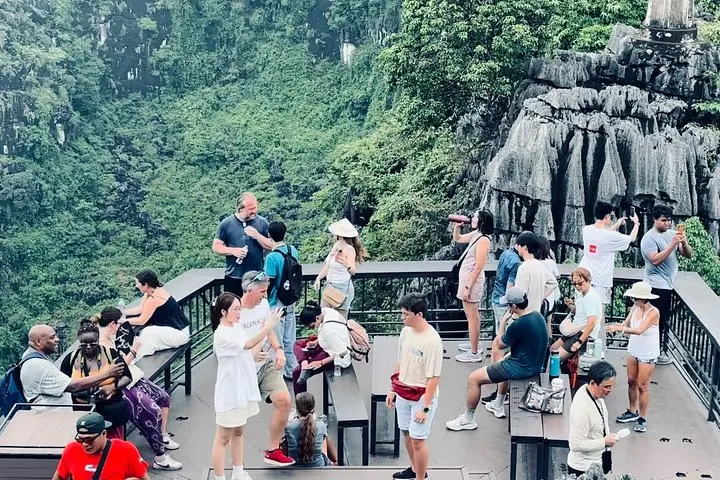
This single‑day loop stitches together Ninh Bình’s most recognisable threads. Bái Đính is Vietnam’s largest temple complex, with giant bronze and stone statues and ceremonial bells; Tràng An is a UNESCO‑listed karst‑and‑river landscape with caves carved by ancient water flow; Múa Cave requires a 500‑step climb to Ngọa Long’s ridge for panoramic views over Tam Cốc; and Hoa Lư holds the ruins and temples of Vietnam’s capital during the Đinh and Early Lê dynasties (968–1010).
Geologically the area is a classic inland karst system—limestone dissolves into caves and arches while seasonal flooding maps the valleys. Culturally, temples and local village life remain active; expect pilgrims at Bái Đính and farmers working fields at the valley floor.
Practical edge: the full itinerary runs about nine hours (07:30–17:00), with boat time roughly two hours and about an hour of stair climbing at Múa. Wear grippy shoes, bring sun protection and a small pack for layers; bottled water and lunch are included but keep some cash for vendor snacks and temple offerings. Early starts beat the heat and crowds; steady pacing on the stairs makes the summit views more enjoyable.
The guided sampan tour through Tràng An typically lasts around two hours and covers several caves and river passages.
Yes; the tour is marketed as easy and includes short walks and boat travel, though the Múa Cave stair climb may be challenging for some—there are rest spots.
Yes. Entrance fees, bottled water on the bus and a buffet lunch at a local restaurant are included in the tour price.
Dress modestly (shoulders and knees covered), speak quietly, and follow local customs—remove hats and avoid flash photography inside worship spaces when asked.
Lisa operates guided outdoor trips and adventures with an emphasis on safety, stewardship, and memorable experiences.



You step out of an air‑conditioned minivan into a spread of limestone towers and flooded rice paddies, the karst ridges cutting the horizon like weathered teeth. Morning light falls across Bái Đính’s vast courtyards and bronze Buddha, then the group moves on to the slow, emerald river of Tràng An where small sampans thread caves and cliff mouths.
You step out of an air‑conditioned minivan into a spread of limestone towers and flooded rice paddies, the karst ridges cutting the horizon like weathered teeth. Morning light falls across Bái Đính’s vast courtyards and bronze Buddha, then the group moves on to the slow, emerald river of Tràng An where small sampans thread caves and cliff mouths.
This single‑day loop stitches together Ninh Bình’s most recognisable threads. Bái Đính is Vietnam’s largest temple complex, with giant bronze and stone statues and ceremonial bells; Tràng An is a UNESCO‑listed karst‑and‑river landscape with caves carved by ancient water flow; Múa Cave requires a 500‑step climb to Ngọa Long’s ridge for panoramic views over Tam Cốc; and Hoa Lư holds the ruins and temples of Vietnam’s capital during the Đinh and Early Lê dynasties (968–1010).
Geologically the area is a classic inland karst system—limestone dissolves into caves and arches while seasonal flooding maps the valleys. Culturally, temples and local village life remain active; expect pilgrims at Bái Đính and farmers working fields at the valley floor.
Practical edge: the full itinerary runs about nine hours (07:30–17:00), with boat time roughly two hours and about an hour of stair climbing at Múa. Wear grippy shoes, bring sun protection and a small pack for layers; bottled water and lunch are included but keep some cash for vendor snacks and temple offerings. Early starts beat the heat and crowds; steady pacing on the stairs makes the summit views more enjoyable.