THE ADVENTURE COLLECTIVE® · Independent discovery and booking for outdoor travel

Swap Hanoi’s traffic for rice paddies and limestone towers on a full-day loop through Hoa Lu, Mua Cave and Tam Coc. Expect a 500-step viewpoint, a tranquil sampan ride through three tunnels, and easy countryside cycling—perfect for a compact introduction to Ninh Binh’s karst landscape.
Swap Hanoi’s traffic for rice paddies and limestone towers on a full-day loop through Hoa Lu, Mua Cave and Tam Coc. Expect a 500-step viewpoint, a tranquil sampan ride through three tunnels, and easy countryside cycling—perfect for a compact introduction to Ninh Binh’s karst landscape.
You step out of Hanoi’s morning rush and, within two hours, the city’s noise is replaced by the slow rhythm of river life: wooden sampans cutting through the Ngo Dong, fields opening green and flat to a horizon of limestone spikes.
Verified experiences and guided adventures in the surrounding area.
Operated by Vietnam Real Tour · Ninh Binh, Ninh Binh Province
You step out of Hanoi’s morning rush and, within two hours, the city’s noise is replaced by the slow rhythm of river life: wooden sampans cutting through the Ngo Dong, fields opening green and flat to a horizon of limestone spikes.
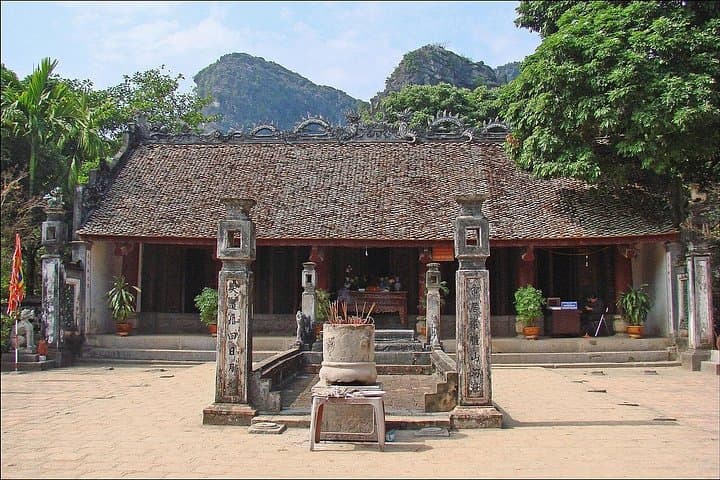
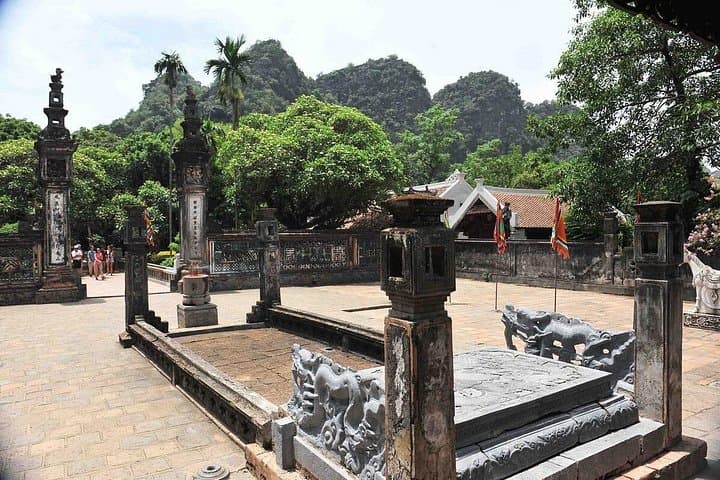
This one-day loop pairs history and geology. Hoa Lu was Vietnam’s 10th-century capital under the Dinh and early Le kings; its low earthen walls and temples offer a compact lesson in early Vietnamese statecraft. The region’s karst towers—limestone folded and eroded over millions of years—create the “Halong Bay on land” silhouette that Tam Coc and Mua Cave look out over. Local culture is visible at every turn: farmers tending narrow rice beds, boatmen guiding passengers through three water-carved tunnels, and narrow village lanes where bicycles are the primary transport.
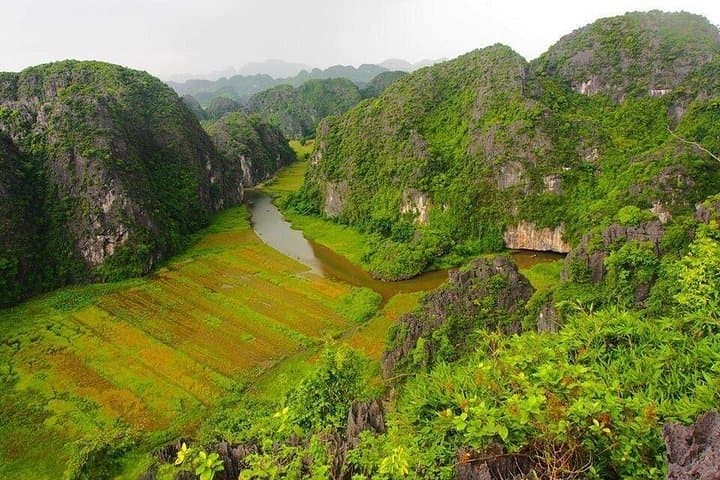
Practicalities shape the day: expect roughly 500 stone steps at Mua’s viewpoint, a 1.5-hour seated sampan ride through Ngo Dong’s tunnels, and a short flat bike ride beside paddies. The trek up Mua rewards effort with sweeping views of the Tam Coc valley; the boat trip rewards patience with low-slung grottoes and quiet riverbank scenes.
Plan for sun, sudden tropical rain, and uneven stairs. Bring cash for small purchases and tips, wear grippy shoes and a light rain layer, and keep valuables dry during the boat segment. Timing matters—midday can be hot and crowded; early departures give cooler light for photos. This loop is an efficient, sensory introduction to northern Vietnam’s karst landscape and rural life.
Yes—most operators include hotel pickup and drop-off in Hanoi’s Old Quarter; confirm your pickup point when booking.
The climb is steep and involves about 500 uneven steps; take breaks and avoid it if you have serious knee or back issues.
Families can bring children, but infants must sit on laps for the boat; the climb and full-day schedule may be tiring for very young kids.
According to the itinerary, all entrance fees and a local Vietnamese lunch are included with the tour price.
Vietnam Real Tour operates guided outdoor trips and adventures with an emphasis on safety, stewardship, and memorable experiences.

You step out of Hanoi’s morning rush and, within two hours, the city’s noise is replaced by the slow rhythm of river life: wooden sampans cutting through the Ngo Dong, fields opening green and flat to a horizon of limestone spikes.
You step out of Hanoi’s morning rush and, within two hours, the city’s noise is replaced by the slow rhythm of river life: wooden sampans cutting through the Ngo Dong, fields opening green and flat to a horizon of limestone spikes.
This one-day loop pairs history and geology. Hoa Lu was Vietnam’s 10th-century capital under the Dinh and early Le kings; its low earthen walls and temples offer a compact lesson in early Vietnamese statecraft. The region’s karst towers—limestone folded and eroded over millions of years—create the “Halong Bay on land” silhouette that Tam Coc and Mua Cave look out over. Local culture is visible at every turn: farmers tending narrow rice beds, boatmen guiding passengers through three water-carved tunnels, and narrow village lanes where bicycles are the primary transport.
Practicalities shape the day: expect roughly 500 stone steps at Mua’s viewpoint, a 1.5-hour seated sampan ride through Ngo Dong’s tunnels, and a short flat bike ride beside paddies. The trek up Mua rewards effort with sweeping views of the Tam Coc valley; the boat trip rewards patience with low-slung grottoes and quiet riverbank scenes.
Plan for sun, sudden tropical rain, and uneven stairs. Bring cash for small purchases and tips, wear grippy shoes and a light rain layer, and keep valuables dry during the boat segment. Timing matters—midday can be hot and crowded; early departures give cooler light for photos. This loop is an efficient, sensory introduction to northern Vietnam’s karst landscape and rural life.