THE ADVENTURE COLLECTIVE® · Independent discovery and booking for outdoor travel

Explore Vietnam’s karst heart on a small-group day tour from Ninh Binh: climb Mua Cave for sweeping valley views, cruise Trang An’s cave canals, and visit the ancient capital of Hoa Lu. A balanced mix of culture, geology and active sightseeing.
Explore Vietnam’s karst heart on a small-group day tour from Ninh Binh: climb Mua Cave for sweeping valley views, cruise Trang An’s cave canals, and visit the ancient capital of Hoa Lu. A balanced mix of culture, geology and active sightseeing.
The morning light slices between karst towers as your minivan hums away from Tam Coc toward the first temple. Air tastes faintly of river clay and cooking fires; rice paddies lie like stitched quilts beneath the cliffs. By mid-morning you’re climbing the stair-stepped flank of Mua Cave — five hundred stone steps that test your legs and reward you with a hard-earned panorama of the valley and winding waterways below.
Verified experiences and guided adventures in the surrounding area.
Operated by Vinadu · Ninh Binh, Ninh Binh
The morning light slices between karst towers as your minivan hums away from Tam Coc toward the first temple. Air tastes faintly of river clay and cooking fires; rice paddies lie like stitched quilts beneath the cliffs. By mid-morning you’re climbing the stair-stepped flank of Mua Cave — five hundred stone steps that test your legs and reward you with a hard-earned panorama of the valley and winding waterways below.
This route threads three layers of Ninh Binh: the 10th-century capital of Hoa Lu with its Dinh and Le dynasties’ temples and relics of early Vietnamese statecraft; the limestone caves and grottoes of Trang An carved over millennia by subterranean rivers; and the tiered pagoda complex at Bich Dong, a quiet example of local Buddhist practice built into a cliffside. Geologically, the region is classic tropical karst — soluble limestone forming caves, tunnels and sheer cliffs that rivers dare to cut through.
Expect guided boat passages through dim caves where sunlight slips in like a moving lantern, short hikes and stair climbs at Mua, and easy walking around temple grounds. Practical notes: bring a reusable water bottle and sunscreen, wear grippy shoes for wet stone steps, and aim for early departures to avoid midday heat and crowds. Boat rides can be cool and damp — a light windbreaker helps. Local restaurants serve regional rice-crab and goat dishes; make dietary requests in advance.
This is a day of contrasts — quiet shrines, green paddies, intimate boat caves and a viewpoint that makes the whole karst landscape feel immediate and walkable.
The climb is about 500 steps—steep in sections but short; take rests and it’s manageable for most people in reasonable health.
Yes—boats are stable and rowed by locals; children should wear life jackets if supplied and be supervised during boarding.
Yes—operators can usually handle vegetarian, vegan and common allergies if notified at booking.
Yes, though heavy rains in summer can make boat sections cooler and slipperier; spring and fall offer the most comfortable conditions.
Vinadu operates guided outdoor trips and adventures with an emphasis on safety, stewardship, and memorable experiences.
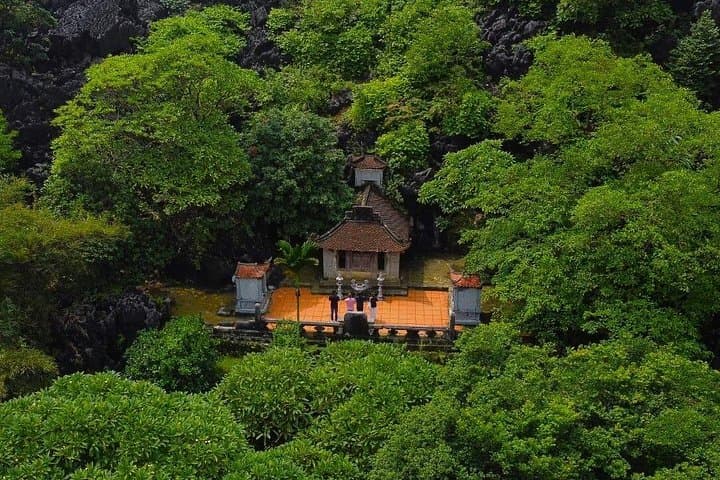


The morning light slices between karst towers as your minivan hums away from Tam Coc toward the first temple. Air tastes faintly of river clay and cooking fires; rice paddies lie like stitched quilts beneath the cliffs. By mid-morning you’re climbing the stair-stepped flank of Mua Cave — five hundred stone steps that test your legs and reward you with a hard-earned panorama of the valley and winding waterways below.
The morning light slices between karst towers as your minivan hums away from Tam Coc toward the first temple. Air tastes faintly of river clay and cooking fires; rice paddies lie like stitched quilts beneath the cliffs. By mid-morning you’re climbing the stair-stepped flank of Mua Cave — five hundred stone steps that test your legs and reward you with a hard-earned panorama of the valley and winding waterways below.
This route threads three layers of Ninh Binh: the 10th-century capital of Hoa Lu with its Dinh and Le dynasties’ temples and relics of early Vietnamese statecraft; the limestone caves and grottoes of Trang An carved over millennia by subterranean rivers; and the tiered pagoda complex at Bich Dong, a quiet example of local Buddhist practice built into a cliffside. Geologically, the region is classic tropical karst — soluble limestone forming caves, tunnels and sheer cliffs that rivers dare to cut through.
Expect guided boat passages through dim caves where sunlight slips in like a moving lantern, short hikes and stair climbs at Mua, and easy walking around temple grounds. Practical notes: bring a reusable water bottle and sunscreen, wear grippy shoes for wet stone steps, and aim for early departures to avoid midday heat and crowds. Boat rides can be cool and damp — a light windbreaker helps. Local restaurants serve regional rice-crab and goat dishes; make dietary requests in advance.
This is a day of contrasts — quiet shrines, green paddies, intimate boat caves and a viewpoint that makes the whole karst landscape feel immediate and walkable.