THE ADVENTURE COLLECTIVE® · Independent discovery and booking for outdoor travel

Glide past towering limestone karsts, rice paddies, and ancient temples on a full-day e-bike tour of Ninh Binh. This ride combines cultural storytelling, manageable distances, and local cuisine stops for a compact, authentic countryside experience.
Glide past towering limestone karsts, rice paddies, and ancient temples on a full-day e-bike tour of Ninh Binh. This ride combines cultural storytelling, manageable distances, and local cuisine stops for a compact, authentic countryside experience.
You start the day on a modern electric bike as limestone karsts loom like slow-moving giants along flooded rice paddies. Pedal assistance lets you glide through village lanes where women tend morning markets and water buffalo graze at the field edge; the landscape keeps pulling you forward, daring you to look around every bend.
Verified experiences and guided adventures in the surrounding area.
You start the day on a modern electric bike as limestone karsts loom like slow-moving giants along flooded rice paddies. Pedal assistance lets you glide through village lanes where women tend morning markets and water buffalo graze at the field edge; the landscape keeps pulling you forward, daring you to look around every bend.
This full-day route threads together Ninh Binh’s cultural high points — river caves of Tam Coc, the boat-carved passages of Trang An, and the sweeping courtyards of Bai Dinh Pagoda — while passing centuries-old villages and colonial-era rice mills. The karst geology here is dramatic: soft limestone sculpted by millennia of rivers and monsoon, creating caves, cliffs, and hidden valleys. Local guides layer in history and storytelling, from imperial-era sites to contemporary village life tied to rice, pottery, and river trade.
On the bike you feel the region’s tempo: slow fields, quick climbs to viewpoints, and easy recovery on flat country roads. Expect largely paved farm roads, occasional gravel, and short dirt sections; total distance is typically 40–60 km depending on route choices. Heat and humidity shape timing — mornings and late afternoons are best for photos and comfort.
Practical tips: bring hydration, a light rain shell, and closed-toe shoes for brief hikes; wear sunscreen and insect repellent. For responsible travel, follow guides’ directions at temples, support local cafés, and leave no trace on fragile riverbanks. The e-bike makes the day accessible without sacrificing the feel of a real countryside ride.
The full-day experience is typically 8–9 hours and covers roughly 40–60 km depending on stops and route variants; e-bike assist makes the distance manageable.
Yes—electric assist lowers pedaling effort, but basic bike-handling experience and comfort on rural roads are recommended.
Most local operators offer English-speaking guides who provide cultural and historical commentary throughout the day; confirm language when booking.
Older riders and teenagers can usually participate if they are comfortable on a bike; check age and weight limits with the operator and request a lower-assist route if needed.
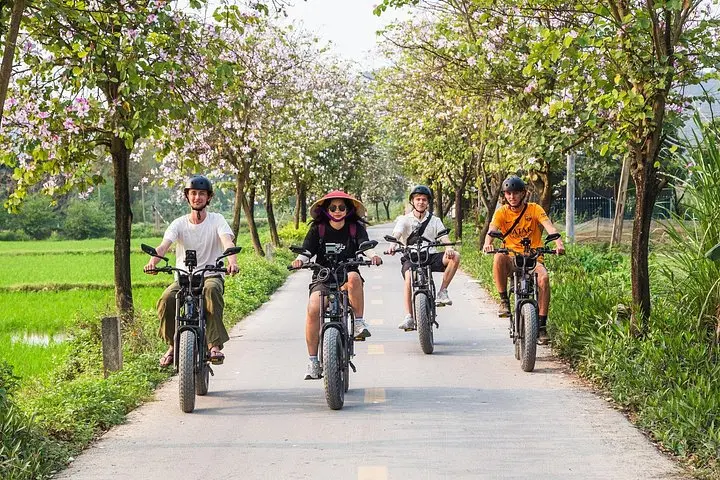
You start the day on a modern electric bike as limestone karsts loom like slow-moving giants along flooded rice paddies. Pedal assistance lets you glide through village lanes where women tend morning markets and water buffalo graze at the field edge; the landscape keeps pulling you forward, daring you to look around every bend.
You start the day on a modern electric bike as limestone karsts loom like slow-moving giants along flooded rice paddies. Pedal assistance lets you glide through village lanes where women tend morning markets and water buffalo graze at the field edge; the landscape keeps pulling you forward, daring you to look around every bend.
This full-day route threads together Ninh Binh’s cultural high points — river caves of Tam Coc, the boat-carved passages of Trang An, and the sweeping courtyards of Bai Dinh Pagoda — while passing centuries-old villages and colonial-era rice mills. The karst geology here is dramatic: soft limestone sculpted by millennia of rivers and monsoon, creating caves, cliffs, and hidden valleys. Local guides layer in history and storytelling, from imperial-era sites to contemporary village life tied to rice, pottery, and river trade.
On the bike you feel the region’s tempo: slow fields, quick climbs to viewpoints, and easy recovery on flat country roads. Expect largely paved farm roads, occasional gravel, and short dirt sections; total distance is typically 40–60 km depending on route choices. Heat and humidity shape timing — mornings and late afternoons are best for photos and comfort.
Practical tips: bring hydration, a light rain shell, and closed-toe shoes for brief hikes; wear sunscreen and insect repellent. For responsible travel, follow guides’ directions at temples, support local cafés, and leave no trace on fragile riverbanks. The e-bike makes the day accessible without sacrificing the feel of a real countryside ride.