THE ADVENTURE COLLECTIVE® · Independent discovery and booking for outdoor travel

Spend a full day from Hanoi exploring Bai Dinh Pagoda’s vast temple grounds, a scenic boat ride through Trang An’s cave network, and a steep climb at Mua Cave for panoramic views. This practical guide tells you what to expect, how to prepare, and why the karst rivers of Ninh Binh reward an early start.
Spend a full day from Hanoi exploring Bai Dinh Pagoda’s vast temple grounds, a scenic boat ride through Trang An’s cave network, and a steep climb at Mua Cave for panoramic views. This practical guide tells you what to expect, how to prepare, and why the karst rivers of Ninh Binh reward an early start.
You step out of the minivan and the limestone towers of Ninh Binh rise like weathered sentries—sharp edges softened by rice paddies and slow-moving waterways. Morning light hits the gilded roofs of Bai Dinh Pagoda; bronze Buddhas and long lines of La Han statues give the complex a quietly grand scale that fills the senses before you board a wooden boat.
Verified experiences and guided adventures in the surrounding area.
Operated by Grayline Vietnam Threeland Travel · Ninh Binh, Ninh Binh Province
You step out of the minivan and the limestone towers of Ninh Binh rise like weathered sentries—sharp edges softened by rice paddies and slow-moving waterways. Morning light hits the gilded roofs of Bai Dinh Pagoda; bronze Buddhas and long lines of La Han statues give the complex a quietly grand scale that fills the senses before you board a wooden boat.
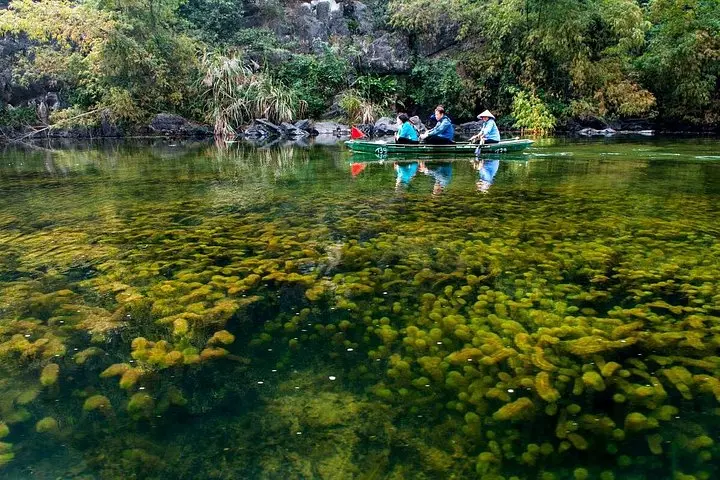
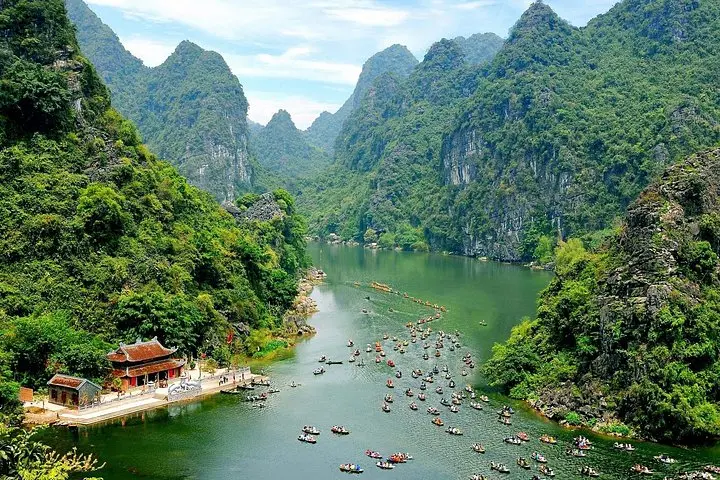
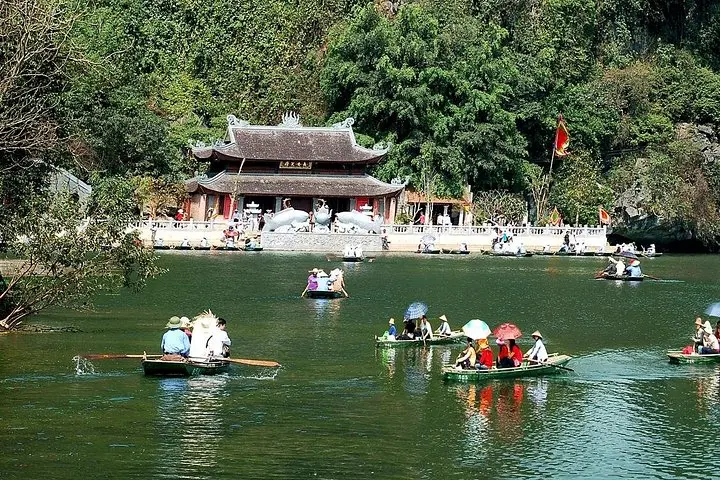
Bai Dinh covers roughly 539 hectares and is Vietnam’s largest temple complex, a recent but culturally important site with the country’s largest bronze Buddha. The karst landscape you’ll glide through in Trang An is older—millions of years of marine limestone sculpted into cave systems and flooded grottoes. Local rowers guide oar-powered boats through nine notable caves, including Sang (Bright) and Toi (Dark), tracing about 6–8 km of narrow waterways while cliffs and rice fields watch you pass.
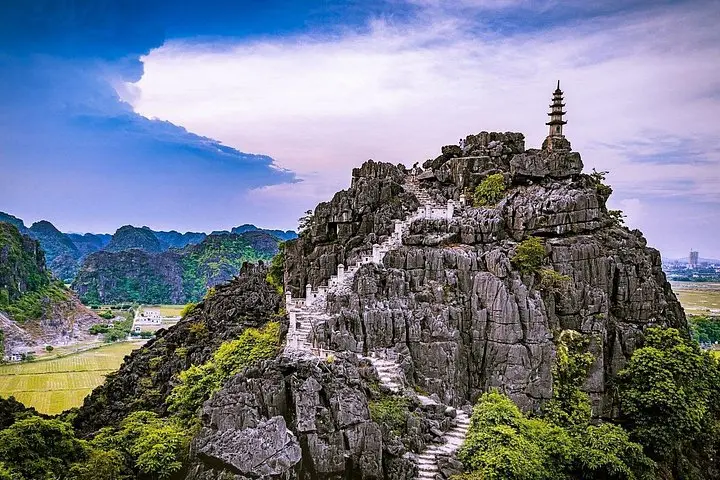
Mua Cave (Hang Múa) adds a terrestrial counterpoint: a steep stone staircase of roughly 400–500 steps that gains about 150–200 m, rewarding effort with a broad panoramic view over Tam Coc and the river ribboning through green fields.
Practical edge: this is a full-day outing (expect 10–12 hours including hotel transfers). Wear sturdy walking shoes for the Mua climb, bring sun protection and 1–1.5 liters of water, and keep small bills for entrance fees and local vendors. Boats are rowed by locals—listen to your guide and watch your footing during boarding. Start early to avoid peak crowds and the late-afternoon heat; weather can change quickly, so a lightweight rain layer is useful in the monsoon season.
Boat routes vary by itinerary but typical shared boat rides visit several caves over 1–2 hours and cover roughly 6–8 km of waterways.
The climb is steep with many steps; children and older adults can complete it with frequent rests, but assess mobility and avoid if stair climbing is difficult.
Most tour packages include admission to Bai Dinh and Trang An plus lunch; confirm on booking and carry cash for extras or tips.
Yes—many full-day tours include an English-speaking guide and hotel pickup from Hanoi’s Old Quarter; confirm your pickup point at booking.
Grayline Vietnam Threeland Travel operates guided outdoor trips and adventures with an emphasis on safety, stewardship, and memorable experiences.
You step out of the minivan and the limestone towers of Ninh Binh rise like weathered sentries—sharp edges softened by rice paddies and slow-moving waterways. Morning light hits the gilded roofs of Bai Dinh Pagoda; bronze Buddhas and long lines of La Han statues give the complex a quietly grand scale that fills the senses before you board a wooden boat.
You step out of the minivan and the limestone towers of Ninh Binh rise like weathered sentries—sharp edges softened by rice paddies and slow-moving waterways. Morning light hits the gilded roofs of Bai Dinh Pagoda; bronze Buddhas and long lines of La Han statues give the complex a quietly grand scale that fills the senses before you board a wooden boat.
Bai Dinh covers roughly 539 hectares and is Vietnam’s largest temple complex, a recent but culturally important site with the country’s largest bronze Buddha. The karst landscape you’ll glide through in Trang An is older—millions of years of marine limestone sculpted into cave systems and flooded grottoes. Local rowers guide oar-powered boats through nine notable caves, including Sang (Bright) and Toi (Dark), tracing about 6–8 km of narrow waterways while cliffs and rice fields watch you pass.
Mua Cave (Hang Múa) adds a terrestrial counterpoint: a steep stone staircase of roughly 400–500 steps that gains about 150–200 m, rewarding effort with a broad panoramic view over Tam Coc and the river ribboning through green fields.
Practical edge: this is a full-day outing (expect 10–12 hours including hotel transfers). Wear sturdy walking shoes for the Mua climb, bring sun protection and 1–1.5 liters of water, and keep small bills for entrance fees and local vendors. Boats are rowed by locals—listen to your guide and watch your footing during boarding. Start early to avoid peak crowds and the late-afternoon heat; weather can change quickly, so a lightweight rain layer is useful in the monsoon season.