THE ADVENTURE COLLECTIVE® · Independent discovery and booking for outdoor travel

A compact, landscape-driven day from Hanoi that pairs a historical temple visit with a tranquil sampan trip through karst grottoes and a steep climb to panoramic views at Mua Cave. Expect water, stairs, and scenic cycling through rice country.
A compact, landscape-driven day from Hanoi that pairs a historical temple visit with a tranquil sampan trip through karst grottoes and a steep climb to panoramic views at Mua Cave. Expect water, stairs, and scenic cycling through rice country.
The morning bus unwinds from Hanoi into a lowland of rivers and karst peaks; limestone teeth rise from rice paddies while the Ngo Dong River threads itself through shadowed grottoes, daring you to follow.
Verified experiences and guided adventures in the surrounding area.
Operated by Authentic NINH BINH · Ninh Binh, Ninh Binh Province
The morning bus unwinds from Hanoi into a lowland of rivers and karst peaks; limestone teeth rise from rice paddies while the Ngo Dong River threads itself through shadowed grottoes, daring you to follow.
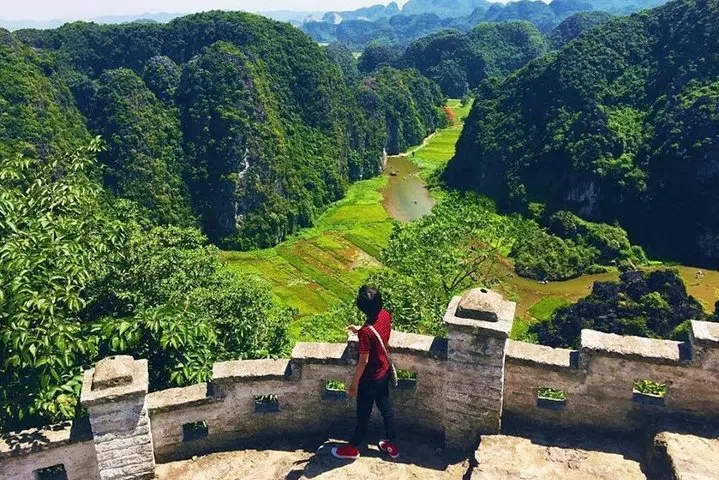
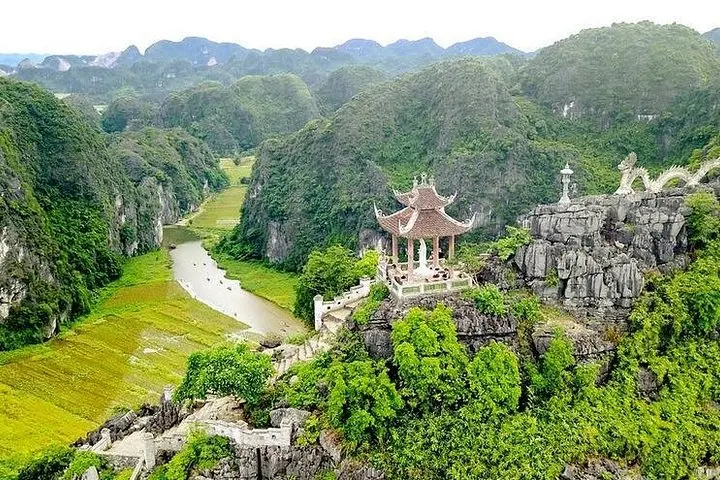
This full-day trip stages three distinct encounters: Hoa Lu’s 10th-century temples where stone altars mark the origins of Vietnam’s early kings; the slow, rowed sampans of Trang An that slip into cool caverns and under arches carved by ancient water; and the steep 500-step climb at Mua Cave, where a narrow ridge rewards the breathless with a wide, map-like view of Tam Coc’s meandering channels.
Geologically, the region is classic tropical karst—limestone sculpted by dissolution and river erosion into caves, cliffs, and isolated peaks. Culturally, the route stitches rural life and long histories: temple inscriptions at Hoa Lu, rice farmers tending low terraces, and small river villages still using sampans and hand-thatch techniques.
Practical guidance is straightforward. Expect about 10–12 hours on the move with two to three hours of boarding time on the water and a vigorous 20–30 minute stair climb at Mua. Wear grippy shoes for the stone steps and a light shell for sudden showers in the monsoon months. Hydrate before the climb; bring sunscreen and insect repellent for lowland stretches. The boat is calm but bring a light layer for dawn or late-afternoon breezes.
Timing matters: morning light is best for photos on the river; late afternoon softens the karst silhouettes. Respect local customs at temple sites—remove hats and speak quietly—and minimize plastic waste to keep these fragile waterways clean.
Expect roughly 2 to 2.5 hours each way depending on traffic; the tour includes a short rest stop en route.
No—the Trang An sampan trips are gentle and rowed by local boatmen; passengers sit while the crew maneuvers through grottoes.
It’s a steep climb of about 500 stone steps; take breaks as needed—good cardiovascular fitness makes the ascent easier but it’s doable for most active travelers.
Yes, the tour includes a local Vietnamese lunch during the day as listed in the itinerary.
Authentic NINH BINH operates guided outdoor trips and adventures with an emphasis on safety, stewardship, and memorable experiences.

The morning bus unwinds from Hanoi into a lowland of rivers and karst peaks; limestone teeth rise from rice paddies while the Ngo Dong River threads itself through shadowed grottoes, daring you to follow.
The morning bus unwinds from Hanoi into a lowland of rivers and karst peaks; limestone teeth rise from rice paddies while the Ngo Dong River threads itself through shadowed grottoes, daring you to follow.
This full-day trip stages three distinct encounters: Hoa Lu’s 10th-century temples where stone altars mark the origins of Vietnam’s early kings; the slow, rowed sampans of Trang An that slip into cool caverns and under arches carved by ancient water; and the steep 500-step climb at Mua Cave, where a narrow ridge rewards the breathless with a wide, map-like view of Tam Coc’s meandering channels.
Geologically, the region is classic tropical karst—limestone sculpted by dissolution and river erosion into caves, cliffs, and isolated peaks. Culturally, the route stitches rural life and long histories: temple inscriptions at Hoa Lu, rice farmers tending low terraces, and small river villages still using sampans and hand-thatch techniques.
Practical guidance is straightforward. Expect about 10–12 hours on the move with two to three hours of boarding time on the water and a vigorous 20–30 minute stair climb at Mua. Wear grippy shoes for the stone steps and a light shell for sudden showers in the monsoon months. Hydrate before the climb; bring sunscreen and insect repellent for lowland stretches. The boat is calm but bring a light layer for dawn or late-afternoon breezes.
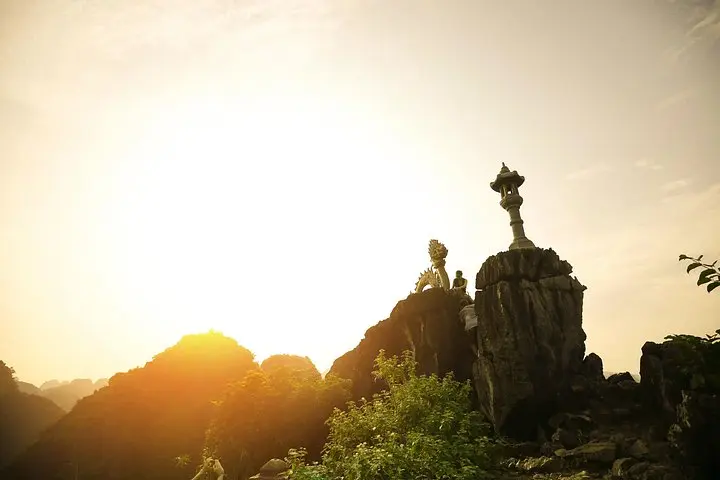
Timing matters: morning light is best for photos on the river; late afternoon softens the karst silhouettes. Respect local customs at temple sites—remove hats and speak quietly—and minimize plastic waste to keep these fragile waterways clean.