THE ADVENTURE COLLECTIVE® · Independent discovery and booking for outdoor travel

Escape Hanoi for a full-day circuit through Ninh Binh’s limestone valleys: historic temples at Hoa Lu, a cave-studded boat ride through Trang An, and a steep climb to Hang Mua’s panoramic ridge. Expect river caves, rice-field vistas, and a solid day of walking and stairs.
Escape Hanoi for a full-day circuit through Ninh Binh’s limestone valleys: historic temples at Hoa Lu, a cave-studded boat ride through Trang An, and a steep climb to Hang Mua’s panoramic ridge. Expect river caves, rice-field vistas, and a solid day of walking and stairs.
You climb out of the minivan at dawn and the air smells of wet rice and limestone. Low karst peaks rise like broken teeth from patchwork paddies; a narrow wooden boat waits, oars tapping the water as you glide into a cave mouth. By midday you are ascending 500 stone steps at Hang Mua, each switchback revealing a wider sweep of green valley and river below.
Verified experiences and guided adventures in the surrounding area.
Operated by Charming Vietnam Travel · Ninh Binh, Ninh Binh Province
You climb out of the minivan at dawn and the air smells of wet rice and limestone. Low karst peaks rise like broken teeth from patchwork paddies; a narrow wooden boat waits, oars tapping the water as you glide into a cave mouth. By midday you are ascending 500 stone steps at Hang Mua, each switchback revealing a wider sweep of green valley and river below.
This loop pairs Hoa Lu, the 10th-century former capital with temples to the Dinh and Le dynasties, and Trang An, a UNESCO-listed karst river network that doubles as both a geological classroom and living cultural landscape. The limestone here formed over millions of years from marine sediments and was sculpted by rain and rivers into caves, pinnacles and underground passages. Local villages still tend rice terraces and ferry tourists on low-profile sampans—an economy woven into the land’s form and history.
Expect a full day: a guided history stop at Hoa Lu, a 2–3 hour boat trip threading caves and river channels, and a steep climb at Hang Mua for panoramic photos. The terrain mixes flat, muddy shorelines, calm boat travel, and a strenuous stone stair climb; bring sturdy shoes, sun protection, and modest clothing for temple visits. Plan for a midday Vietnamese lunch in a local restaurant, some walking between sites, and cash for small purchases. Timing your visit for morning light or late afternoon reduces heat and crowds. Keep to marked paths, follow your guide’s instructions in caves and at shrines, and carry water—the karst will invite exploration, but respect the fragile landscape and local customs.
The guided boat portion typically lasts about 2–3 hours, depending on the route and how many cave passages you float through.
Yes—there are roughly 500 stone steps to reach the main viewpoint; it’s steep but well-built with intermittent platforms for rests.
Bring cash (VND) for small purchases, tips, and some restrooms; larger restaurants may accept cards, but rural vendors usually do not.
The boat ride is family-friendly, but the Hang Mua climb is not suitable for those with limited mobility or small children who cannot manage steep steps safely.
Charming Vietnam Travel operates guided outdoor trips and adventures with an emphasis on safety, stewardship, and memorable experiences.

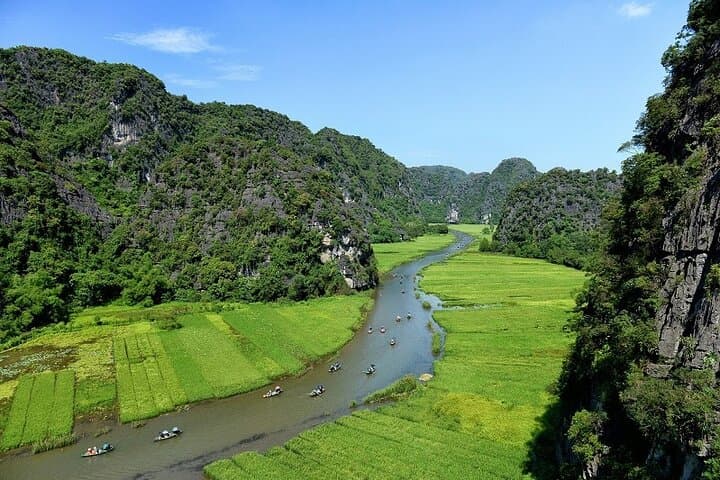


You climb out of the minivan at dawn and the air smells of wet rice and limestone. Low karst peaks rise like broken teeth from patchwork paddies; a narrow wooden boat waits, oars tapping the water as you glide into a cave mouth. By midday you are ascending 500 stone steps at Hang Mua, each switchback revealing a wider sweep of green valley and river below.
You climb out of the minivan at dawn and the air smells of wet rice and limestone. Low karst peaks rise like broken teeth from patchwork paddies; a narrow wooden boat waits, oars tapping the water as you glide into a cave mouth. By midday you are ascending 500 stone steps at Hang Mua, each switchback revealing a wider sweep of green valley and river below.
This loop pairs Hoa Lu, the 10th-century former capital with temples to the Dinh and Le dynasties, and Trang An, a UNESCO-listed karst river network that doubles as both a geological classroom and living cultural landscape. The limestone here formed over millions of years from marine sediments and was sculpted by rain and rivers into caves, pinnacles and underground passages. Local villages still tend rice terraces and ferry tourists on low-profile sampans—an economy woven into the land’s form and history.
Expect a full day: a guided history stop at Hoa Lu, a 2–3 hour boat trip threading caves and river channels, and a steep climb at Hang Mua for panoramic photos. The terrain mixes flat, muddy shorelines, calm boat travel, and a strenuous stone stair climb; bring sturdy shoes, sun protection, and modest clothing for temple visits. Plan for a midday Vietnamese lunch in a local restaurant, some walking between sites, and cash for small purchases. Timing your visit for morning light or late afternoon reduces heat and crowds. Keep to marked paths, follow your guide’s instructions in caves and at shrines, and carry water—the karst will invite exploration, but respect the fragile landscape and local customs.