THE ADVENTURE COLLECTIVE® · Independent discovery and booking for outdoor travel

A full-day excursion from Hanoi that pairs the monumental Bai Dinh Pagoda with a tranquil sampan passage through Trang An’s limestone grottoes. Expect dramatic karst scenery, cultural insight, and a long but accessible day of walking and boat rides.
A full-day excursion from Hanoi that pairs the monumental Bai Dinh Pagoda with a tranquil sampan passage through Trang An’s limestone grottoes. Expect dramatic karst scenery, cultural insight, and a long but accessible day of walking and boat rides.
Morning light thins out over the rice flats as the bus slips away from Hanoi; by the time the karst towers arrive they feel like an abrupt new grammar in the landscape—vertical limestone ribs rising from paddies, daring you to look closer.
Verified experiences and guided adventures in the surrounding area.
Operated by Vietnam Real Tour · Ninh Binh, Ninh Binh Province
Morning light thins out over the rice flats as the bus slips away from Hanoi; by the time the karst towers arrive they feel like an abrupt new grammar in the landscape—vertical limestone ribs rising from paddies, daring you to look closer.
At Bai Dinh Pagoda the scale is immediate: wide stone courtyards, an electric tram that ferries visitors past gleaming bells and the corridor of 500 Arhat statues. The site is a contemporary expression of Vietnamese Buddhism, built in recent decades on a long cultural history of regional temples and pilgrimage.
Trang An’s geology reads like a field guide to karst formation—limestone folded, dissolved and sculpted into caves and grottoes. A wooden sampan, guided by a local rower, threads through shadowed tunnels where bats and waterbirds hurry along the ceilings and cliff faces. The caves—Hang Toi, Sang and Hang Nau Ruou—each open into little basins and hidden ponds, a quiet counterpoint to the ornate bustle at Bai Dinh.
Practical guidance: this is a long day (expect 10–12 hours) with moderate walking, some steps and short boat transfers; bring sun protection, comfortable shoes and a light rain layer in summer. Respect temple protocol—cover shoulders and knees, speak softly and remove hats in prayer areas. Photography is rewarding from both sites but expect crowds midday; early departures and seated benches on the sampan make for better light and fewer people. Keep water and cash for small purchases; support local guides and stay on marked paths to protect fragile karst vegetation. The trip pairs cultural insight with dramatic geology—an accessible, full-day window into northern Vietnam’s landscape and spiritual life.
Expect about 2.5 hours each way by shuttle bus; the full experience lasts roughly 10–12 hours including site visits and lunch.
A local rower usually mans the sampan, so passengers only sit and board—no rowing skills required.
Bai Dinh has electric trams and some paved areas, but many temple paths and steps limit full accessibility; check with the operator for specific assistance.
Buffet lunch is included; notify booking of dietary needs in advance so the local restaurant can accommodate requests.
Vietnam Real Tour operates guided outdoor trips and adventures with an emphasis on safety, stewardship, and memorable experiences.
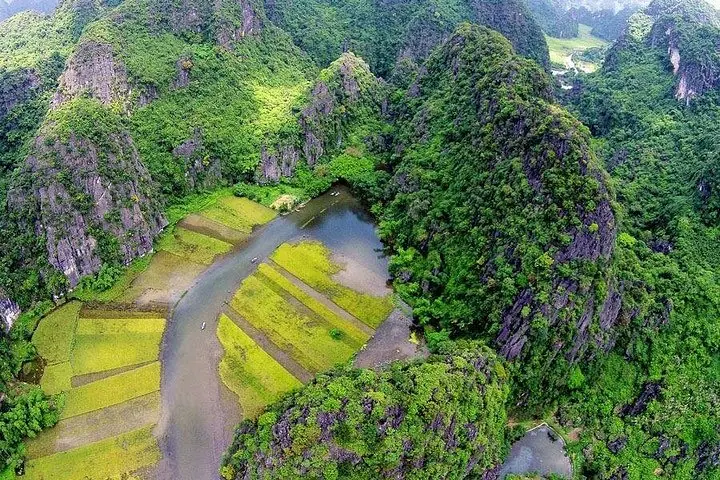



Morning light thins out over the rice flats as the bus slips away from Hanoi; by the time the karst towers arrive they feel like an abrupt new grammar in the landscape—vertical limestone ribs rising from paddies, daring you to look closer.
Morning light thins out over the rice flats as the bus slips away from Hanoi; by the time the karst towers arrive they feel like an abrupt new grammar in the landscape—vertical limestone ribs rising from paddies, daring you to look closer.
At Bai Dinh Pagoda the scale is immediate: wide stone courtyards, an electric tram that ferries visitors past gleaming bells and the corridor of 500 Arhat statues. The site is a contemporary expression of Vietnamese Buddhism, built in recent decades on a long cultural history of regional temples and pilgrimage.
Trang An’s geology reads like a field guide to karst formation—limestone folded, dissolved and sculpted into caves and grottoes. A wooden sampan, guided by a local rower, threads through shadowed tunnels where bats and waterbirds hurry along the ceilings and cliff faces. The caves—Hang Toi, Sang and Hang Nau Ruou—each open into little basins and hidden ponds, a quiet counterpoint to the ornate bustle at Bai Dinh.
Practical guidance: this is a long day (expect 10–12 hours) with moderate walking, some steps and short boat transfers; bring sun protection, comfortable shoes and a light rain layer in summer. Respect temple protocol—cover shoulders and knees, speak softly and remove hats in prayer areas. Photography is rewarding from both sites but expect crowds midday; early departures and seated benches on the sampan make for better light and fewer people. Keep water and cash for small purchases; support local guides and stay on marked paths to protect fragile karst vegetation. The trip pairs cultural insight with dramatic geology—an accessible, full-day window into northern Vietnam’s landscape and spiritual life.