THE ADVENTURE COLLECTIVE® · Independent discovery and booking for outdoor travel

Drive from Muscat into the Al Hajar mountains to explore Nizwa’s bustling souq, walk the ramparts of Nizwa Fort, and visit the terraced orchards of Jebel Akhdar on a private full‑day 4WD tour. Expect short walks, dramatic views, and local irrigation systems that sustain highland farming.
Drive from Muscat into the Al Hajar mountains to explore Nizwa’s bustling souq, walk the ramparts of Nizwa Fort, and visit the terraced orchards of Jebel Akhdar on a private full‑day 4WD tour. Expect short walks, dramatic views, and local irrigation systems that sustain highland farming.
Dust kicks under the 4WD as it leaves Muscat’s coastline and climbs into the calcified ribs of the Al Hajar mountains. By midmorning the air thins and terraces appear—orchards of pomegranate, apricot and rose bushes clinging to steep slopes—while the driver eases into switchbacks toward Jebel Akhdar.
Verified experiences and guided adventures in the surrounding area.
Operated by Oman Camping Tours · Nizwa, Ad Dakhiliyah
Dust kicks under the 4WD as it leaves Muscat’s coastline and climbs into the calcified ribs of the Al Hajar mountains. By midmorning the air thins and terraces appear—orchards of pomegranate, apricot and rose bushes clinging to steep slopes—while the driver eases into switchbacks toward Jebel Akhdar.
The route begins in Nizwa, Oman’s old capital. Its souq still rings with bargaining and the metallic clack of traditional silver khanjar being polished; the nearby 17th‑century Nizwa Fort, built by the Yaruba dynasty, was engineered for defense and inspection, with winding corridors and defensive traps that reveal a pragmatic military past. Geologically the Al Hajar range is limestone and jagged escarpment, carved by seasonal wadis that now funnel life (and irrigation) into the terraced farms below.
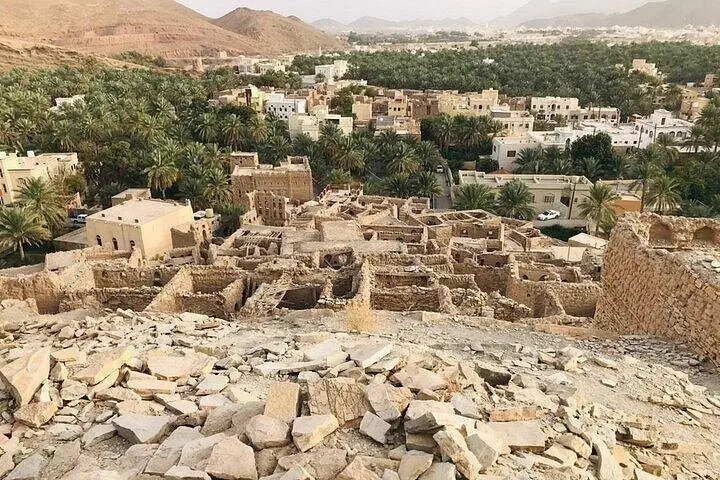
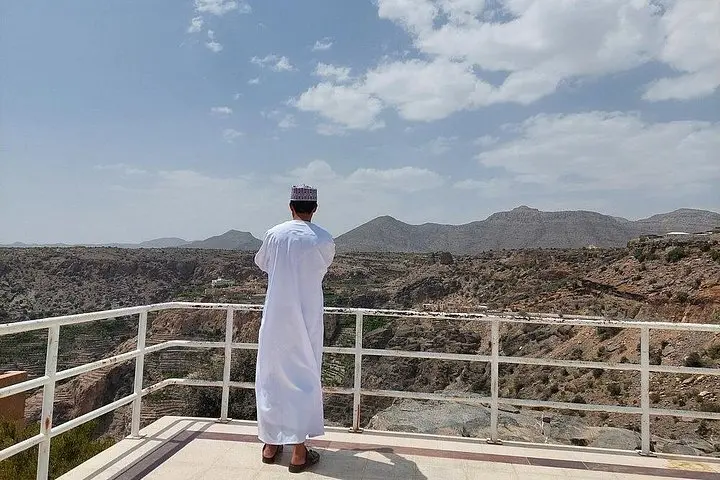
Culturally the day balances market rhythms with mountain agriculture: Birkat Al Mouz’s ruined village and the falaj (ancient irrigation) systems show how communities have coaxed water through rock for centuries. Diana Point offers a quick panoramic stop—valleys drop away, and breezes push hikers along short trails.
Practical guidance: this is a full‑day private drive (about 8–9 hours); much of it is in vehicle with short walks on uneven village tracks and paved fort stairs. Bring sun protection, a refillable water bottle, and comfortable shoes for stone steps and loose scree near viewpoints. Expect variable temperatures between Muscat and the highlands—plan layers and allow time for photography, souq browsing, and a relaxed return to Muscat in the late afternoon.
The private 4WD tour lasts about 8–9 hours and includes transportation (4WD), water, English‑speaking Omani guide, fuel, and Muscat area pickup and drop‑off.
Admission to Nizwa Fort is typically not included in some packages—check your booking; the itinerary notes admission may be separate.
Access to higher parts of Jebel Akhdar often requires a 4WD due to steep, winding mountain roads; this tour uses a 4WD vehicle for safety and comfort.
The tour lists wheelchair‑accessible transportation and infant seats; confirm specific needs at booking to ensure proper arrangements.
Oman Camping Tours operates guided outdoor trips and adventures with an emphasis on safety, stewardship, and memorable experiences.

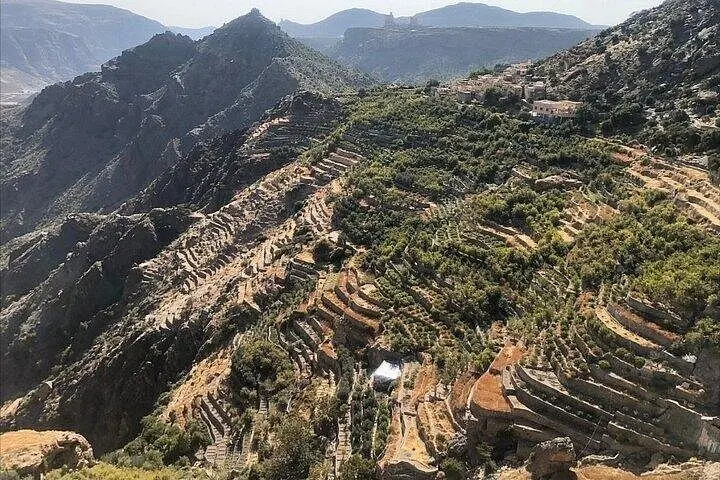
Dust kicks under the 4WD as it leaves Muscat’s coastline and climbs into the calcified ribs of the Al Hajar mountains. By midmorning the air thins and terraces appear—orchards of pomegranate, apricot and rose bushes clinging to steep slopes—while the driver eases into switchbacks toward Jebel Akhdar.
Dust kicks under the 4WD as it leaves Muscat’s coastline and climbs into the calcified ribs of the Al Hajar mountains. By midmorning the air thins and terraces appear—orchards of pomegranate, apricot and rose bushes clinging to steep slopes—while the driver eases into switchbacks toward Jebel Akhdar.
The route begins in Nizwa, Oman’s old capital. Its souq still rings with bargaining and the metallic clack of traditional silver khanjar being polished; the nearby 17th‑century Nizwa Fort, built by the Yaruba dynasty, was engineered for defense and inspection, with winding corridors and defensive traps that reveal a pragmatic military past. Geologically the Al Hajar range is limestone and jagged escarpment, carved by seasonal wadis that now funnel life (and irrigation) into the terraced farms below.
Culturally the day balances market rhythms with mountain agriculture: Birkat Al Mouz’s ruined village and the falaj (ancient irrigation) systems show how communities have coaxed water through rock for centuries. Diana Point offers a quick panoramic stop—valleys drop away, and breezes push hikers along short trails.
Practical guidance: this is a full‑day private drive (about 8–9 hours); much of it is in vehicle with short walks on uneven village tracks and paved fort stairs. Bring sun protection, a refillable water bottle, and comfortable shoes for stone steps and loose scree near viewpoints. Expect variable temperatures between Muscat and the highlands—plan layers and allow time for photography, souq browsing, and a relaxed return to Muscat in the late afternoon.