THE ADVENTURE COLLECTIVE® · Independent discovery and booking for outdoor travel

Ride the ropeway, watch Ezo brown bears from secure observation decks, and explore the Brown Bear Museum and Ainu cultural exhibits at Noboribetsu Bear Park. This half-day outing pairs dramatic volcanic scenery with accessible wildlife viewing.
Ride the ropeway, watch Ezo brown bears from secure observation decks, and explore the Brown Bear Museum and Ainu cultural exhibits at Noboribetsu Bear Park. This half-day outing pairs dramatic volcanic scenery with accessible wildlife viewing.
You step into the ropeway cabin and the valley exhales below you — steam rising from hot springs, dark conifers sliding past, and the lake on the horizon pulling the eye. The gondola climbs fast; by the time the cabin slows you’re at the summit where the Bear Park opens like a rugged stage. Ezo brown bears move with deliberate curiosity inside large, terraced enclosures while the observation deck frames Lake Kuttara as a calm counterpoint.
Verified experiences and guided adventures in the surrounding area.
Operated by TREVOPEDIA · Noboribetsu, Hokkaido
You step into the ropeway cabin and the valley exhales below you — steam rising from hot springs, dark conifers sliding past, and the lake on the horizon pulling the eye. The gondola climbs fast; by the time the cabin slows you’re at the summit where the Bear Park opens like a rugged stage. Ezo brown bears move with deliberate curiosity inside large, terraced enclosures while the observation deck frames Lake Kuttara as a calm counterpoint.
The park sits within the greater Shikotsu–Toya National Park, an area shaped by volcanic forces and sulfurous hot springs that have supported human settlement for centuries. Nearby Yukar no Sato recreates Ainu architecture and stories from the early Meiji era — a direct cultural thread to the island’s Indigenous people. The Brown Bear Museum on site focuses on regional biology and conservation, explaining how Hokkaido’s bears adapted to cold winters and coastal food sources.
Practical matters matter: allow 4–5 hours to ride the ropeway, visit the museum, pause at the observation decks, and enjoy the Ainu village exhibit. The ropeway is the most efficient route to the summit; public transit brings you close to the lower station. Wear solid walking shoes for uneven paths between viewing platforms and bring layers — summit winds can be sharp even in summer. Observe all barriers and signage; the park is designed for safe viewing and education rather than close contact. Mobile tickets are accepted and the site is largely wheelchair- and stroller-accessible, making it a straightforward half-day outing for travelers based in Noboribetsu.
Plan 4–5 hours to include the ropeway round trip, Brown Bear Museum, observation decks, and Yukar no Sato.
Yes — the ropeway and most summit facilities are wheelchair- and stroller-accessible, and surfaces are generally manageable.
No — the park provides secure viewing only; never attempt to feed or approach animals and follow posted rules.
Yes — mobile or paper tickets are accepted, and instant confirmation is available when booking online.
TREVOPEDIA operates guided outdoor trips and adventures with an emphasis on safety, stewardship, and memorable experiences.
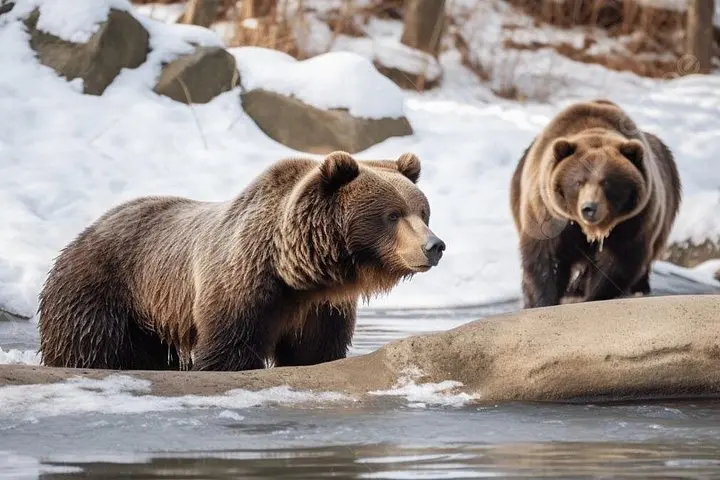
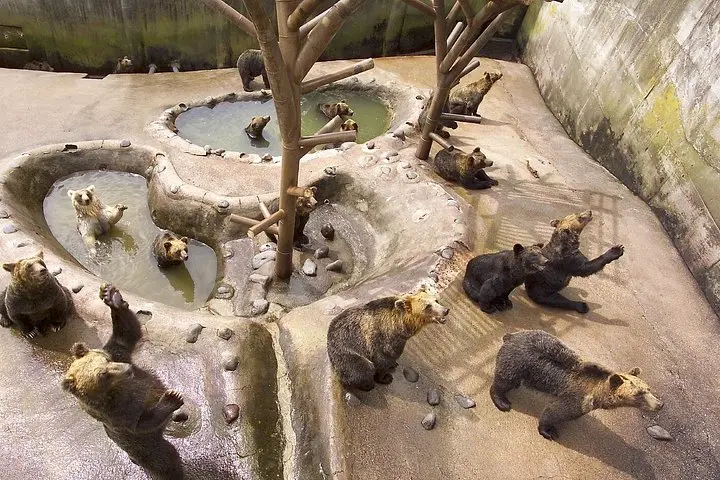
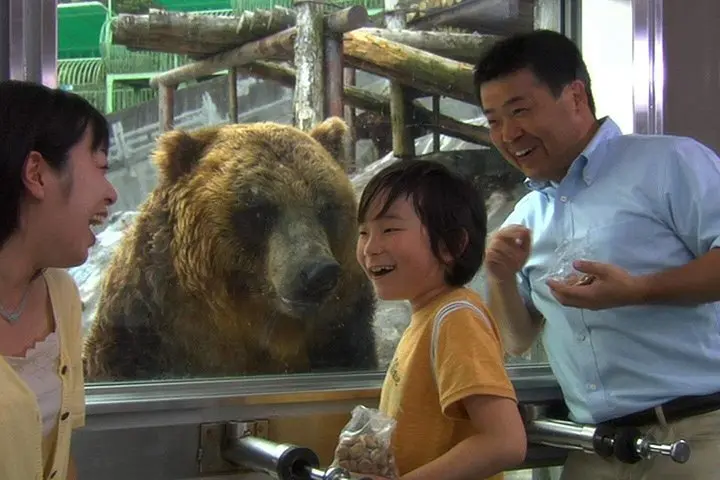
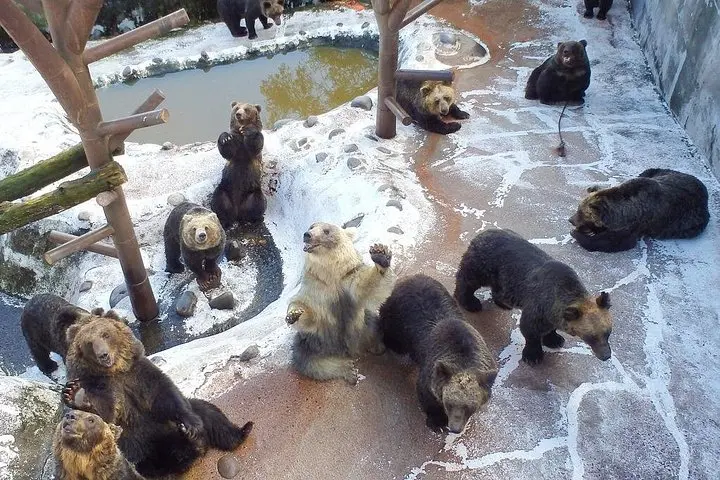
You step into the ropeway cabin and the valley exhales below you — steam rising from hot springs, dark conifers sliding past, and the lake on the horizon pulling the eye. The gondola climbs fast; by the time the cabin slows you’re at the summit where the Bear Park opens like a rugged stage. Ezo brown bears move with deliberate curiosity inside large, terraced enclosures while the observation deck frames Lake Kuttara as a calm counterpoint.
You step into the ropeway cabin and the valley exhales below you — steam rising from hot springs, dark conifers sliding past, and the lake on the horizon pulling the eye. The gondola climbs fast; by the time the cabin slows you’re at the summit where the Bear Park opens like a rugged stage. Ezo brown bears move with deliberate curiosity inside large, terraced enclosures while the observation deck frames Lake Kuttara as a calm counterpoint.
The park sits within the greater Shikotsu–Toya National Park, an area shaped by volcanic forces and sulfurous hot springs that have supported human settlement for centuries. Nearby Yukar no Sato recreates Ainu architecture and stories from the early Meiji era — a direct cultural thread to the island’s Indigenous people. The Brown Bear Museum on site focuses on regional biology and conservation, explaining how Hokkaido’s bears adapted to cold winters and coastal food sources.
Practical matters matter: allow 4–5 hours to ride the ropeway, visit the museum, pause at the observation decks, and enjoy the Ainu village exhibit. The ropeway is the most efficient route to the summit; public transit brings you close to the lower station. Wear solid walking shoes for uneven paths between viewing platforms and bring layers — summit winds can be sharp even in summer. Observe all barriers and signage; the park is designed for safe viewing and education rather than close contact. Mobile tickets are accepted and the site is largely wheelchair- and stroller-accessible, making it a straightforward half-day outing for travelers based in Noboribetsu.