THE ADVENTURE COLLECTIVE® · Independent discovery and booking for outdoor travel

Fly quietly above the Noosa River with a 1.5‑hour Fliteboard eFoil lesson that pairs hands-on instruction with sheltered estuary conditions. Expect a short shore briefing, guided progression from kneeling to standing, and scenic water time near the Great Sandy National Park.
Fly quietly above the Noosa River with a 1.5‑hour Fliteboard eFoil lesson that pairs hands-on instruction with sheltered estuary conditions. Expect a short shore briefing, guided progression from kneeling to standing, and scenic water time near the Great Sandy National Park.
The morning light skims the Noosa River as the instructor clips a handheld throttle into place and the board hums to life — a quiet, electric promise. Riders step from the blue-and-white jetty onto glassy water, and within minutes the eFoil lifts, the board floating an inch — then a metre — above the river as the current seems to nudge you forward.
Verified experiences and guided adventures in the surrounding area.
Operated by Fliteschool Noosa · Noosa Heads, Queensland
The morning light skims the Noosa River as the instructor clips a handheld throttle into place and the board hums to life — a quiet, electric promise. Riders step from the blue-and-white jetty onto glassy water, and within minutes the eFoil lifts, the board floating an inch — then a metre — above the river as the current seems to nudge you forward.
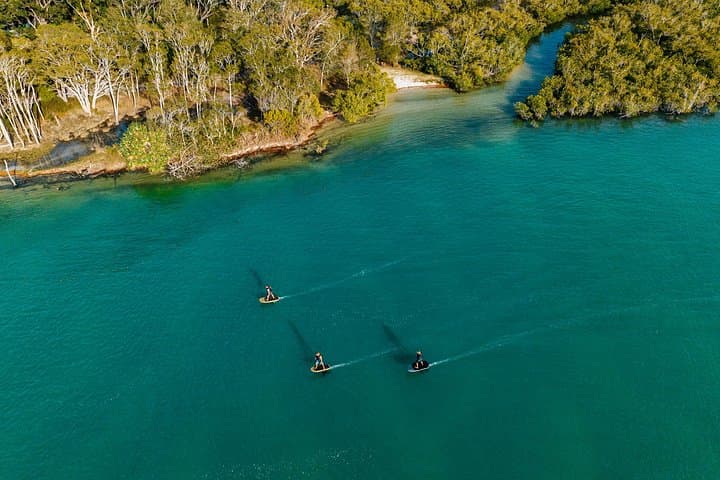
Noosa’s river mouth and hinterland sit at the edge of the Great Sandy National Park, carved from ancient sand dunes and coastal sediment. The area’s Indigenous Gubbi Gubbi (Kabi Kabi) heritage and the late-19th-century resort history of Noosa mean the shoreline blends cultural sites, fishing flats and protected estuaries. The river’s shallow channels and sheltered bays make it ideal for learning eFoiling: calm water, predictable wind, and clear sightlines to the shoreline.
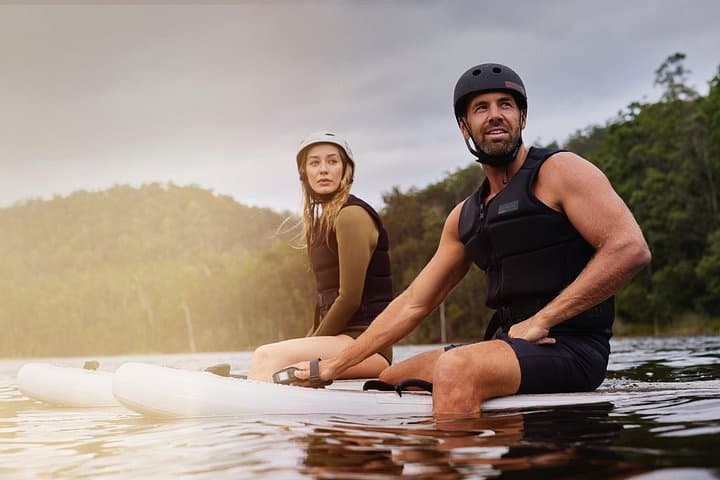
This Fliteboard lesson begins with 15 minutes of on-jetty safety and technique before 75 minutes on the water. Instructors start riders kneeling or seated to build throttle control, then progress to standing as balance and confidence improve. Small groups and modern Fliteboards shorten the learning curve — most students catch their first clean flights during the session.
Practical notes: arrive 20 minutes early, wear quick-dry clothing, and expect salt spray and sun reflection off the water. Weight limits and basic health checks apply; riders must be 15+ and under 110kg. For wildlife, watch for kingfish, rays and shorebirds — the river often presents quiet encounters. Plan this as a 2-hour window in your day and choose calmer morning or late-afternoon tides for the smoothest learning conditions.
No—lessons start with kneeling and sitting positions and progress to standing, making it accessible for beginners.
Sessions are canceled for unsuitable conditions (high winds, thunderstorms) with a full refund up to 24 hours prior; instructors monitor safety continuously.
Yes—Fliteschool supplies helmets, lifejackets and wetsuits (when needed) as part of the booking.
It’s low-impact but requires balance and short bursts of paddling; most riders should have reasonable mobility and no serious heart conditions.
Fliteschool Noosa operates guided outdoor trips and adventures with an emphasis on safety, stewardship, and memorable experiences.
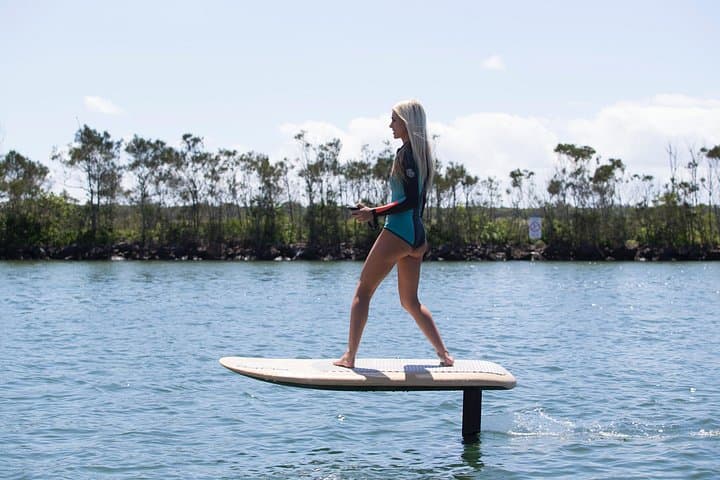
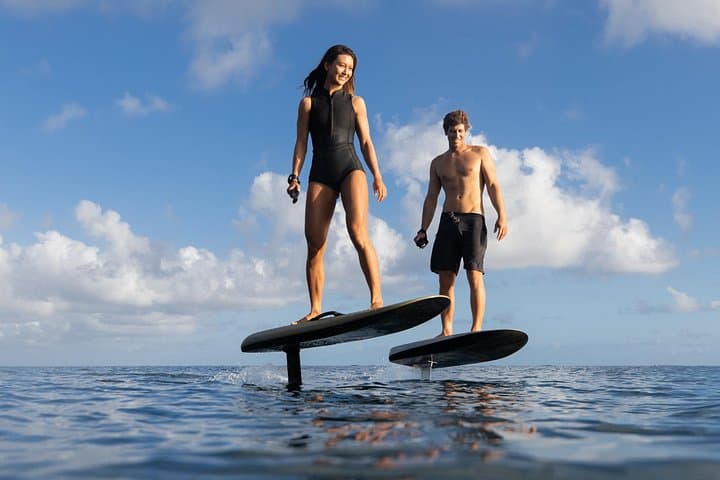
The morning light skims the Noosa River as the instructor clips a handheld throttle into place and the board hums to life — a quiet, electric promise. Riders step from the blue-and-white jetty onto glassy water, and within minutes the eFoil lifts, the board floating an inch — then a metre — above the river as the current seems to nudge you forward.
The morning light skims the Noosa River as the instructor clips a handheld throttle into place and the board hums to life — a quiet, electric promise. Riders step from the blue-and-white jetty onto glassy water, and within minutes the eFoil lifts, the board floating an inch — then a metre — above the river as the current seems to nudge you forward.
Noosa’s river mouth and hinterland sit at the edge of the Great Sandy National Park, carved from ancient sand dunes and coastal sediment. The area’s Indigenous Gubbi Gubbi (Kabi Kabi) heritage and the late-19th-century resort history of Noosa mean the shoreline blends cultural sites, fishing flats and protected estuaries. The river’s shallow channels and sheltered bays make it ideal for learning eFoiling: calm water, predictable wind, and clear sightlines to the shoreline.
This Fliteboard lesson begins with 15 minutes of on-jetty safety and technique before 75 minutes on the water. Instructors start riders kneeling or seated to build throttle control, then progress to standing as balance and confidence improve. Small groups and modern Fliteboards shorten the learning curve — most students catch their first clean flights during the session.
Practical notes: arrive 20 minutes early, wear quick-dry clothing, and expect salt spray and sun reflection off the water. Weight limits and basic health checks apply; riders must be 15+ and under 110kg. For wildlife, watch for kingfish, rays and shorebirds — the river often presents quiet encounters. Plan this as a 2-hour window in your day and choose calmer morning or late-afternoon tides for the smoothest learning conditions.