THE ADVENTURE COLLECTIVE® · Independent discovery and booking for outdoor travel

A full‑day private drive from Paris to the Normandy landing beaches: Pointe du Hoc, Omaha Beach, the American Cemetery and Mulberry harbour remains at Arromanches. Expect a long day of short, informative walks across historically charged coastlines.
A full‑day private drive from Paris to the Normandy landing beaches: Pointe du Hoc, Omaha Beach, the American Cemetery and Mulberry harbour remains at Arromanches. Expect a long day of short, informative walks across historically charged coastlines.
You pull away from Paris before dawn, the city lights shrinking behind your window as the highway unspools west toward a coastline that still holds the scars of June 6, 1944.
Verified experiences and guided adventures in the surrounding area.
Operated by Paris Guided · Colleville-sur-Mer, Normandy
You pull away from Paris before dawn, the city lights shrinking behind your window as the highway unspools west toward a coastline that still holds the scars of June 6, 1944.
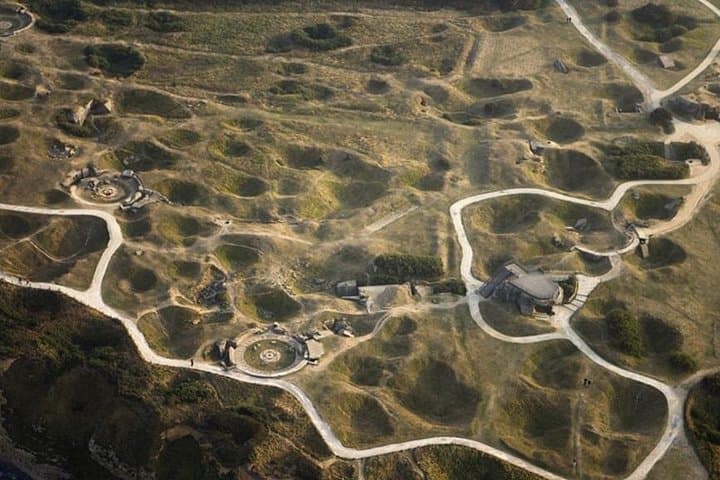
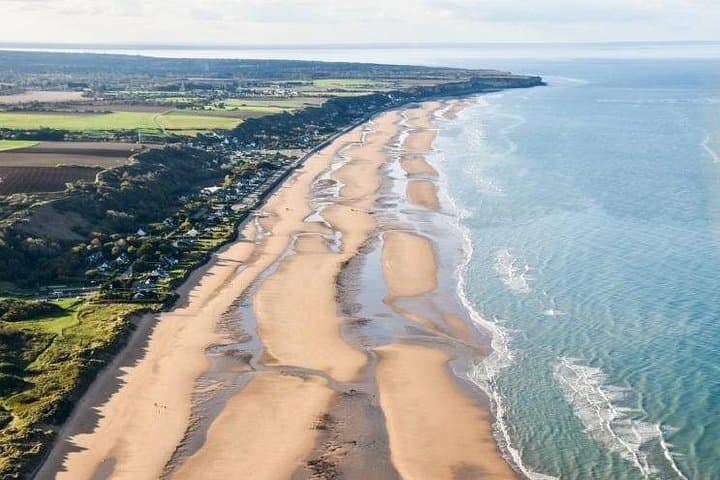
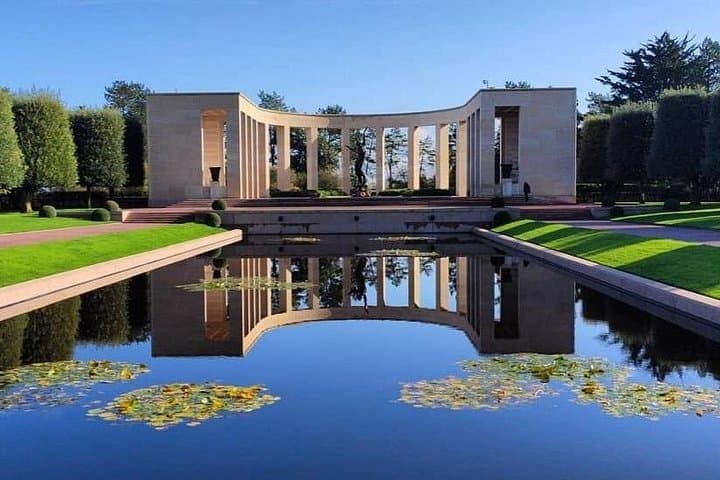
By midmorning the cliff-face at Pointe du Hoc rises ahead: battered concrete bunkers, ragged bomb craters and a bluff that the Rangers scaled under fire. Later you’ll stand on the wide sands of Omaha Beach, where the surf seems indifferent and the scale of the operation becomes immediate—the churned sand, scattered metal, and the neat rows of white stone at the American Cemetery above.
This day traces a concentration of military engineering, geology and memory. The chalk cliffs and limestone headlands shaped landing plans; Mulberry harbour remnants at Arromanches show Allied logistical inventiveness; Longues-sur-Mer retains original German 150mm guns. Bayeux, if visited, adds medieval continuity—the Bayeux Tapestry tells an earlier invasion and underscores how layered Normandy’s history is.
Practical notes: plan for a 12‑hour day with multiple short walks on uneven, sometimes muddy ground and stairs at memorial sites. Wear sturdy shoes, bring windproof layers and a refillable water bottle, and carry identification for cemetery registers. Respect signage: the cemetery is hallowed ground with photography guidelines in parts. Booking a private driver-guide from Paris saves time on transit and lets you tailor stops—opt for an early departure to avoid afternoon crowds and to get the best light for the shoreline vistas.
The tour departs from your Paris address around 7:00 a.m. and returns around 7:00 p.m., totaling roughly 12 hours including drives and stops.
Many exterior sites have accessible viewpoints and car access, but some locations involve stairs, uneven ground or steep ramps—notify the operator in advance to arrange accommodations.
Admissions are not required for the outdoor sites; museum entries or lunch are typically at your expense—Arromanches offers several cafés for a sit‑down meal.
A quick drive through Bayeux is possible and, if time permits, a short visit can be arranged, but a full museum visit may require extra time or a separate trip.
Paris Guided operates guided outdoor trips and adventures with an emphasis on safety, stewardship, and memorable experiences.

You pull away from Paris before dawn, the city lights shrinking behind your window as the highway unspools west toward a coastline that still holds the scars of June 6, 1944.
You pull away from Paris before dawn, the city lights shrinking behind your window as the highway unspools west toward a coastline that still holds the scars of June 6, 1944.
By midmorning the cliff-face at Pointe du Hoc rises ahead: battered concrete bunkers, ragged bomb craters and a bluff that the Rangers scaled under fire. Later you’ll stand on the wide sands of Omaha Beach, where the surf seems indifferent and the scale of the operation becomes immediate—the churned sand, scattered metal, and the neat rows of white stone at the American Cemetery above.
This day traces a concentration of military engineering, geology and memory. The chalk cliffs and limestone headlands shaped landing plans; Mulberry harbour remnants at Arromanches show Allied logistical inventiveness; Longues-sur-Mer retains original German 150mm guns. Bayeux, if visited, adds medieval continuity—the Bayeux Tapestry tells an earlier invasion and underscores how layered Normandy’s history is.
Practical notes: plan for a 12‑hour day with multiple short walks on uneven, sometimes muddy ground and stairs at memorial sites. Wear sturdy shoes, bring windproof layers and a refillable water bottle, and carry identification for cemetery registers. Respect signage: the cemetery is hallowed ground with photography guidelines in parts. Booking a private driver-guide from Paris saves time on transit and lets you tailor stops—opt for an early departure to avoid afternoon crowds and to get the best light for the shoreline vistas.