THE ADVENTURE COLLECTIVE® · Independent discovery and booking for outdoor travel
Head out from São Miguel’s north coast for a three‑hour whale watching trip that targets sperm whales and fast‑moving dolphins. Learn about the island’s whaling past, expect shore‑influenced deep water sightings, and come prepared for open‑ocean conditions.
Head out from São Miguel’s north coast for a three‑hour whale watching trip that targets sperm whales and fast‑moving dolphins. Learn about the island’s whaling past, expect shore‑influenced deep water sightings, and come prepared for open‑ocean conditions.
The Atlantic opens like a moving map as the boat slips northward from Ribeira Grande. Salt air sharpens the senses; basalt cliffs recede, and the ocean’s surface begins to breathe—small plumes, a curved back, then a deeper roll. On this three‑hour outing you ride the island’s northern swell where deep channels bring large cetaceans close to shore.
Verified experiences and guided adventures in the surrounding area.
The Atlantic opens like a moving map as the boat slips northward from Ribeira Grande. Salt air sharpens the senses; basalt cliffs recede, and the ocean’s surface begins to breathe—small plumes, a curved back, then a deeper roll. On this three‑hour outing you ride the island’s northern swell where deep channels bring large cetaceans close to shore.
São Miguel’s north coast is carved from volcanic flows and marine terraces; currents funnel food from offshore canyons, which historically supported a working whaling industry and now support observation and conservation. Local crews combine modern spotter techniques with an older-day ethic of seamanship, shifting some activity to lesser-used ports to spread tourism benefits across communities.
Expect focused searching punctuated by bursts of action when spotters radio a sighting. Sperm whales are a common target because of the deep water nearby, and pods of common dolphins often escort the boat, curious and fast. The crew will brief you on safe viewing distances, boarding procedures, and what to do when a large animal surfaces.
Practically: dress in windproof layers, bring motion‑sickness medication if you’re sensitive, and time trips for morning calm when possible. Photography needs fast shutter speeds and a steady hand—bring binoculars and a charged camera. Operators aim to minimize disturbance, so follow briefings and avoid sudden movements near railings.
This outing is equal parts natural history and maritime rhythm: you don’t control the sea, but you can be prepared to read its signals and witness the giants it carries.
Operators target areas where sperm whales and other large species are commonly found, but sightings cannot be 100% guaranteed—weather and animal movements influence each trip.
Trips on the north coast typically depart from small harbors around Ribeira Grande; confirm exact meeting point with your operator when booking.
Yes if they can safely board a small vessel and stand for portions of the trip; inform the operator of any mobility concerns beforehand.
Late spring through early fall generally offers calmer seas and frequent sightings, though resident sperm whales can be seen year‑round.
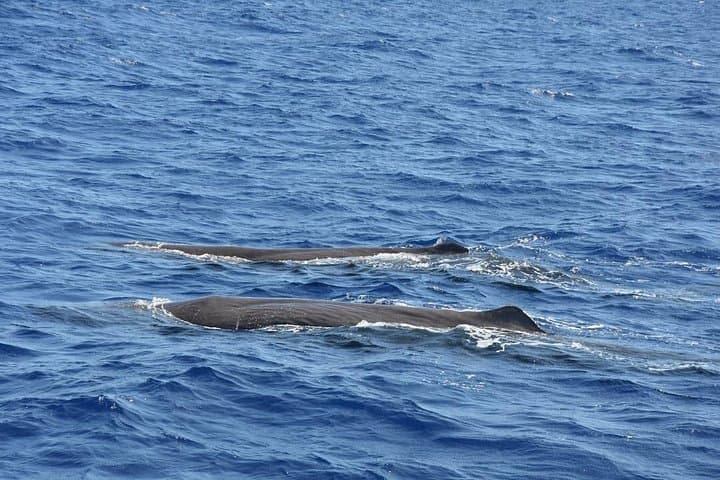
The Atlantic opens like a moving map as the boat slips northward from Ribeira Grande. Salt air sharpens the senses; basalt cliffs recede, and the ocean’s surface begins to breathe—small plumes, a curved back, then a deeper roll. On this three‑hour outing you ride the island’s northern swell where deep channels bring large cetaceans close to shore.
The Atlantic opens like a moving map as the boat slips northward from Ribeira Grande. Salt air sharpens the senses; basalt cliffs recede, and the ocean’s surface begins to breathe—small plumes, a curved back, then a deeper roll. On this three‑hour outing you ride the island’s northern swell where deep channels bring large cetaceans close to shore.
São Miguel’s north coast is carved from volcanic flows and marine terraces; currents funnel food from offshore canyons, which historically supported a working whaling industry and now support observation and conservation. Local crews combine modern spotter techniques with an older-day ethic of seamanship, shifting some activity to lesser-used ports to spread tourism benefits across communities.
Expect focused searching punctuated by bursts of action when spotters radio a sighting. Sperm whales are a common target because of the deep water nearby, and pods of common dolphins often escort the boat, curious and fast. The crew will brief you on safe viewing distances, boarding procedures, and what to do when a large animal surfaces.
Practically: dress in windproof layers, bring motion‑sickness medication if you’re sensitive, and time trips for morning calm when possible. Photography needs fast shutter speeds and a steady hand—bring binoculars and a charged camera. Operators aim to minimize disturbance, so follow briefings and avoid sudden movements near railings.
This outing is equal parts natural history and maritime rhythm: you don’t control the sea, but you can be prepared to read its signals and witness the giants it carries.
