THE ADVENTURE COLLECTIVE® · Independent discovery and booking for outdoor travel

Cliff jumps, sea caves and short abseils define a coasteering day on Mallorca’s north coast. Read on for what to expect, practical prep and local tips for timing, gear and safety.
Cliff jumps, sea caves and short abseils define a coasteering day on Mallorca’s north coast. Read on for what to expect, practical prep and local tips for timing, gear and safety.
On the ragged northern edge of Mallorca, salt wind slices across limestone steps where a group gathers at a stony inlet. Guides check harnesses while the sea pulses against the cliffs—clear turquoise, deep. Participants set off along a narrow coastal trail, then step from rock into the surf, swim into sea caves, clip into ropes for abseils and launch from ledges sized to match confidence.
Verified experiences and guided adventures in the surrounding area.
Operated by Adventurers Mallorca · Port de Pollença, Balearic Islands
On the ragged northern edge of Mallorca, salt wind slices across limestone steps where a group gathers at a stony inlet. Guides check harnesses while the sea pulses against the cliffs—clear turquoise, deep. Participants set off along a narrow coastal trail, then step from rock into the surf, swim into sea caves, clip into ropes for abseils and launch from ledges sized to match confidence.
The north coast bears the mark of the Serra de Tramuntana: folded limestone carved by rain and wave, producing sea cliffs, coves, and narrow channels that have shaped local fishing and maritime traditions for centuries. The coastline's geology creates natural platforms for coasteering, and harbors like Port de Pollença and Alcúdia still retain the island’s maritime culture.
Expect a mixed day of hiking, scrambling, swims and jumps guided by experienced instructors who supply wetsuits, helmets and ropes; participants must bring sturdy water shoes. Groups are small and adaptable to skill levels, so beginners and experienced adventurers can get an adrenaline fix.
Practical notes: strong swimming ability is required and those with vertigo should consider alternatives. Wear a close-fitting wetsuit in spring and fall; in summer plan for sun protection and faster tides; winter trips may be colder and shorter. Bring a dry bag, extra layers for after the water, and plenty of water. Check tide and weather windows before booking; cancellation is common in rough conditions. With common-sense preparation, coasteering Mallorca’s north coast is an intense way to feel the island’s wild edge, and rewarding.
Yes—participants must be confident swimmers; guides will support weaker swimmers but basic swimming competency is required.
Bring water shoes, swimwear, a towel, sun protection and any personal medication; guides provide technical gear like helmets and harnesses.
Yes—groups are adapted by skill level and guides coach technique for jumping and abseiling, though some comfort with heights helps.
Trips are commonly canceled in rough seas or poor weather; operators typically offer refunds or rescheduling if conditions are unsafe.
Adventurers Mallorca operates guided outdoor trips and adventures with an emphasis on safety, stewardship, and memorable experiences.
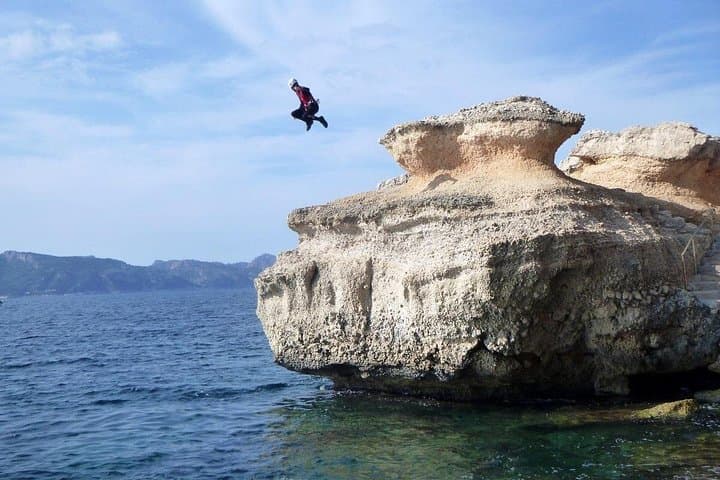
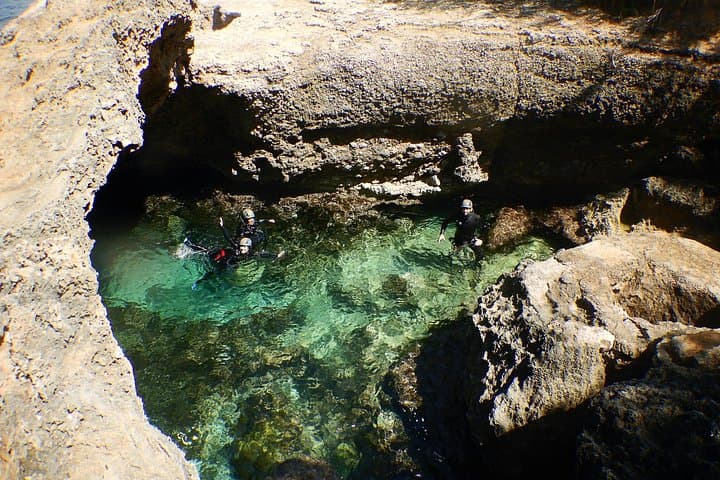
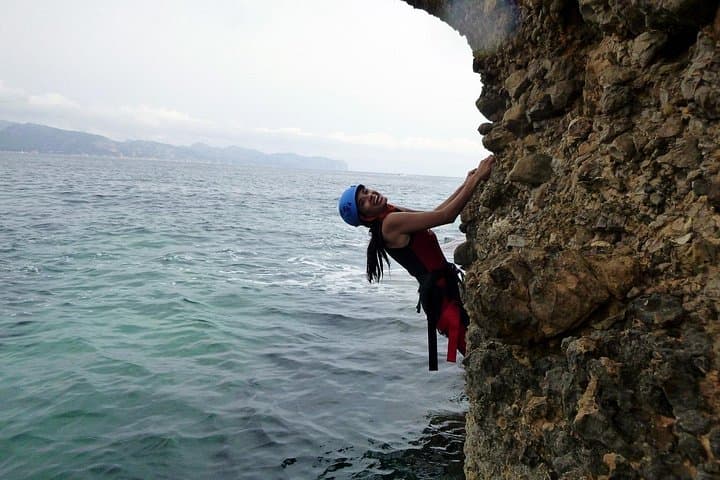
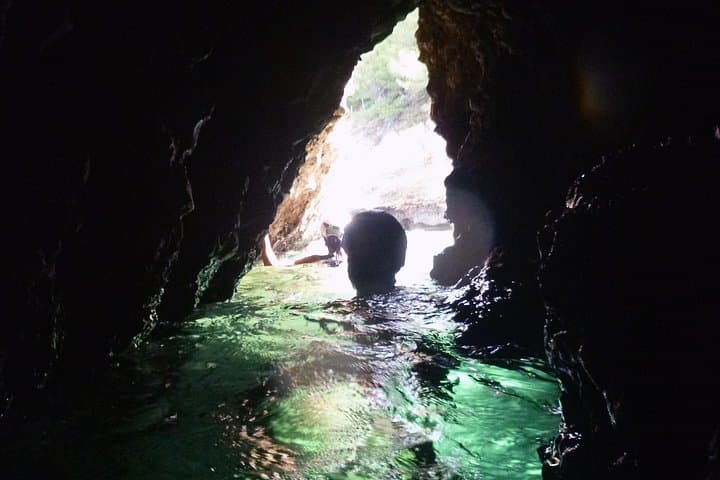
On the ragged northern edge of Mallorca, salt wind slices across limestone steps where a group gathers at a stony inlet. Guides check harnesses while the sea pulses against the cliffs—clear turquoise, deep. Participants set off along a narrow coastal trail, then step from rock into the surf, swim into sea caves, clip into ropes for abseils and launch from ledges sized to match confidence.
On the ragged northern edge of Mallorca, salt wind slices across limestone steps where a group gathers at a stony inlet. Guides check harnesses while the sea pulses against the cliffs—clear turquoise, deep. Participants set off along a narrow coastal trail, then step from rock into the surf, swim into sea caves, clip into ropes for abseils and launch from ledges sized to match confidence.
The north coast bears the mark of the Serra de Tramuntana: folded limestone carved by rain and wave, producing sea cliffs, coves, and narrow channels that have shaped local fishing and maritime traditions for centuries. The coastline's geology creates natural platforms for coasteering, and harbors like Port de Pollença and Alcúdia still retain the island’s maritime culture.
Expect a mixed day of hiking, scrambling, swims and jumps guided by experienced instructors who supply wetsuits, helmets and ropes; participants must bring sturdy water shoes. Groups are small and adaptable to skill levels, so beginners and experienced adventurers can get an adrenaline fix.
Practical notes: strong swimming ability is required and those with vertigo should consider alternatives. Wear a close-fitting wetsuit in spring and fall; in summer plan for sun protection and faster tides; winter trips may be colder and shorter. Bring a dry bag, extra layers for after the water, and plenty of water. Check tide and weather windows before booking; cancellation is common in rough conditions. With common-sense preparation, coasteering Mallorca’s north coast is an intense way to feel the island’s wild edge, and rewarding.