THE ADVENTURE COLLECTIVE® · Independent discovery and booking for outdoor travel

A full-day route across northern Montenegro that pairs the dramatic Đurđevića Tara Bridge with the cliffside Ostrog Monastery. Expect steep viewpoints, short walks, and long drives through some of the country’s most rugged scenery.
A full-day route across northern Montenegro that pairs the dramatic Đurđevića Tara Bridge with the cliffside Ostrog Monastery. Expect steep viewpoints, short walks, and long drives through some of the country’s most rugged scenery.
A cold wind from the Tara River cuts through the canyon as the van rounds a hairpin and the concrete arch of Đurđevića Tara comes into view, spanning a green-blue gorge that dares you to lean over the rail. The bridge reads as both engineering and edge—an approach viaduct of four arches feeding a main span that has watched history and weather reshape the valley below.
Verified experiences and guided adventures in the surrounding area.
Operated by Ragusa Tours · Danilovgrad, Montenegro
A cold wind from the Tara River cuts through the canyon as the van rounds a hairpin and the concrete arch of Đurđevića Tara comes into view, spanning a green-blue gorge that dares you to lean over the rail. The bridge reads as both engineering and edge—an approach viaduct of four arches feeding a main span that has watched history and weather reshape the valley below.
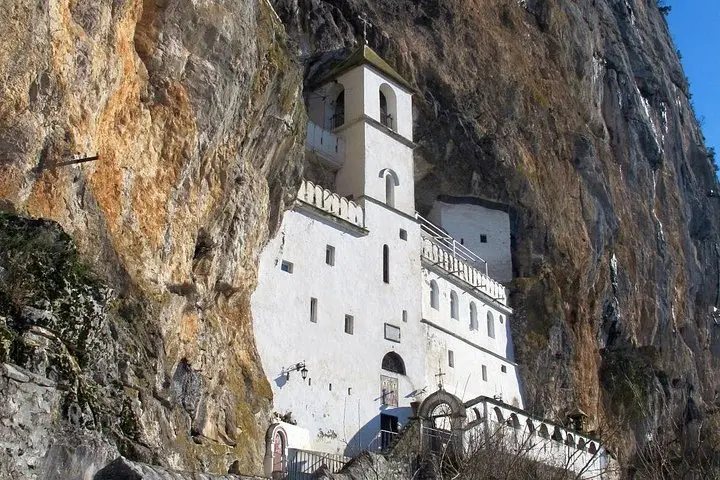
This day trip threads together two of northern Montenegro’s defining scenes: the high, carved façade of Ostrog Monastery, pinned into pale rock like a watchpost, and the sweeping Tara Canyon, one of Europe’s deepest river gorges formed by millennia of glacial melt and riverine carving. Ostrog has drawn pilgrims since the 17th century for its reliquary of Saint Basil; the bridge, completed in 1940 and rebuilt after wartime damage, is a modern landmark linking mountain communities.
Travelers can expect easy, mostly sightseeing walking with short stair climbs at Ostrog and brief stops for photos and viewpoints at the Tara overlook. The terrain is steep where the monastery sits and exposed at the canyon rim; sturdy shoes and a head for heights help. Plan for long driving segments between sites, bring water, and carry layers—the microclimate shifts from river mist to sun-baked plateau fast.
Timing your visit for morning light at Ostrog or late afternoon at the Tara bridge minimizes crowds and sharpens the views. Respect religious practices at the monastery, and leave no trace on fragile limestone slopes.
This is a full-day excursion—expect about 10–12 hours including driving time and stops.
Ostrog involves stair climbs and narrow paths; the walking is short but can be steep and exposed.
Yes—visitors are welcome but should follow local rules, dress modestly, and avoid disturbing services.
Yes—crossing from Croatia into Montenegro requires a valid passport; bring it on the day of travel.
Ragusa Tours operates guided outdoor trips and adventures with an emphasis on safety, stewardship, and memorable experiences.
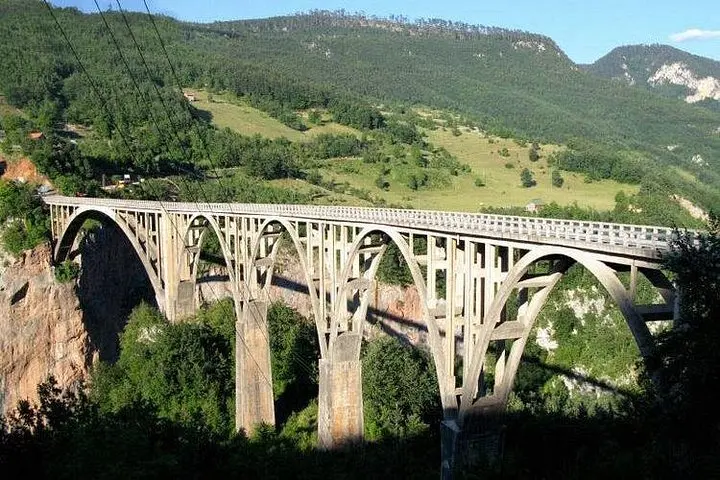
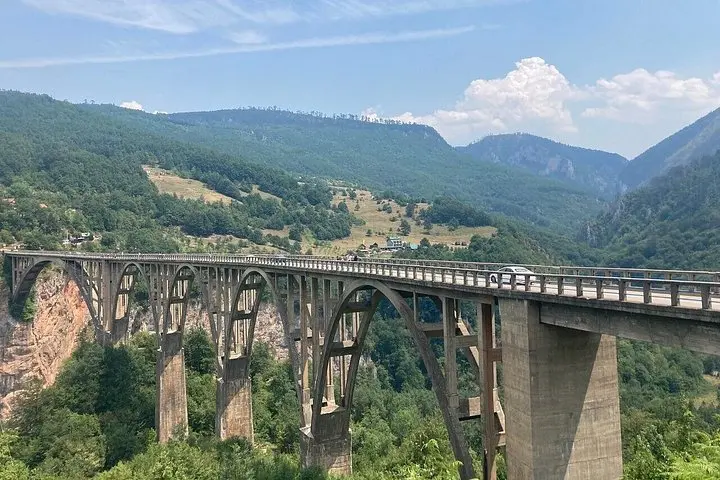
A cold wind from the Tara River cuts through the canyon as the van rounds a hairpin and the concrete arch of Đurđevića Tara comes into view, spanning a green-blue gorge that dares you to lean over the rail. The bridge reads as both engineering and edge—an approach viaduct of four arches feeding a main span that has watched history and weather reshape the valley below.
A cold wind from the Tara River cuts through the canyon as the van rounds a hairpin and the concrete arch of Đurđevića Tara comes into view, spanning a green-blue gorge that dares you to lean over the rail. The bridge reads as both engineering and edge—an approach viaduct of four arches feeding a main span that has watched history and weather reshape the valley below.
This day trip threads together two of northern Montenegro’s defining scenes: the high, carved façade of Ostrog Monastery, pinned into pale rock like a watchpost, and the sweeping Tara Canyon, one of Europe’s deepest river gorges formed by millennia of glacial melt and riverine carving. Ostrog has drawn pilgrims since the 17th century for its reliquary of Saint Basil; the bridge, completed in 1940 and rebuilt after wartime damage, is a modern landmark linking mountain communities.
Travelers can expect easy, mostly sightseeing walking with short stair climbs at Ostrog and brief stops for photos and viewpoints at the Tara overlook. The terrain is steep where the monastery sits and exposed at the canyon rim; sturdy shoes and a head for heights help. Plan for long driving segments between sites, bring water, and carry layers—the microclimate shifts from river mist to sun-baked plateau fast.
Timing your visit for morning light at Ostrog or late afternoon at the Tara bridge minimizes crowds and sharpens the views. Respect religious practices at the monastery, and leave no trace on fragile limestone slopes.